
Chicken rice and a seat at Maxwell
How to pick a hawker queue, order lunch for two and find each other again with the food still hot.
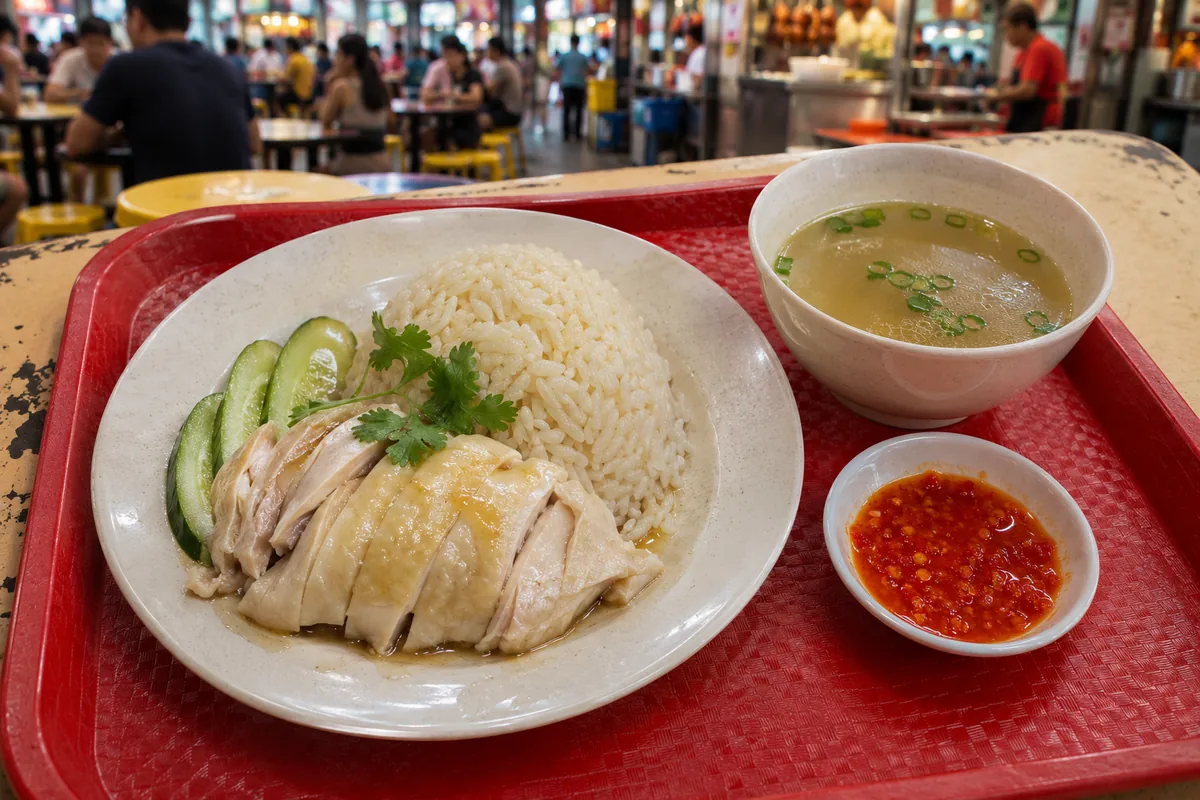
At Maxwell, a group of two can order two quite different lunches and still eat at the same table. The snag is timing. One person can finish queuing for a drink while the other is still choosing a dish, and a table described as ‘near the chicken rice’ is surprisingly hard to find.
Give the visit one anchor. Chicken rice is a good one, with sliced chicken, seasoned rice and chilli you can add a little at a time. If that’s the dish you came across Chinatown for, spend your queue time on it and keep the rest of lunch simple.
Plan your stops
Read the menu before you join the line
Look for the portion choices and the stall number. Decide whether you want a plate each or one dish to share while you try something else. If a queue runs past several stalls, check where it actually ends. A quick look at the menu board beats finding out at the counter that you joined the neighbouring line.
Give the rice a bite on its own
Start with a spoonful of rice, then add chicken and a dab of sauce to the next bite. It’s an easy way to notice the seasoning in the grain. Ask for chilli on the side if you’d like to control the heat. If you spot congee and want a second dish, share that separately so the textures stay distinct.
Split the drink run
Once you’ve found seats, choose a visible stall number as your meeting point. Take turns getting the main dish and drinks, particularly if one person needs to stay seated. At the end, take the trays and crockery to the marked return station. Follow the halal or non-halal signage at the return point.
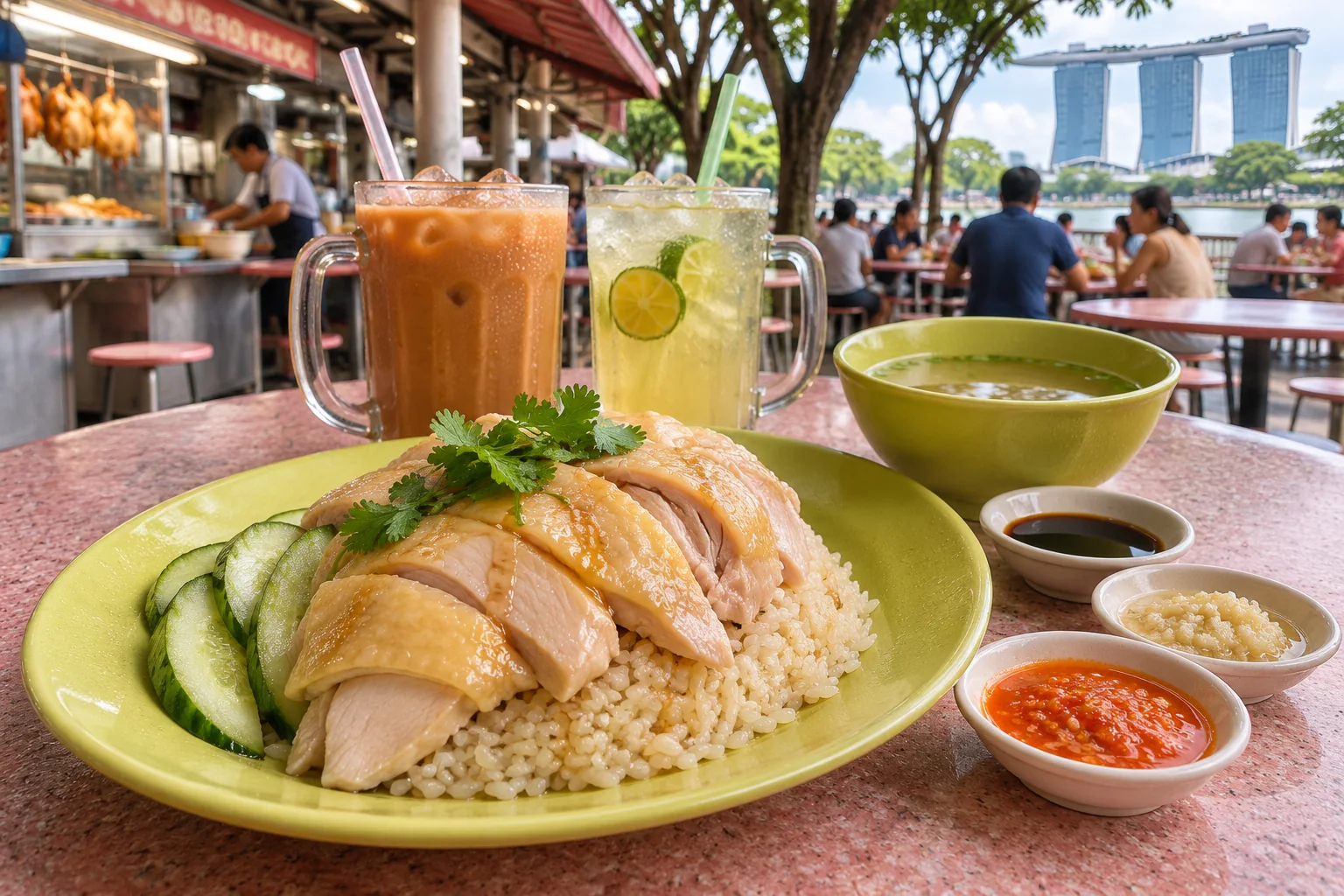
Chicken rice before the drink run
Agree on the stall number before either of you joins a queue. Order the rice when both diners are ready to eat. Keep chilli separate so each person can adjust their own plate. If your companion is collecting drinks, send the stall number and a description of your table. Several rows can look much the same from the end of a busy aisle.
When the queue is longer than lunch
If you’re here for a particular cook, get in line first and save the drinks for later. If you’re here to eat before a timed visit, choose an open stall whose queue is actually moving. Watching the next two orders tells you more about your wait than counting heads.
Make a two-person order work
Two diners can do something at Maxwell that is difficult in a conventional restaurant. Each person can choose a completely different kitchen. Take advantage of that freedom by deciding on the shape of the meal before anyone waits in line. Do you want two individual chicken-rice plates that arrive close together? Or one plate to split while the second person looks for something quite different? Those plans use the same tables and stalls but ask for different amounts of carrying, waiting and attention.
For two individual plates, look at the counter where you intend to order and follow the line backwards. The end may be around a corner or beside a neighbouring stall. A question to the last person can save a long wait in the wrong place. If the board offers several sizes, decide whether you want extra rice or extra chicken before you reach the front. Those are different requests. A photograph of a large plate tells you little about which part of the portion is actually bigger.
For a shared tasting lunch, buy the dish that matters most first. Give the rice and chicken their own space and leave the chilli at the edge until both diners have tried a bite. Now you have a common reference point. One person may want a spoonful of sauce while the other prefers to notice the rice on its own. Add a second dish if you still have an appetite. Buying three trays at once makes the last few bites a race against the temperature of the food.
A seat is a more useful landmark than a queue
At table height, one aisle of a busy food centre can look a lot like the next. Before a drink run, turn around once and look at your table from the direction in which you will return. Note the nearest stall number, which side of the aisle you are sitting on, and one object your companion can see from their seat. That description works even when customers are standing in front of the sign you originally used as a landmark.
An umbrella or tissue packet left at a seemingly empty table may indicate that someone is reserving the seat. If the situation is unclear, ask a person already at the table. A quick question works better than moving someone's belongings. When the food is ready, make one careful trip with a tray rather than juggling two bowls, a phone and a drink. Ask your companion to take the drinks if the table is already crowded.
At the end, pause before stacking everything together. Look for the signs at the return point so you take items to the appropriate section. Take your bag first and then return the tray. It is a small sequence, but it avoids leaving a phone on the table while both diners are focused on carrying crockery away.
If lunch is part of a Chinatown walk
Use the centre's full name and street address in your meeting message, particularly if you and a friend are taking different routes. A pin for the wider neighbourhood can send someone to another perfectly good lunch spot. If both of you have a timed appointment afterwards, decide in advance how much of the hour you are prepared to spend waiting for the first plate. Make the choice about changing stalls while you can still enjoy the alternative. It is much easier to abandon a queue before you are invested in reaching the last few places.
If a friend is running late, send the name of the dish and ask whether to order now or wait. That single message can save a second queue without committing them to a cold lunch.
Deciding what a second plate should add
Once you have eaten some chicken rice, pause before deciding what else to order. Which part of the plate did you actually enjoy? If it was the seasoned rice, a second chicken-rice plate may be exactly what you want. If it was a particular spoonful of chilli, more chilli on the first plate may satisfy you better than another whole portion. If what you really want is a different texture, look for something soft or brothy rather than another plate with the same balance of rice and meat.
A companion can help make the decision fair. Put the sharing spoon down for a moment and each describe the bite you would like next. One person might want something warming and mild, the other something with a chew. The advantage of eating at a hawker centre is that a shared table can hold both. You don't have to settle on a single dish acceptable to everyone. You do have to decide who will collect each dish and how to recognise the table on the way back.
If you are eating on your own, consider how the second order affects your seat and belongings. Finish the first course, return the tray and then choose the next stall if that makes movement easier. You can enjoy two small meals at different tables. That can feel more relaxed than trying to keep a seat, carry an open drink and watch a queue all at once. It also frees the table when someone else arrives with a hot tray.
A practical way to choose between two queues
Suppose two counters have the same number of customers waiting. At one, orders are passed across individually at a steady pace. At the other, a cook is preparing several portions together and nobody has collected food for a little while. The second line may move in a burst. Simply counting heads cannot tell you which line will clear first. If the exact dish matters, ask the person taking orders whether the wait will fit the time you have. If it doesn't matter, let the visible work at the counter inform your choice.
A timed lunch has an ending beyond the last bite. Include time to return the tray, find the person who left for a drink and walk to your next stop. Someone who has a full hour between appointments might only have half that hour to spend at the table. Say so before splitting up. It makes changing to a different open stall an ordinary part of the plan, rather than an argument held by message while one person is already halfway through a queue.
Write down the stall number if you want to come back for the dish you missed. The next visit can start with a destination instead of a vague memory of which aisle smelled good. Check the centre's closure information before travelling and check the individual stall when you arrive. A return visit works best when the plan survives one cook taking a day off.
Getting there
Use the centre’s address, 1 Kadayanallur Street, when planning the trip. Chinatown Complex is a different food centre. The official Chinatown area guide can help if your group is meeting at a nearby landmark.
Check before leaving
Check the NEA closure list for ‘Maxwell Food Centre (Kim Hua Market)’ and confirm that your chosen stall is serving.
Visitor sources
Research checked .