
Finding your table at Maxwell, alone or together
A solo lunch and a reunion with friends call for different ways of finding seats, timing orders and returning trays.
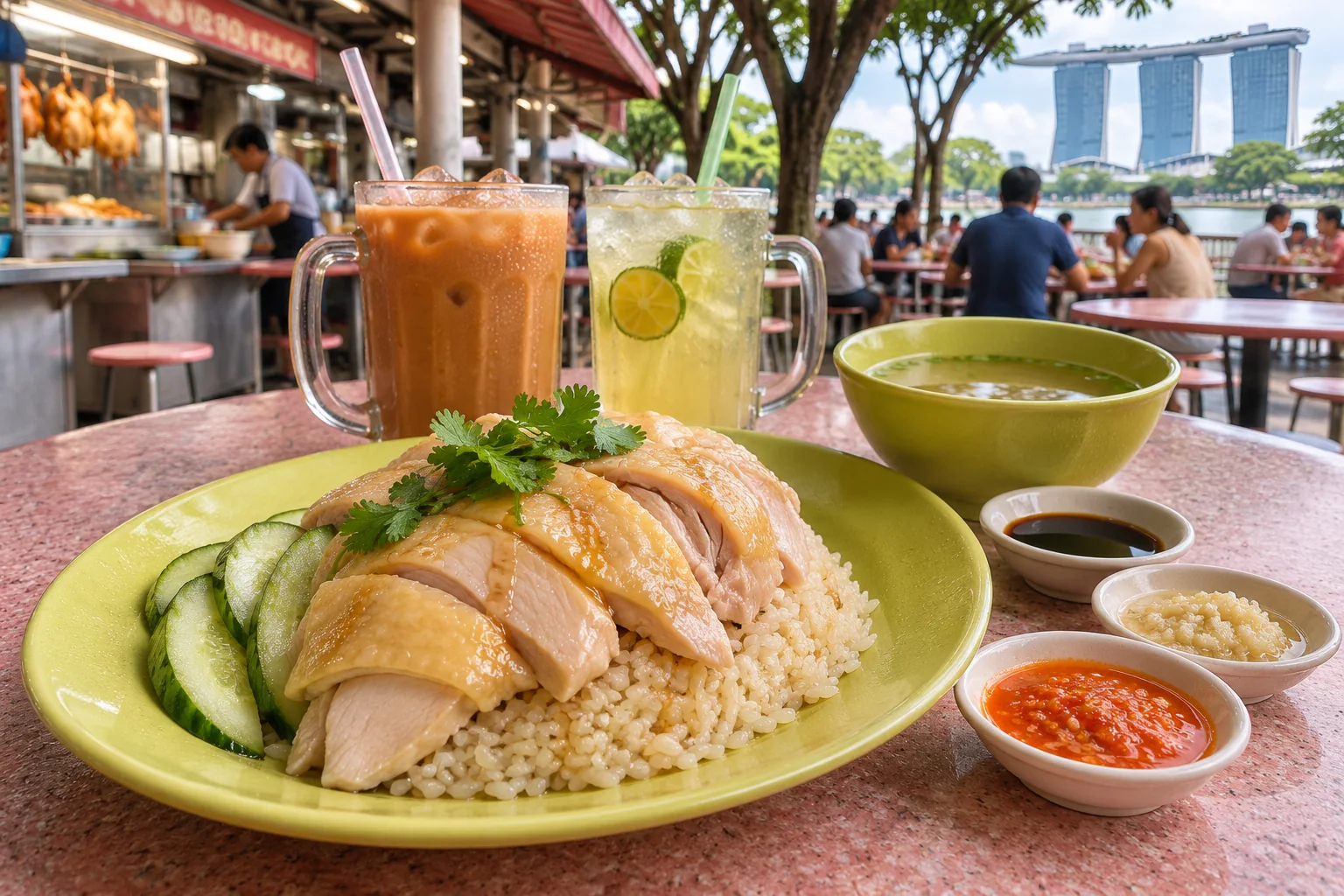
Look for the seat before you collect the tray
At Maxwell the easiest moment to understand the layout is when your hands are empty. Walk from the entrance to a cluster of tables, note the nearest stall number and look for a tray return point. A seat beside the food you buy is convenient. A seat you can actually identify on your way back is more useful still.
A packet of tissues or an umbrella can mean that someone has reserved the place. Chinatown Singapore explains this custom, commonly called chope. At a shared table, ask whether an individual seat is free before pulling it out. A chair can belong to someone still collecting a meal. Keep your valuables with you as you look around.
Make a single journey with the first order
Chicken rice works well as a one-stall meal. Read the stall's own board, decide on the size and ask where to collect your plate. Keep the receipt or collection marker handy when one is issued. If a stall asks you to wait, stand where the seller indicates so another customer can order.
Leave the drink until the tray is on a table, or buy a closed bottle you can carry easily before queuing for food. A hot bowl, an uncovered drink and two sets of cutlery are awkward even on a quiet aisle. If you want to eat from a second stall, return with a fresh order after finishing the first dish.
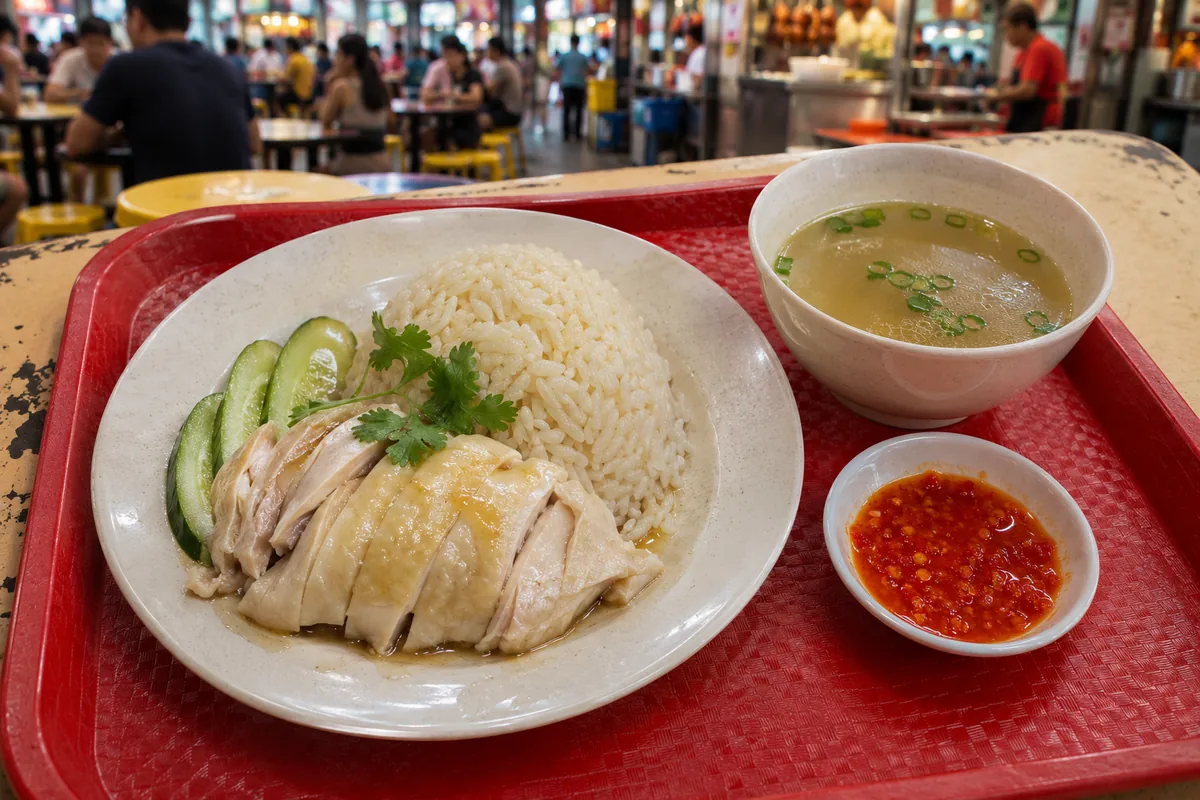
Have a plan for a full room
If you cannot see a seat, do one short circuit before paying. Decide then whether you want to wait, get takeaway or come back to Maxwell later. Ask about takeaway containers and any charge before the order is prepared. A nearby doorway or working counter makes a poor substitute for a dining table.
When you finish, take your tray and crockery to the signed return point. Follow the labels for the appropriate dishes. Gather loose tissues and keep the walkway open while you sort everything. The next diner finds a usable table, and you can leave without looking for a companion who has walked off with the only reminder of your exit.
Choose your fallback while the seat is empty
A long queue can be a reasonable use of a lunch break when the whole point of visiting Maxwell is one particular stall. It is a poor use of the same minutes when you simply need a hot meal between appointments. Decide which sort of lunch you have come for. With the first, you might willingly wait and take the result away. With the second, finding a moving counter and a comfortable seat is the real success.
Imagine you have half an hour before meeting a friend outside. Use your first walk through to identify a quick alternative, then get in the queue you prefer. If several minutes pass and nobody is served, you already know where to go. You can leave the queue politely without standing in the aisle to study another menu. The decision also saves you from walking off with a dish you hardly have time to eat.
What to say when it is your turn
A solo order can be quite short. Point to the name or picture, give the number of portions, and say whether you are eating here or taking away. If the portion size matters, point at the size as well. Repeat the part the seller asks about rather than starting the whole order again. The noise in a busy food centre makes even entirely familiar words easy to miss.
If you plan to sample several things, say so when asking about the smallest serving. A second dish may be a full meal in its own right. When a stall only sells one size, you can choose to make that the main event, then get a drink elsewhere. A photograph of a dish is a useful reminder of what you wanted. Take one of the board from the side when it is convenient, leaving customers and the service opening clear.
The uncomfortable middle of a meal
People eating alone often leave the table twice, once for a drink and once for an extra condiment. If the meal has already arrived, look around before getting up. Ask a neighbouring diner if the seat is free when you return. Leaving an expensive phone or bag as a claim on the table creates a much larger worry than finding another place to sit. Finish the first plate before beginning a second round if seats are scarce.
A familiar mistake is to buy a second hot dish then spend ten minutes looking for the cold drink you had in mind. Reverse those two jobs. Finish the tray, return the crockery, find the drink and choose whether you still want more food. By then you also know which stalls have drawn a fresh crowd. A solo diner can change the order of the meal without renegotiating anybody else's lunch.
Use the address when leaving
When booking a ride or meeting a walking companion, use the centre's full name and address from its listing. Singapore has other food centres in the Chinatown area. An instruction to meet by the hawker stalls is enough to create two different meeting points. If you step outside while waiting, send the name of the nearby street or a clearly identifiable entrance.
Check closures through the National Environment Agency when planning another visit. Hawker centre cleaning or other scheduled closures can affect a whole centre, while individual stalls may take different days off. Save the venue details beside the dish you wanted. A return visit can then begin with a quick check rather than a long journey based on a screenshot that recorded only the plate.
The quiet advantage of a solo lunch
Take a minute with the plate before reaching for the chilli. Try the rice, then the chicken, then the bite you have seasoned yourself. If the balance you like involves more sauce, you can change just your next mouthful. A solo lunch needs very little coordination, and that leaves room for a small experiment. A useful note for next time might be as simple as remembering which sauce you added, how much of the rice you finished, and whether the smallest size was plenty for one.
A note worth keeping
Record the neighbour you used as a landmark, too. Even if the queue bends differently on your next visit, that second stall can help you locate the first one.
When the party grows
Sometimes the meal begins alone and ends with three friends arriving from different parts of Chinatown. Send the centre name before leaving the hostel or office. Once you have chosen a seat, send the landmark you can see from it. Now the group can take over from the solo routine without disturbing the people already eating.
Agree on two details before splitting up
Four adults can visit the same centre and spend most of lunch messaging one another from different queues. Choose one visible stall number as a landmark and one time to regroup. Add which side of the aisle the table is on once someone has found seats. Two people who describe their location as near chicken rice may be looking in opposite directions.
Ask everyone to choose a first dish while the group is still together. If two diners want chicken rice from one stall, one person can ask how to order two portions. A group member who wants a different meal can look for an open counter and report back. Nobody has to accept a dish simply because the others have joined its queue.
Put the table-holder's order first
When one diner stays at the table, it is easy for that person's meal to become an afterthought. Ask for their actual order and preferences before the other three leave. Note the stall and portion on one phone. If the first choice is sold out, send a picture of the current board or return to the table with two alternatives. That takes less effort than buying four substitutes and discovering nobody wanted them.
Make the plan fair for anyone who would enjoy choosing in person. Two diners can collect their meals while the other two sit, then swap roles for a second round. If a member of the group needs a seat or an accessible route, let that person choose their place first. A table that looks ideal from the entrance may be inconvenient to approach once the surrounding chairs are full.
Divide the bill without delaying the counter
One person ordering two dishes can pay for those dishes together if the seller accepts that arrangement. Settle the group's shares back at the table, where you can hear each other. Record the actual amount from the transaction and keep drinks separate if a different person bought them. Guessing the total from a photograph of last year's board creates a surprisingly awkward conversation over a small sum.
Before sending somebody to order, ask what payment method that particular counter accepts. The answer at a neighbouring stall does not settle it. If one member of the party can use the available method and another cannot, exchange duties before either reaches the front. Someone can pick up the drinks while the person with the suitable payment method handles the cooked meal. Keep the exchange of money away from trays and serving areas.
Order for the diners who share
An enthusiastic group may order four plates to taste, then add a fifth because somebody noticed another counter. Start with what people have actually agreed to share. A diner who ordered a personal portion should be able to eat it that way. A separate shared order makes more sense than reaching across after the meal has begun. Put any common condiments where people can reach them without moving hot plates around.
If the two shared dishes arrive at different times, give the first one its moment. Serve small portions to those who want some and eat while it is hot. Repeating that sequence with the second dish does more for the meal than waiting for a photograph of everything at once. When one stall still has a long queue, check back with the whole table before another diner spends the rest of the break standing there.
Visitor sources
- Chinatown Singapore’s Maxwell listing
- Chinatown dining and tray-return etiquette
- NEA hawker centre closures
- Singapore Tourism Board’s Chinatown guide