A counter lunch inside La Boqueria
Find a cooked breakfast at stand 582, then use the market map to build a small picnic for later.
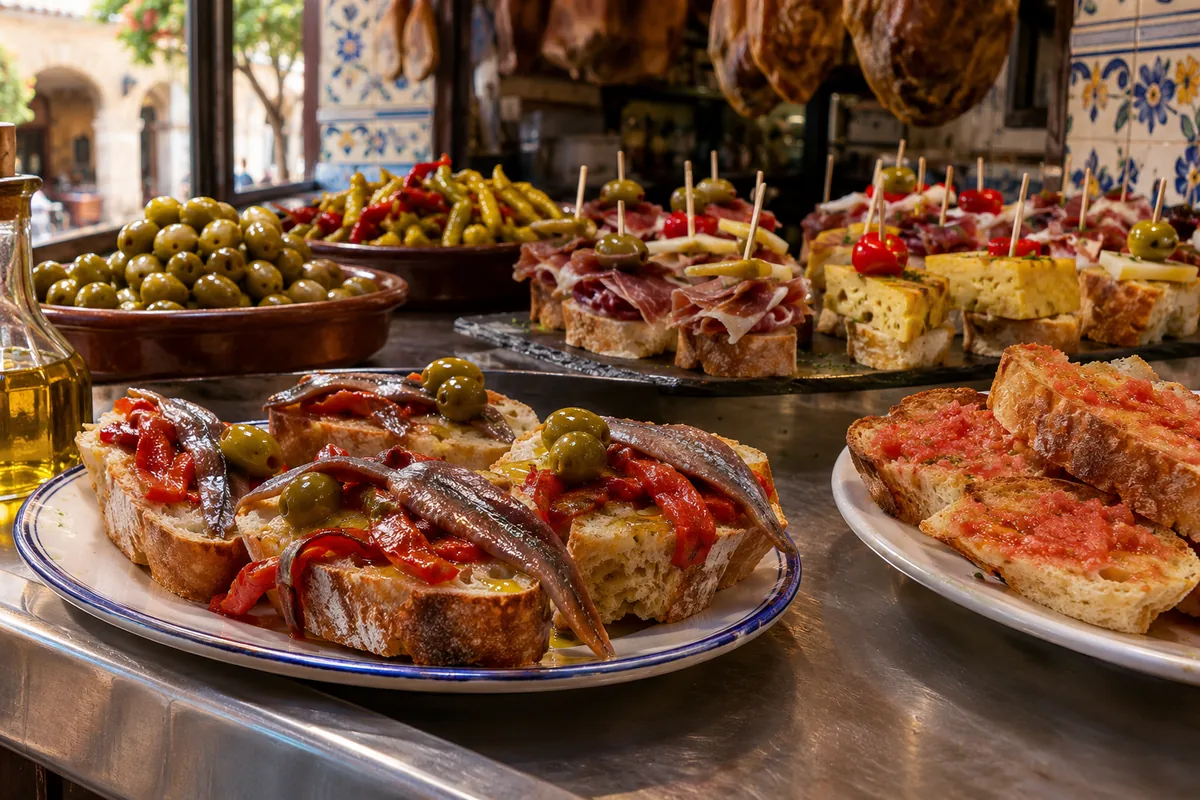
La Boqueria has two different answers to ‘What shall we eat?’ A market bar can cook the eggs in front of you. A produce stand can sell you just enough olives or fruit for a second lunch later. Decide which you’re buying before a row of beautiful ingredients turns into an armful of groceries.
The entrance on La Rambla is an easy meeting point. Inside, the stall number is the more useful address. The market’s online map sorts stands by what they sell, including bars, legumes, fish and olives.
Plan your stops
Find the counter by its number
For a cooked meal, enter 582 into the stand map to find El Quim de la Boqueria. Its menu pairs fried eggs with baby squid, garlic and chilli. If there are two of you, ask about sharing the eggs and ordering bread with tomato alongside. Check the menu board for the day’s choices before you settle in.
Make a picnic that fits the afternoon
At an olive counter, say how many people you are shopping for and ask for a small tub with a secure lid. Add a piece of fruit for each person. If the choice is loose and priced by weight, ask the total before the vendor packs it. Nobody needs a bag full of brine on a walk down La Rambla.
Save a stall for another day
The map separates fresh fish from salted fish, and has its own category for legumes. If you have a kitchen where you’re staying, choose one of those sections and ask how the vendor would prepare a small portion. Without a kitchen, olives, nuts and whole fruit are easier to carry and eat.
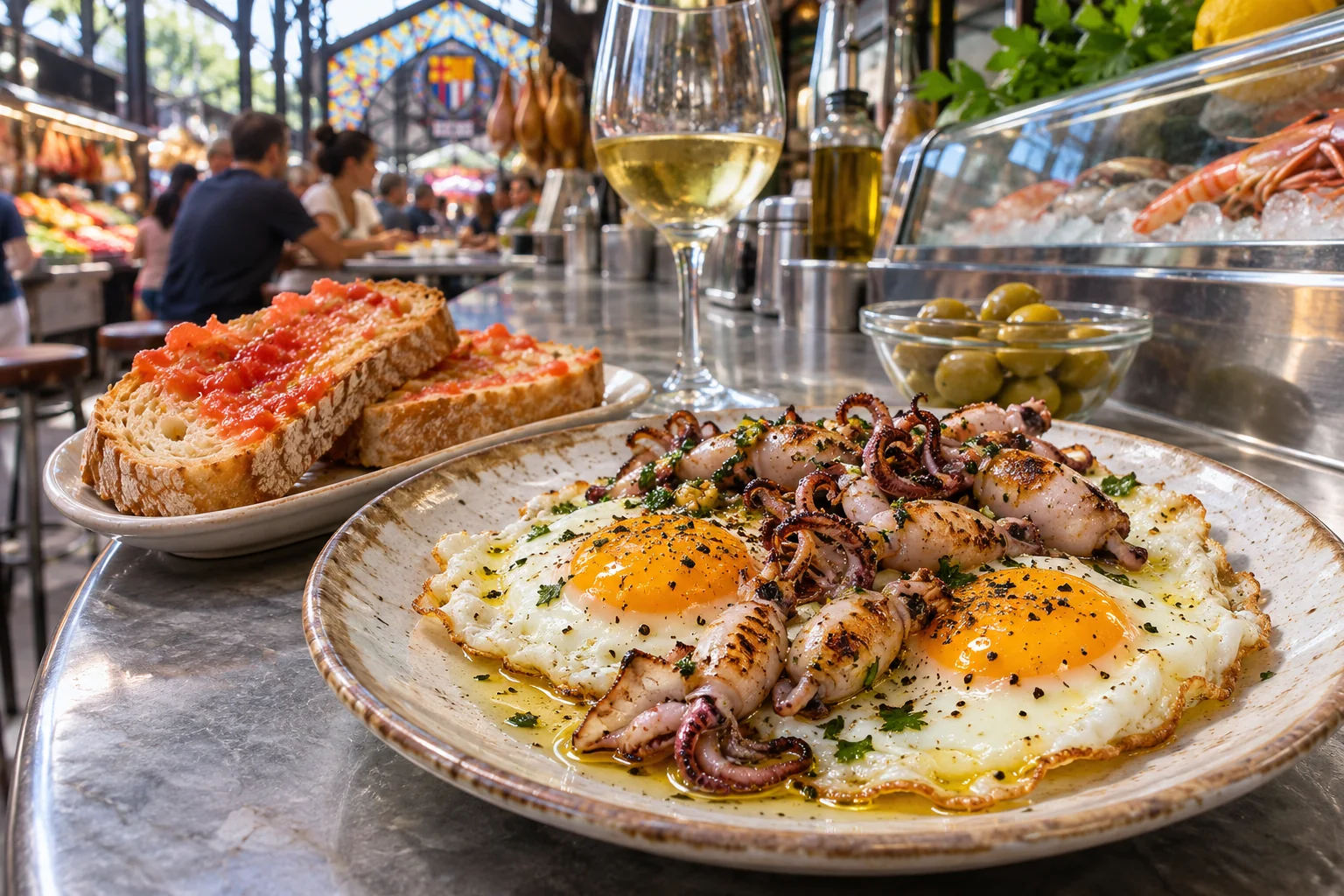
Eggs at the counter, fruit for later
Ask whether the kitchen can divide a plate before ordering two. A shared plate of eggs and bread leaves room for a second stop. If the counter has only one free stool and your group wants to sit together, ask about the next pair of seats before placing an order. Buy fruit as you leave so it spends less time getting bruised in a shopping bag.
Counter seat or shopping bag?
A pair of stools makes the bar an attractive stop for two. A larger group may prefer to split into shopping pairs and meet back at a numbered stand. Agree on the number before anyone wanders off. A busy entrance makes a poor place to look for someone holding lunch.
Turn the stall map into a short route
A shopping list for La Boqueria works better when it contains verbs. “Eat eggs, buy olives, pick up fruit” gives a visitor three clear decisions. “See the food market” leaves every stall competing equally for your attention. Before leaving the entrance, look up the numbered stand for the meal you want and choose just one category for your shopping after lunch. You can add a stop when something looks good. You cannot eat a whole counter meal while continuing to move with a busy crowd.
At El Quim, use the stall number to find the right counter and the menu to decide whether you want a full plate or something to share. Ask the person serving about seating before treating an empty-looking stool as available. A diner may have stepped away for a moment or a group may already be waiting. If two neighbouring places are unlikely to open up soon, decide together how important the counter experience is. Staying for one particular dish and buying a picnic are both coherent plans. Drifting between them while everyone gets hungrier is less satisfying.
When the eggs arrive, keep the bread close. Bread makes the soft yolk and the juices from the squid part of the same mouthful, and makes a shared dish easier to divide. Start by giving each person some of the topping along with the egg. Waiting until the plate is almost empty to take your half can leave one person with the bread and the other with all the squid.
Take only what you can carry
At an olive stand, work backwards from where you will open the container. A table back at your accommodation gives you forks, a bowl and somewhere to put the brine. A bench and a bag on your lap call for a much smaller tub and a lid that closes securely. Ask whether stones are still in the olives and where the container should stay upright. Store it away from loose bread and anything made of paper. An inexpensive lunch becomes inconvenient surprisingly quickly when a lid comes loose.
For fruit, the prettiest cut portion and the best portion for your plans may differ. A whole orange or apple is simple to carry away for later. If you buy something prepared for immediate eating, first work out where you can stop with it. Leave enough space at the counter for the next person to order. If there is a price by weight, have the vendor tell you the total for your selected portion before packing it. A few words at the scale are easier than negotiating a full bag after paying.
Keep a receipt somewhere you can reach without unpacking everything. The market explains its customer toilet arrangements on its services page. The same visitor information lists the information point and its printed market map. That can be more useful than a screen when two shoppers are trying to compare routes at once. Give the person carrying the bags the shorter final walk rather than sending them back through a crowded aisle for one forgotten item.
Leave room for a second visit
If you see a fish or legume stall that would suit a longer cooking day, take a note of the number instead of buying something you have no way to prepare. You can use the market map later to plan which stall to visit first. That makes a return trip shorter and more purposeful, particularly if you want a conversation with the vendor about portion sizes or how to cook a small purchase.
Ask the stallholder to show you the number on the printed map before folding it away. A marked map is useful when several counters along the same aisle sell similar-looking produce.
Reading a counter menu without ordering too much
A list of small plates can make a meal look much smaller on paper than it is on the table. Start with the plate that brought you to the bar, then work out what would make it complete. Eggs with baby squid have richness and a soft centre. Bread with tomato adds somewhere for the juices to go. Another fried dish may be wonderful, but it does a different job from a simple vegetable plate that gives the meal a change of pace. Read the menu for that difference before ordering a second round.
When two diners share, find out whether a price refers to an individual item or a plate. A row on the menu may name the same number of ingredients as the next row while representing a very different amount of food. If you do not share a language confidently, pointing to the printed item and asking how many pieces come with it is perfectly practical. Asking whether it feeds two is less precise because two appetites can have so little in common.
If the dish you wanted is unavailable, use the cooking method as a clue to an alternative. Did you want eggs for the soft yolk, squid for its texture, or the combination of garlic and chilli? The cook or server can suggest a sensible substitute when you identify the part that matters. Picking the next most familiar word on the board can give you a plate with an entirely different flavour and no connection to the meal you had in mind.
If your accommodation has a kitchen
Buying ingredients to cook changes both the route and the order of purchases. Think through the equipment first. Can you drain a pan of legumes, slice a tomato and keep fresh ingredients cool? Is there oil in the cupboard, or will the smallest bottle become an extra purchase you carry home almost full? A market supper made from three ingredients you can actually prepare beats a larger basket whose best item requires a pan you don't own.
Choose the ingredient that determines the serving size first. If you are buying cooked legumes, ask for enough for the number of people eating and explain whether they are the main dish or a side. Add a vegetable that you already know how to prepare. Choose the salty component last. Olives or preserved fish can season an entire plate, so a little might be all you want. Ask for separately wrapped portions if two people differ on salt or have a particular ingredient requirement.
Save the stall number and make a note of how much was left after dinner. A small tub that fed two alongside bread might barely feed one as the entire meal. Your own experience of the portion is more valuable on a return visit than a rigid rule about how many items every visitor should order. It lets the next vendor give you a quantity that makes sense for your table.
Getting there
The market lists its address as La Rambla, 91. Its quarterly Boqueriamap also marks places to eat and visitor services. The information point is on the ground floor.
Check before leaving
Look up the bar’s menu and trading day separately from the market’s opening times.
Visitor sources
Research checked .