
Kaya toast, eggs and the first cup of kopi
Thin toast makes a good spoon for soft egg. Knowing when to dip it makes a better breakfast than letting the whole plate sit.
Order the breakfast you want
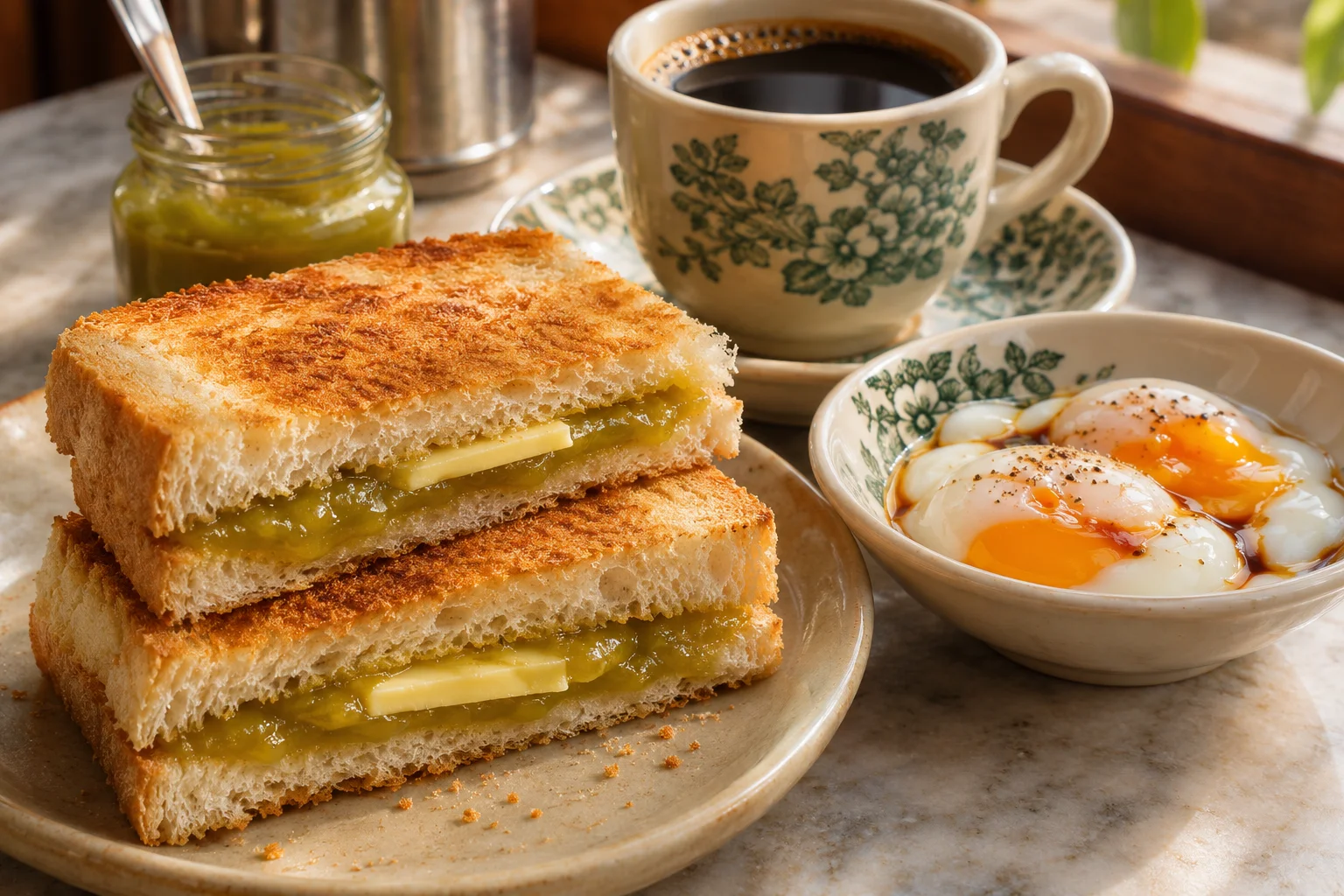
Kaya is a sweet spread made with coconut and egg. It gives a toasted sandwich a custard-like middle, often with butter alongside. Singapore’s tourism board describes the classic breakfast combination with local coffee and a soft-boiled egg. The practical question at the counter is whether you want that whole set or just toast. A picture of a set can make a small snack look like the only choice.
Read the drink part of the order separately. If your toast already covers the sweetness you want, ask what the stall puts in its standard coffee and say how you take yours. If you would prefer tea, ask whether it can substitute in the set. Agree on the drink before paying rather than trying to change it once the cups are lined up.
Keep a dry corner
Break a piece from one corner of the toast while its surface is still crisp. The first taste gives you the coconut spread and any butter on their own. For a different second bite, dip just the end in the egg. The rough edge holds the egg well. Lowering the whole piece into the bowl quickly gives you a sandwich that bends instead of snapping.
Break the yolk with a spoon if you want it to coat the bread evenly. If soy sauce is provided, put a few drops at one edge and taste from there. It is much easier to adjust a little patch than a whole seasoned bowl. Leave some plain egg for the last piece of toast.
Make room for your next stop
For two diners heading to a hawker lunch afterwards, ask how many pieces come with one order of toast. A shared plate and individual drinks may suit the morning better than two full breakfasts. Someone who wants the eggs can order their own portion if the counter offers it separately.
This is a breakfast to collect when the table is ready. If both people go to find a second shop while the toast waits in a bag, steam softens the crust that made it worth ordering. Visit the takeaway counter for a jar of kaya afterwards if it is the spread you would like to bring home.
What a toast set actually buys you
A kaya toast set is a little collection of foods that happen to suit each other. It is worth reading its parts one at a time. Toast with spread is something you can share. Eggs are usually an individual portion or a bowl on the table. The coffee is sized for one person. For two friends stopping before a second breakfast elsewhere, ordering one set and adding a drink can make more sense than buying two of everything. Ask what the shop allows.
For a hungrier traveller, work in the opposite direction. Start by finding out how many pieces are in the set, then decide whether you want an extra serving of toast or simply the eggs and drink that accompany it. A large photograph on a menu board can make the portion look quite different from the order that arrives on a tray. The number of pieces is a more useful starting point.
If you have brought coffee from another shop, check the premises' arrangements before settling down. For a seated breakfast, it is usually simpler to order what you want to drink at the same counter as the toast. You then receive one coherent breakfast and have someone to ask about its components while the toast is still good.
Make the drink part of the tasting
A sip of sweetened coffee after a bite full of kaya can give the breakfast a very different finish from a sip of plain tea. Think about the drink you enjoy with a sweet pastry at home. If you usually like something unsweetened alongside it, ask which order at this stall comes closest. Use ordinary descriptions of milk and sugar if you are unsure about local ordering vocabulary.
A diner who likes a sweet morning drink may enjoy changing the food side of the equation instead. Eat part of the toast with egg and save the plain kaya corners for the coffee. Someone who wants to pick out the coconut flavour can start with water or a milder drink. There is no obligation to follow the printed sequence in a photo of the breakfast set.
If you are sharing toast but ordering different drinks, keep one piece plain and compare it with each drink. The same spread may seem more coconut-forward beside tea and more caramel-like beside coffee. Those impressions are personal and depend on the particular coffee, toast and spread. They are a better reason to try another shop than collecting an arbitrary number of breakfasts on a city checklist.
When the toast is going into a bag
A sandwich that has just been pressed together traps heat around the filling. Once placed inside a closed wrapper, moisture moves towards the once-crisp outer surface. This matters if you are planning to take the toast across town. Ask whether the counter has a better choice for takeaway or whether it recommends eating this version on the spot. If you can spare ten minutes, sitting down for the toast may be more rewarding than taking it to your next attraction.
If you do carry it, give the packet its own space in the bag. Pressing a drink bottle into the toast flattens the air pockets and pushes filling towards the paper. Keep the drink upright and carry it separately if possible. Give each diner their own portion as soon as you reach a place to eat so the remaining toast is exposed to air instead of continuing to steam in a large bundle.
Buy the spread you liked
If a shop sells jars, ask which one it uses in the order you just ate. A window full of green and brown spreads need not correspond one-for-one with the bread menu. Check the jar's ingredients, instructions after opening and size. A small jar you can finish while it still tastes good is often a better purchase than a larger souvenir chosen for its packaging.
At home, give the spread a fair second chance by starting with the kind of toast you liked in Singapore. Thickness, browning and the amount of butter all affect the result. If a first attempt seems too sweet, try a thinner layer on a more deeply toasted slice before concluding you chose the wrong kaya. The balance on a café plate came from more than the contents of the jar.
Choose between toast and steamed bread
Ya Kun's published menu offers both kaya toast with butter and steamed bread with kaya and butter. This is a particularly useful comparison for someone curious about the spread. Both put a sweet filling next to butter, but the bread carries them differently. Steam gives you a soft surface that yields straight away. Toast gives you a crisp edge and a little bitterness from the browning. If what you dislike about toast is its scratchy edge, one change to the order might make the whole breakfast more enjoyable.
Consider how the bread will behave with the eggs, too. A rigid toast corner will scoop up egg quite neatly. A piece of very soft bread is easier to eat with a spoonful of egg alongside it. Anyone trying both should start by tasting a piece of each plain and then add egg to the rest. Otherwise the most striking difference may simply be that one piece was submerged for longer.
The same menu lists peanut kaya toast and French toast with kaya. If the spread is already familiar and you want a different breakfast, choose the change you actually want. Peanut brings another flavour into the filling. French toast changes the bread itself. A description like “the kaya one” is too vague when you are carrying an order back to a table of several people. Give the person joining the queue the full item name.
One breakfast, three different morning plans
A person heading directly to a museum can give breakfast a proper ten minutes and leave with both hands free. Choose the set if toast, eggs and a drink are what you want, find a seat and finish the soft egg there. If you want a second drink for the walk, get it near the end, after you have discovered whether the first coffee was sweet or strong enough for you.
For a family sharing several dishes, let the youngest or least adventurous diner try a small piece of toast without egg first. The spread, butter and bread are already several flavours in one bite. Someone enthusiastic about the combination can always add more from the same plate. If there is any need to check ingredients, remember the eggs in the kaya itself as well as the visible eggs served beside the toast.
A pair of travellers opening a final jar at home a week later have a different problem. A label may tell you how the product should be stored, but it will not tell you how thick your favourite stall spread it. Begin with a thin layer on one half of a warm slice and a slightly more generous one on the other. Add butter to one bite, then adjust the rest. In a few minutes you can settle on the version that suits your own bread and coffee.
That last breakfast might not look much like the photograph you took in Singapore. If the coconut spread, warm bread and drink sit well together on your own table, you have carried the useful part of the experience home.