
How long is that lunch queue, really?
Use two orders, a departure time and a fallback dish to decide whether to join a busy line.
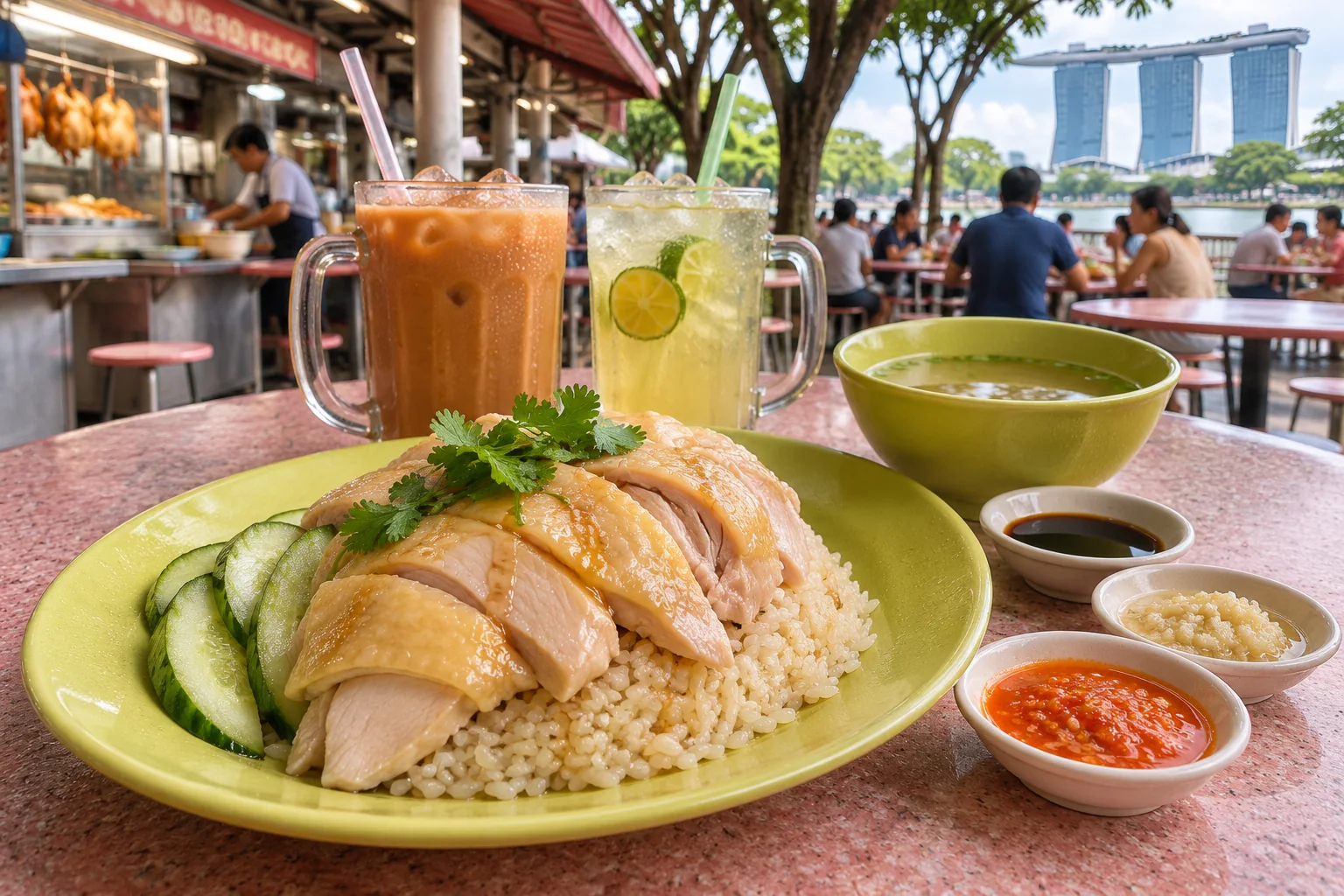
Put a clock on lunch
Work backwards from the next thing you must do. If you need to leave the food centre at half past, a queue that reaches the counter by twenty past leaves ten minutes to receive the food, find a seat, eat and return the tray. The same queue could make perfect sense on a free afternoon.
At Maxwell, give your companion the name or number of the stall before looking for seats. Two lines may stretch along the same aisle. It is worth walking past the side of the queue to see which counter serves the dish you came for. Leave enough space for people carrying trays.
Watch the handover
Watch what happens to the next two customers. A cook may portion rice quickly while several drinks are being assembled at the next counter. A single customer collecting several meals can take longer than a pair buying one plate each. Count finished orders and look at how the line moves once food changes hands.
Some queues lead to a cashier who takes the order, while the actual cooking comes afterwards. Look for tickets or for customers waiting to one side with receipts. Ask where to collect the meal if the arrangement is unclear. This matters particularly when the person buying lunch is also carrying the group's drinks.
Give the alternative a name
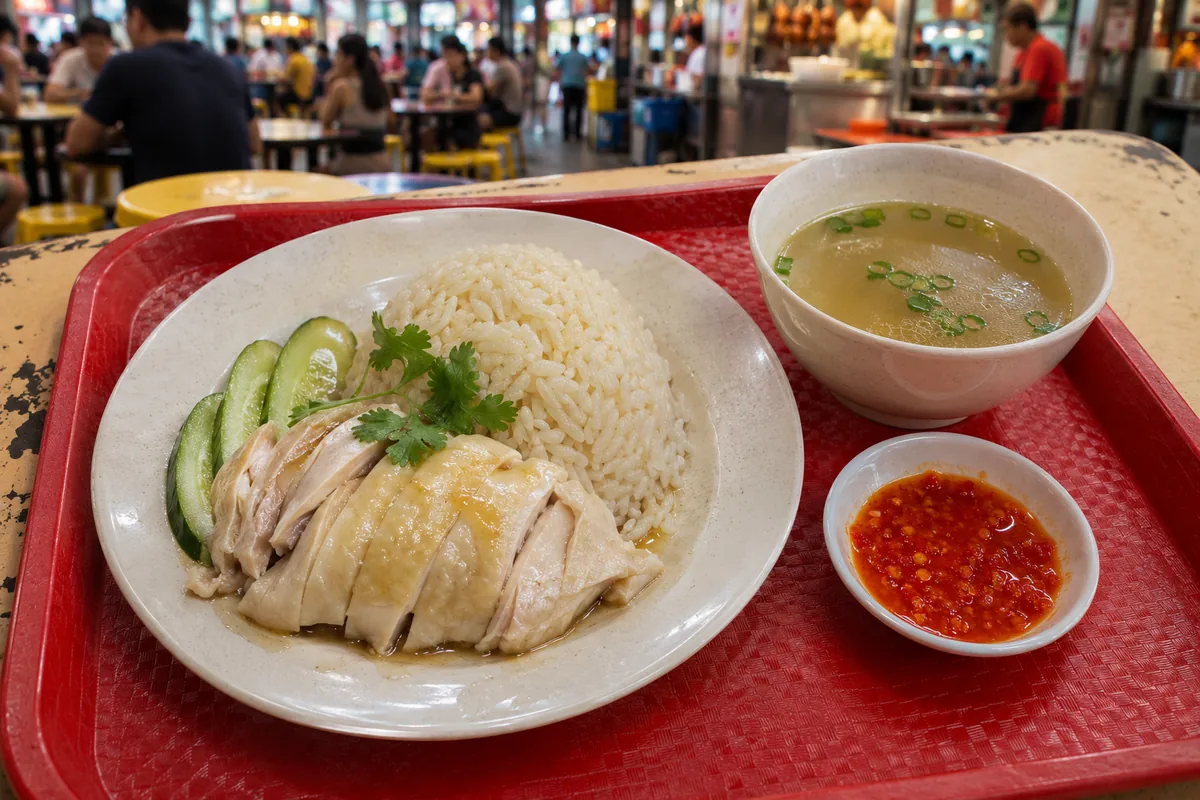
Choose a backup before joining the first queue. It can be as simple as another open rice stall whose menu you like and whose food you can see leaving the counter. Agree on the point at which you will switch. That decision is much easier to make with empty hands than with one person already trying to guard a table.
If a specific stall is the whole reason for the trip, make the queue the activity and keep the rest of your plans flexible. Check the food centre closure information before travelling. A centre that is open on the day still leaves each vendor to decide what it is serving when you arrive.
A worked half-hour at Maxwell
Imagine arriving with thirty minutes before you must set off for a museum booking. Allow a few minutes to find the right stall, check its menu and wash your hands. Put aside time to eat a plate of rice without rushing and a little more to return your crockery. If you allow fifteen minutes for the meal and five for finding your way out, the original half-hour has only ten minutes left for choosing and receiving food. These are your allowances, not a prediction of any stall's service.
Now imagine that you are already in the centre, have a table number from your friend and know your order. Your allowances can change. The point of doing this calculation is to notice where the time goes. It would make very little sense to spend the entire ten minutes walking between counters comparing lines that each look a minute quicker than the last.
Notice what the cook is making
Watch the shape of the work without leaning into the serving area. Some cooks are repeating an order many people have chosen. Others are taking individual requests or waiting for an item to finish cooking. A queue of six waiting for a single item can move differently from a queue of six each ordering a family meal. Looking for signs of movement gives a better estimate than assigning a fixed number of minutes to every head.
Even that estimate has limits. A fresh batch may take time, or a cook may announce that a popular dish has just finished. Before joining, see whether there is an indication of what is still available. If you would accept a second dish from the same cook, the wait carries less risk. If you came only for the item in the photograph, check it before you invest the better part of lunch in the line.
Keep a pair together without losing time
Two diners seeking two stalls face a small scheduling problem. If both queue immediately, the person with the quicker dish may have to hold a cooling plate while searching for a place to sit. If both start in the same queue and then join another, two hot dishes may arrive far apart. Decide whether you would prefer to eat one shared dish at a time or have separate meals at roughly the same moment.
For the shared approach, find seats, buy one dish, eat it and decide whether the second stall still appeals. For separate meals, agree on a table or a clear stall number and send one person for the longer order first. The other can take the short queue once the first is near the counter. This works best when both diners can communicate easily. If one person needs assistance carrying a tray, skip the choreography and make a single order together.
Choose which part you want to share
Four people eating together do not necessarily want to share four dishes. One may have come for chicken rice, another may prefer noodles and a third might simply need a drink and a place to sit. Before anybody enters a queue, ask what each person wants from the meal. The group may care much more about sitting together than about ordering identical food.
At a hawker centre such as Maxwell, different stalls offer a way to resolve different appetites within one visit. Start by agreeing whether each person will order an individual meal or whether the group will buy a few dishes to divide. Avoid casually switching between those arrangements while orders are being made. Someone who ordered a single portion for themselves can reasonably be surprised when three friends start treating it as a shared starter.
Locate the table before planning four journeys
Walk through the seating area together and check how it is being used. Chinatown Singapore describes the common practice of reserving places with personal items. An empty-looking seat can belong to a diner collecting food. Check politely before settling in and give other groups room to use seats you do not need. Follow any signs and instructions from the operators on the day.
Pick one landmark visible from the table, ideally a named or numbered stall. Send a message naming it and describe which side of the aisle you are on. A photo of the stall number, taken where appropriate, can save several phone calls. If the group has more than one member who needs assistance with bags or trays, establish who will remain with them before dividing up.
Work out whose food will wait
A hot cooked dish, a cold drink and a packet of food for later do not have to be collected at the same moment. If one person expects a long wait, send them to check the queue while a companion orders something quicker. A friend returning with a drink can then swap roles with a seated diner. Two short rounds of ordering are often calmer than sending all four people into different lines at exactly the same time.
Sharing one dish as it arrives can be pleasant if everybody planned for that. For individual meals, give permission for people to eat while the food is hot rather than waiting for every tray to arrive. A simple agreement avoids the politeness trap in which three meals cool on the table while the fourth person stands in a queue they cannot hurry.
Make payment easy to untangle
Agree whether each person will pay for their own food or one person will cover a round of drinks. If somebody is buying two plates on behalf of others, write down the orders and quantities. Small differences such as separate chilli or type of drink are easy to forget when the order is placed after a long wait. Check the payment arrangements at the individual stall if your group depends on a particular method.
Shared items deserve their own small total. Imagine two diners split an extra dish while all four share the drinks. Dividing the entire spend equally would give the other two diners a share of something they never asked for. Record the shared dish separately when someone pays, and leave the arithmetic until everyone has their food. Standing in the queue is a poor place to renegotiate whose lunch belongs to whom.
Recognise the point at which to leave
Once you have paid, ask the stall how collection works and keep the relevant slip or number. Before paying, there is still an easy decision to make. If time is disappearing and you have barely moved, step aside without expecting the people behind to preserve your place. If several friends are arriving late, choose a new meeting point away from the line so the original queue can keep moving.
Making a return visit is a perfectly reasonable answer to a famous slow queue. Record the stall name, number and the day you tried it. Check the official centre closure information and, where available, the cook's current trading details before your next trip. Your note about one afternoon can help you remember the location. It cannot tell you how long a completely different day's queue will be.
When the group includes a late arrival
Send the late diner a photograph of the stall sign and tell them whether the group has already ordered. That prevents a common doubling-up problem: someone races across the food centre to buy the same chicken rice that is already waiting for them. If the person is ten minutes away and does not mind choosing their own lunch, give them the meeting point and eat your own food when it is ready.
A queue feels longer when nobody knows what the group has decided. One message with the table, the order and the agreed leaving time can do more for everyone's lunch than trying to coordinate three separate lines at once.