How to order at a Paris bouillon
Egg mayonnaise, duck confit and a room full of mirrors at the original Bouillon Chartier.
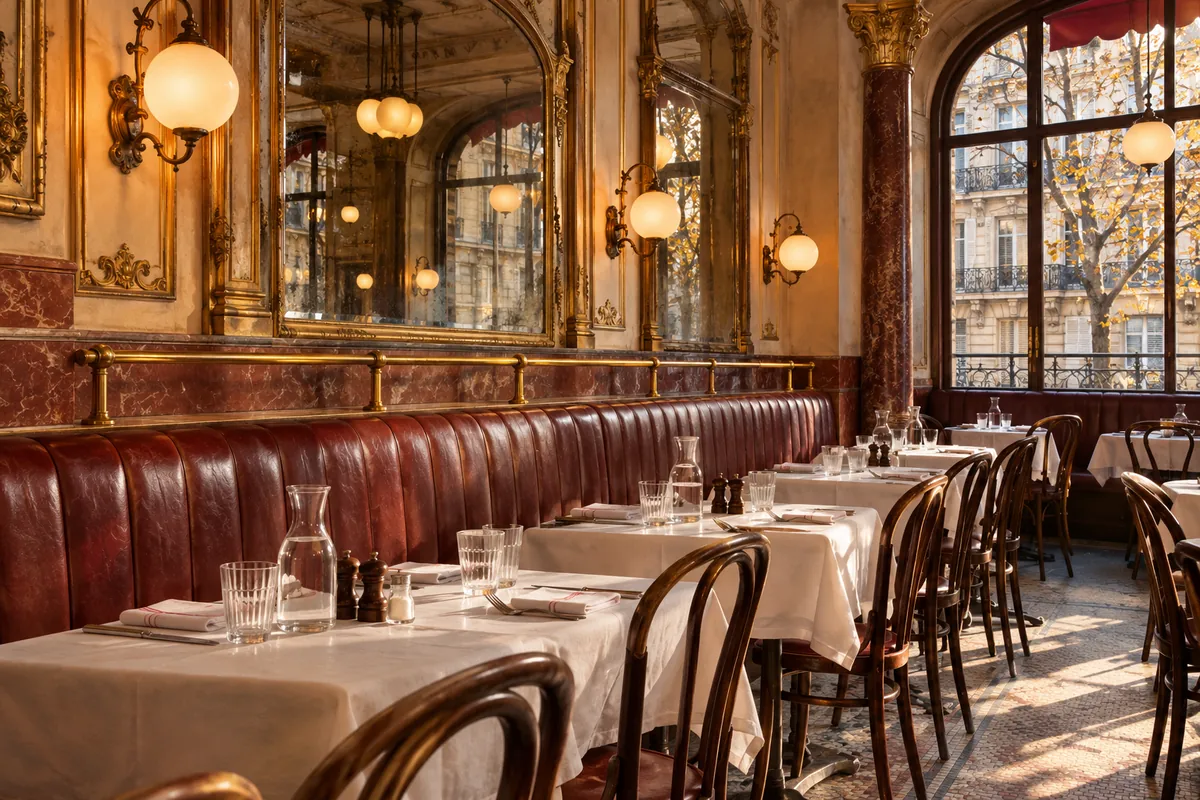
Those little wooden drawers in the Grands Boulevards dining room once held regulars’ napkins. They’re a clue to the kind of place Chartier opened in 1896. Despite its chandeliers, this was a restaurant people could come back to for an ordinary meal. You can still put together a lunch from a few simple dishes.
The house publishes a sample menu and changes the actual list according to what’s available. Use it to learn two or three French dish names in advance. At the table, you’ll have more time to look around the room and less reason to translate the entire page over someone’s shoulder.
How to order
Pick your main course first
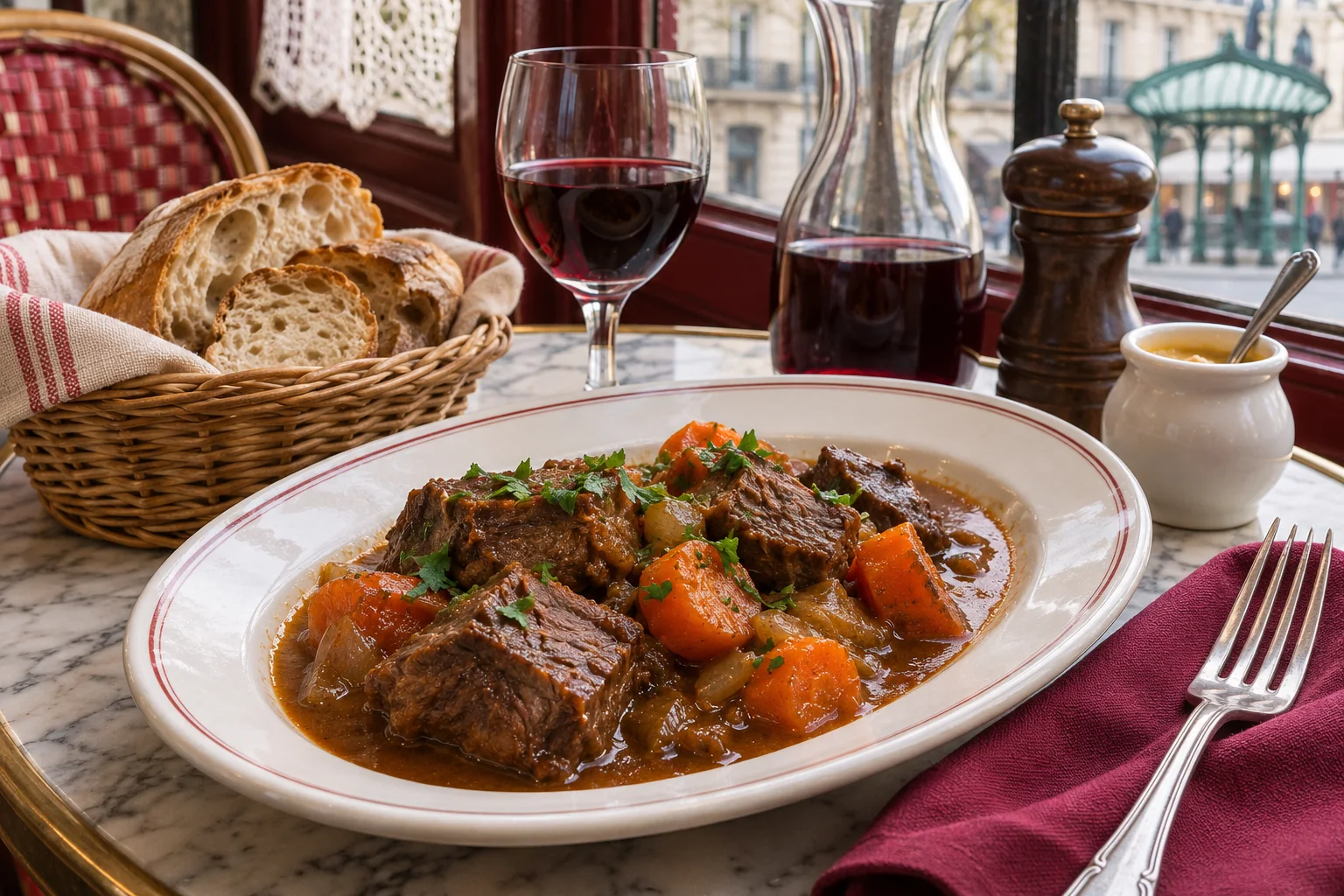
Look at the words that follow the dish. Duck confit comes with potatoes on the sample menu. Beef bourguignon comes with coquillettes, little elbow-shaped tubes of pasta that catch the sauce. If one of those sounds like lunch, you may already have the starch you want and can skip a separate order of fries.
Choose a starter to go with that main
Poireaux vinaigrette are dressed leeks. They make a sharp beginning to a rich dish of duck. Œuf mayonnaise is a hard-boiled egg with mayonnaise, an easy order when your main is still undecided. If two diners are curious about the snails, check the portion choices on the day’s menu before ordering a serving each.
Keep room for the last course you actually want
Read the dessert and cheese sections before you order the starter. A rum baba with cream is a substantial finish. A piece of cheese, such as a blue from Auvergne if it’s on that day, makes a savoury last course. You can build lunch around either and still have the pleasure of the old dining room.
Read the daily menu in courses
Choose the main dish before deciding whether to add a starter. For a table of two, ask which accompaniments come with each main. That small question helps you decide whether a separate side would add anything. If you are tempted by dessert, keep the menu until you have seen the size of the first course.
Fit the meal around a show
The restaurant offers continuous service and accepts walk-ins. If your evening has a fixed curtain time, an afternoon meal leaves more room for a wait. If the show starts soon, check the queue before committing to three courses. Chartier doesn’t offer reservations to secure a particular seating time.
Read the menu as a table, not just as individuals
A bouillon meal becomes easier to manage once everyone has looked at the same current menu. Before joining the line, decide whether you have come for a full meal or for a single main dish before another appointment. A table with time for starters and dessert can make a different choice from two diners who need to leave together in an hour. If one person is particularly keen on a starter, discuss that before ordering so the rest of the group knows how they want to pace lunch.
Start with the main you are most interested in and work outwards. What comes with it? Is the accompaniment part of the dish or a separate order? Would a bread-based starter and a rich dessert still appeal after that main? These are better questions than trying to identify the cheapest line in each part of a menu. A meal can suit your appetite and your budget even when every person at the table orders a different number of courses.
If a French term is unfamiliar, keep the question small and concrete. Point to the item and ask what the main ingredient is or how it is cooked. Someone trying to choose between two dishes may only need to know whether one comes with a sauce or whether a side can be shared. Trying to translate every dish on the board before committing to any of them can make the whole table feel hurried. Let each diner identify a first choice and one question that would actually change their decision.
Build a budget from the items you intend to order
Add the items you are likely to order before deciding whether the headline price of a main feels like a bargain. A drink, a separate side and a dessert each change the total. For a pair, put shared items in a separate column so you count them once. This simple exercise is particularly helpful when looking at an older photograph online. A photograph can introduce a dish without telling you what the bill will be on the day you visit. Use the restaurant's current menu for that decision.
Suppose one person wants a starter and a main and the other wants a main and dessert. There is no need to order two of everything just to make the courses line up. Ask about sharing only when both people actually want the same dish. A side chosen to accompany a main may be more useful than a second starter chosen solely to fill a gap while waiting. If someone wants to taste a dish without committing to it, discuss sharing before the plates arrive.
For a group keeping separate accounts, settle the plan before the meal rather than while everyone is trying to leave. One diner can keep a quick note of the shared choices without recording every mouthful. If your onward journey has a firm departure, allow time at the end of the meal to ask for the bill. The length of the line outside is only one part of the time needed for a seated lunch.
Match the branch to the afternoon
The name Chartier can bring up more than one location in a search. Use the Grands Boulevards branch page for directions and share that exact branch with your companions. Two people waiting at different locations can both be standing under a convincing sign. Check the address once more if a map automatically suggests a nearer result. When you arrive, agree on what you will do if the line is longer than the time you have available. Some afternoons the room and the meal are the point of the visit. On a tight schedule, giving up a place in line early can be the difference between eating somewhere else comfortably and missing lunch entirely.
Choosing a seat and a pace that fit your visit
There are two kinds of attention to give an old dining room. One is directed at the room itself, the mirrors, the arrangement of the tables and the way a server moves through the space. The other belongs to the meal and to the people at your table. If the room is part of the reason you came, give yourself time to look around when you have been seated. Trying to take it all in from the doorway while others are entering is a good way to miss both the room and the directions to your table.
For a visitor who needs particular seating, make the request as early as you can. Identify what would actually help, such as a seat near the entrance or space to approach the table comfortably. A general question about how busy the restaurant is cannot answer those specific needs. The Paris tourist office and the restaurant's own branch page give useful starting information, but the person seating diners can tell you what is possible in that room at that moment. Have a backup if a suitable table is unavailable.
Once at the table, read the room without letting other people's orders decide your own. A plate at a neighbouring table may be exactly what you wanted, but it may also have been ordered with a separate side or drawn from a changing list of dishes. Ask what it is and find it on today's menu. That turns a passing glimpse into an informed order. It also gives you a moment to check an ingredient before the meal is already underway.
Keeping track of a French dish you would order again
Take a short note after the first few bites if a dish particularly appeals. Write the exact menu name and the part you liked, such as the texture of the celery root, the balance of vinegar and oil, or the accompaniment to a slow-cooked main. “French food I liked” will be almost useless when you are choosing in another restaurant. A few precise words give you something concrete to ask about and enough vocabulary to recognise a related dish on a different menu.
If the dish did not suit your taste, make a note of the reason as well. Somebody who dislikes a sharp dressing might still love the same vegetable served warm. A diner who finds a portion too rich for a starter may enjoy sharing it with a companion on the next visit. These distinctions are especially helpful in a restaurant with several courses available. A poor decision about the order of dishes need not become a sweeping verdict about a whole style of cooking.
As the meal ends, return to the day's original purpose. If this was a quick lunch before an appointment, ask for the bill with enough time to check it and walk to the next stop. If you set aside the afternoon to enjoy the dining room, pause before choosing dessert and decide whether you want another course or simply a little more time at the table. Choosing your own pace gives a much clearer sense of the restaurant than copying the group beside you.
Getting there
The original dining room is at 7 rue du Faubourg Montmartre in the ninth arrondissement. The restaurant lists Grands Boulevards Métro station on lines 8 and 9.
Check before leaving
Use the branch’s visitor page for service hours and read the menu presented at the table for that day’s dishes and prices.
Visitor sources
Research checked .