
A late breakfast at Tsukiji Outer Market
Rolled omelette, a pantry stop and a place to sit after the morning buyers have finished.
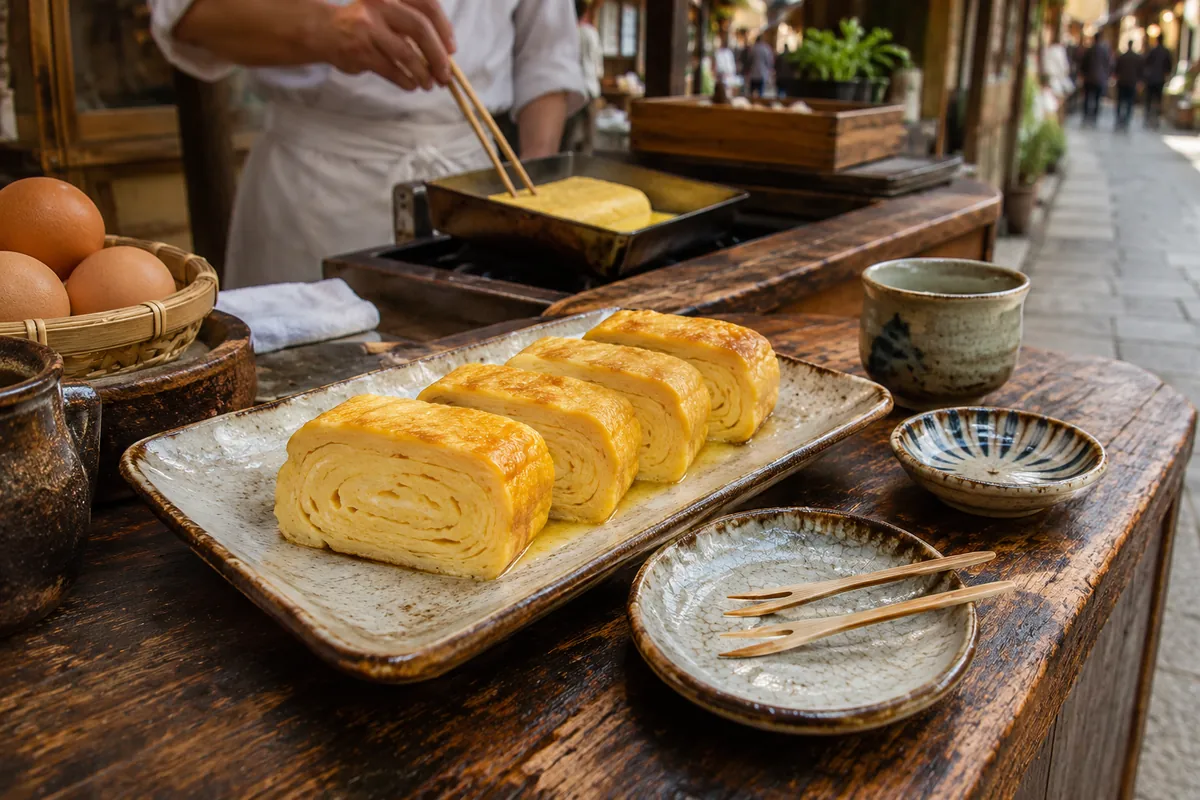
A sunrise start sounds appealing at a food market. At Tsukiji it puts you in the middle of someone else’s working day. Professional buyers have priority until 9am. Plan a later breakfast and you can give a shopkeeper your attention without standing between a cook and an order.
Make tamagoyaki, the layered Japanese omelette, your first stop. It’s a small enough order to leave room for a sit-down meal, and the market’s directory groups the egg specialists together so you can find one that trades on your day.
Plan your stops
Start with one piece of omelette
Look up Tsukiji Shoro or Tsukiji Yamacho in the tamagoyaki directory. Their trading calendars differ. Check which portion is sold for eating straight away and ask where you can stand to eat it. Finish there before moving on. This keeps your hands free and the narrow lane clear.
Shop for one ingredient you can use
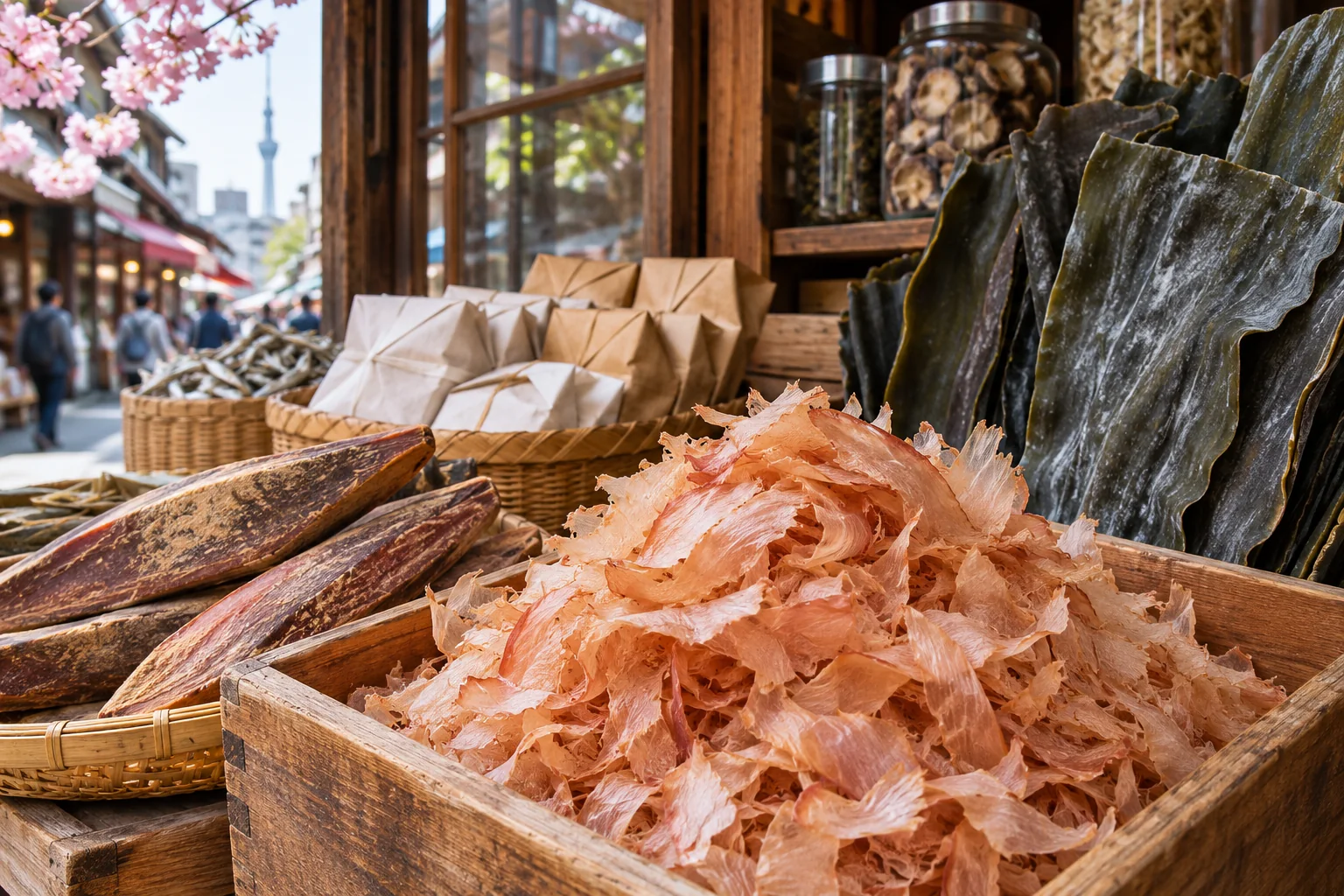
Dried bonito flakes and seaweed each have a section in the official directory. If you make stock at home, tell the seller how many bowls you usually make and ask which pack would suit that quantity. If you mainly want a souvenir, a small piece of tableware avoids the need to check a food product’s storage instructions.
Meet for lunch at Uogashi
The Odawarabashi building of Tsukiji Uogashi has a third-floor food court. It gives a group a practical meeting place after browsing separately. The market directs diners away from eating on the ground-floor sales area. Follow the signs upstairs and decide on the hot dish when you see what is serving.
One slice of tamagoyaki
Start with the smallest ready-to-eat portion the shop offers. Ask where you can finish your omelette without standing in the next shop’s entrance. If you also want to take some home, ask about wrapping and storage before buying a larger piece. A small breakfast order gives you room for a seated lunch later.
Shop first if you have a particular seller in mind
A shop can be open to professional buyers well before the recommended public shopping time and still close early in the afternoon. Look up that shop individually. If the day is mainly about breakfast, one omelette shop and one place to sit make a more relaxed itinerary.
Let the buying day set the pace
In Tsukiji, getting there as early as possible can put a visitor in the way of the very activity that makes the market interesting. A person collecting supplies for a kitchen needs to identify an order, move it through a narrow space and get on with the working day. A visitor deciding between two portions of omelette has a much more flexible timetable. The market asks visitors to give professional buyers priority until nine. Use the time before that to choose a shop and confirm its trading day, then come ready to place a small order.
On the first pass, stand where you can read the menu without creating a second queue in the lane. Check whether the shop is selling a ready-to-eat piece, a larger block to take away, or both. Those can look similar in a photograph but make quite different breakfasts. If the person serving has already wrapped your order, ask where to eat it before you step away. Finding somewhere appropriate with hot food in your hand is harder than asking while you are still at the counter.
Tamagoyaki lets you notice texture without committing to an entire restaurant meal. The cut face shows how the cooked egg has been rolled into layers. Start with a plain bite if that is how the shop presents it. If another shop sells its own version, wait until you have decided whether a second taste interests you more than the lunch you planned. Buying at every stop is an expensive way of learning that you were only hungry for breakfast.
Bring a kitchen question to the pantry shops
A packet of bonito flakes is much easier to choose if you know what you do at home. Are you trying to make a few bowls of stock, to finish a small dish with a topping, or to find something you can give to a cook? Tell the seller how you intend to use it and how often you cook. A packet that makes sense for a restaurant can be completely impractical for a traveller who makes soup once a month. Compare the size of the package as carefully as the price.
The same approach works with seaweed. A label that simply looks beautiful may not tell you enough about how to use what is inside. Ask for the name of the product and the intended preparation, and keep the original packaging with it. If you cannot read the instructions, photograph the label while there is still someone around who can point you to the relevant line. Avoid assuming that every kind of seaweed is a ready-to-eat snack. If buying food to take abroad, check the destination's rules for that particular product before paying.
If the answer involves more storage or planning than you want, a small piece of tableware can be a better purchase. Ask for protective wrapping and carry it where a heavier item cannot land on top of it. Before you take a picture of a display, ask the person running the shop. Then step aside to look at the photograph. Looking down at a screen while standing beside a working delivery route takes space away from everyone else.
Give the group one place to regroup
The third-floor food court in the Odawarabashi building makes a much clearer meeting point than “back by the egg stall.” Name the building and floor in the message, particularly if some people are shopping and others want a seat. Leave the sales area clear and follow the posted signs upstairs. For someone arriving with a bulky bag, the information centre and its locker information can be the most useful stop of the visit. Sort the luggage question first. It changes how comfortably the rest of the group can move through the morning.
If you intend to keep the shop card, write the product name on it straight away. A card with a telephone number is much easier to recognise later when you also know what you bought.
Shopping with someone who came to eat
Two people can have entirely different reasons for visiting Tsukiji. One wants an omelette and a bowl of rice before continuing across Tokyo. The other wants to spend an hour considering kitchen tools. Start by settling the meal you want together. If the cook in the group drifts off to look at pans while the other orders a hot breakfast, the person holding the food will have to choose between eating alone and letting it cool. Eat the omelette together, then part for a clearly defined shopping interval if that suits you both.
The person buying kitchenware can make the visit easier by measuring one object before leaving home. A shopper who knows the width of a drawer or the diameter of a favourite saucepan can judge a pan or strainer much more confidently than someone trying to remember how large their cooker looks. Keep the measurements in your phone alongside a photo of the equipment you use. If you are choosing a bowl, imagine it filled. A lovely deep bowl can feel surprisingly heavy in one hand at the table, quite apart from what it weighs in a suitcase.
For the diner, the equivalent preparation is a second food choice. If the omelette shop you want is taking a day off, do you want the same food at another shop, or a different breakfast? The official directory separates egg shops from seafood eateries and other categories. Bookmarking two plausible places keeps that decision small when you are standing in the lane. It also means you can tell your companion where you will be if their conversation with a shopkeeper lasts longer than expected.
What belongs in the bag on the way out
Look at the day's shopping as a group before leaving the area. A rigid bowl, a packet of seaweed and a soft food purchase need three different places in a bag. Wrap the bowl against an accidental knock. Keep the packet flat enough to remain legible and leave the food that you will eat soon within easy reach. A neat parcel at the counter is only useful if it survives the short walk to your next stop.
If you are exchanging gifts afterwards, put a note beside the item as soon as you buy it. Someone receiving bonito flakes may want to know why you selected this packet and what dish you imagined them making. A recipient who loves tableware might appreciate the shop name and any care instructions much more than a generic description of the market. Get that information while you still have the vendor and the packaging in front of you.
Before crossing the street to leave, agree on the next destination in words as well as on a map. A pin dropped in a dense market can point to the wrong side of a building, and the people following it may each take a different turn. A named entrance, the information centre or the food court you both used earlier makes a better reference. That final minute of coordination costs very little compared with trying to find one another again while carrying a fragile purchase.
Choose one useful frame
For a meal you bought, try a simple angle that shows the food and its scale without including nearby diners. If the dish has a filling, take the picture after it has been opened for eating. If the ingredient is the point, let that ingredient remain visible rather than filling the frame with unrelated signs and crowds. One clear picture helps the memory more than a dozen near-identical ones.
For a product you may want to find again, ask the vendor how to write the name and record the stall location. A note can supply the part of the story that the camera misses. A picture of a small packet of dried stock ingredients may show its colour beautifully while failing to capture which packet the trader recommended for a small household. Write that advice down in your own words.
Protect someone else's lunch
Consider what is visible beyond the plate. Another diner's face, a child, a worker's name badge, a payment screen or a receipt might be readable in a picture you intend to share. Choose a tighter view while taking it or remove those details before posting. When a worker has agreed to a quick picture, avoid implying that they endorsed a recommendation or told you something you did not actually discuss.
If the stall is busy, skip the video. Recording continuously can make other customers feel watched and can keep a phone aimed at a worker for much longer than the short picture they thought they had agreed to. Sound also changes what is captured. A neighbouring conversation or private order may become part of a recording even though the plate of food is the only visible subject.
Keep the food worth photographing
A first bite can be as important as a first image. A crisp outer edge, a warm filling or a soft egg can change while companions wait for several people to finish photographing it. Ask whether everyone is happy to pause and agree on a short moment. If diners are hungry, eat. A photograph taken halfway through a meal can still explain the texture of the food.
If you want a closer look at a technique, ask a small question after the customer ahead has received their food. The cook may be able to explain where to stand or when a quieter time would be. They may also have no time for conversation at all. Buying lunch and leaving the counter clear is already a complete and respectful market visit.
Write the caption on the same day
Save the shop name, market, date and anything the vendor explicitly told you about the dish. Distinguish what you saw from what you inferred. A stall selling something on one morning is not necessarily its original inventor, and a line of customers does not establish every person's reason for joining it. A precise caption can be as short as the food name and the place where you bought it.
If you return and the shop has moved or the menu has changed, leave the original picture attached to its actual date. Add a current operator link if you share practical advice with another traveller. In this way a market image can remain a truthful record of a good lunch while the visitor information stays useful to someone planning a completely different day.
When you share a picture with a companion who was there, ask whether it includes anyone they would prefer to keep out of view. A meal shared privately can remain a good memory without every frame becoming public. Sometimes the most useful photograph to keep is the humble shop sign that lets both of you find the same place when you return.
Keep the original file with your other travel notes and check the spelling against the official market directory. A carefully spelled shop name gives the person reading your caption a much better chance of finding the vendor whose food caught your eye.
Getting there
Plat Tsukiji, the market information centre, offers area maps, English-language assistance and coin lockers. It’s a practical first stop if you arrive carrying luggage.
Check before leaving
Check your chosen shop’s own day off, especially around Wednesdays, Sundays and holidays.
Visitor sources
Research checked .