Turn a sample menu into a dinner plan
How to use an online menu to plan courses while leaving room for the dishes actually on the board.
Use the online menu for vocabulary
A sample menu is a very good place to learn the structure of a meal. Look for where the starters end, whether vegetables appear alongside mains or in a separate section, and which dishes you would need someone to explain. A photograph of three unfamiliar words is more useful at dinner than screenshots of every page.
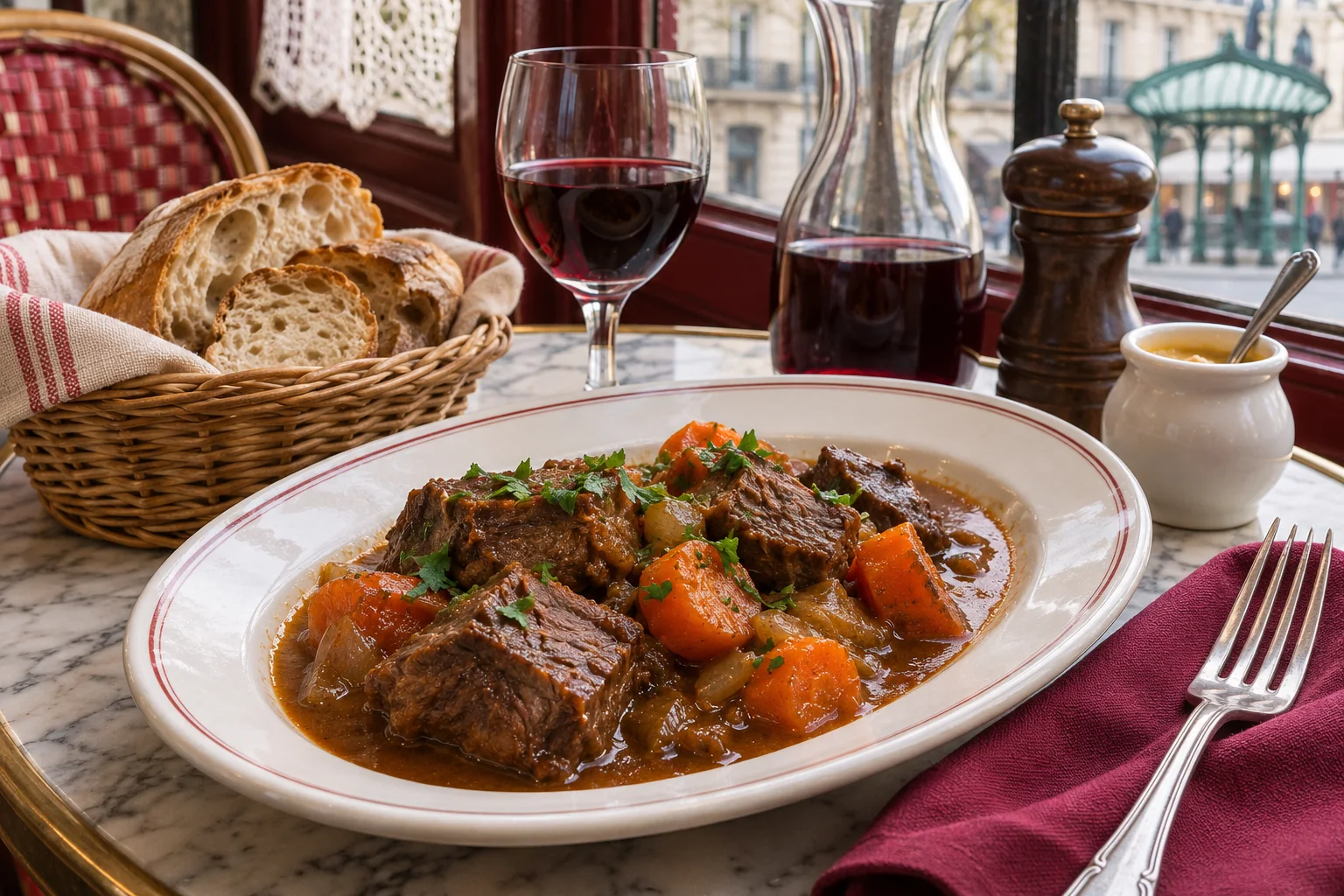
Chartier publishes an English menu that gives visitors a way into the language of a Paris bouillon. Choose one dish that sounds familiar and one that you are curious about. Avoid building the whole evening around a particular preparation until you have seen what the dining room offers that day.
Build two possible combinations
For a light meal, choose a main and leave the decision about dessert until later. For an evening when the food is the main event, pick an opening dish whose texture differs from the main course. A crisp or sharp starter can give a quite different rhythm to dinner than two successive rich, soft dishes.
If two people want to try three courses between them, discuss the arrangement before ordering. Ask whether a starter can be shared and whether any course comes as part of a set menu. A list of individual prices and a fixed combination involve different decisions. The person serving can explain the choices on the day.
Check the details that change your order
At the table, compare the printed or posted menu with the notes you made. Ask about the accompaniment to the main, how the dish is cooked and whether a portion is intended for one person. Those questions usually help more than asking which dish is “best”, particularly if one diner likes a long meal and another wants something simple.
Once the mains arrive, decide whether to save room for dessert. You may have found the starter more substantial than you expected. Keep the current menu nearby if the staff can spare it. The best use of a sample menu is to make a real conversation easier when the food and its prices are in front of you.
Decide which question earns a place at the table
A diner who likes fish but dislikes picking out bones has a specific question to ask. So does a diner trying to choose between a hot main and a cold first course. If you ask only for a recommendation, the answer may be a staff favourite that does little to settle your own choice. “Is this served whole?” or “Does it come with potatoes?” moves the conversation further with fewer words.
If you are using another language, write the name of the dish exactly as it appears on the sample. Point to the current menu when speaking so there is no doubt which line you mean. Translations of a dish name can be quite broad, especially if a short English label stands in for a preparation the French name conveys more precisely. A quick exchange with the server can resolve more than another ten minutes on the phone.
Do a two-person bill on paper
Use a fictional menu to practise. Two starters at six units each, two mains at seventeen, and one dessert at seven make a food total of fifty-three units. Two mains and two desserts instead would make forty-eight. These are invented figures, but the difference illustrates an everyday choice. You can use your budget for more variety at the beginning, or you can save it until you know how hungry everyone feels at the end.
Now add the drinks you actually expect to order. Check whether your comparison includes them on both sides. A set option may look close in price to a combination of individual dishes but include different quantities or choices. At the restaurant, use the prices printed that day. For a group paying separately, agree early on how shared items will be divided. One guest's dessert for the table should not become an unexpected addition to someone else's bill.
Leave room for timing
If you have a performance to reach afterwards, tell the dining room before ordering. The staff can say whether a course is practical within your time. A dish that cooks slowly may be a splendid idea on an open evening and a poor fit for a fixed departure. Ask about timing when you choose, while changing the order is simple.
If everyone has time, a shared starter can give the table a chance to settle into the meal. People who would like different numbers of courses should mention that when ordering. It helps the dining room understand which dishes you want together and can save one person watching the others eat their mains while waiting for an order they assumed had been timed to match.
The day the favourite disappears
Suppose the menu you saved showed a particular braise and the board today offers a different one. Rather than asking for an out-of-date dish, think about why it appealed. Was it the long-cooked texture, the sauce, the accompaniment or a childhood memory? Mention the part that matters and ask which current dish comes closest. You may make a much better choice than by looking for an exact English word on the board.
An absence can also be your cue to try a simpler combination. Choose the starter you know you want and a main the staff can describe clearly. Keep a photograph of the current menu if photography is welcome and you would like to remember the meal afterwards. Label it with the branch and date. A saved menu makes a pleasant record of dinner and a useful vocabulary lesson without becoming a promise about the next visit.
Three diners at one bouillon table
Imagine three friends arrive together. One has already had a late lunch and wants only a starter. Another wants a main course and dessert. The third is hungry enough for all three courses. If everyone simply names dishes without mentioning the order in which they hope to eat them, the kitchen has to infer whether a starter is meant to arrive before, or alongside, somebody else's main. Decide that detail as a group before giving the order.
One arrangement is for the light eater to have their starter alongside the other diners' mains, so all three are eating for the same central part of the evening. Another is for two people to share a first course at the beginning while the light eater waits for a dish they prefer. There is no single correct arrangement. What matters to a busy dining room is hearing one clear request and being given the chance to say what timing the kitchen can accommodate.
Check the drink orders separately. A person who wants only a small course may still want a drink or coffee, and a person ordering several dishes may want simply water. If the group is splitting costs according to what each person orders, decide how to divide any shared bottle or plate before the bill arrives. Even old friends can interpret 'let's share' in different ways when one person is having a very different meal from the others.
Get more from a translation than a list of nouns
Look at the words that tell you how a dish will arrive. A phrase describing a preparation, a sauce or an accompaniment can change the meal more than the main ingredient. If you are comparing two beef dishes, for instance, a question about whether each is served in a sauce or with one on the side may settle the choice faster than a literal translation of the names alone.
Foods that appear under the first-course heading may sound substantial to someone used to a different style of menu. Ask about the portion the restaurant actually serves. A companion who plans to share needs to know whether the plate can be divided comfortably and whether it comes with bread. The resulting conversation can be very short if you point to the line you are discussing and explain what you hope to do with it.
Finally, keep the menu's own spelling next to your translation when you save a note. A literal English description may resemble several different dishes on a future menu. Having the original word lets a server recognise the preparation and explain whether the day's offering is similar. That small habit also makes it easier to ask for a recipe or look up an ingredient once you are home, without guessing which unfamiliar term you heard across a noisy dining room.
If you are keeping the note for a return visit with children or a larger group, add which part of the order would have been simplest to change. An accompaniment offered separately or a dish served in an easily shared portion can be useful to remember even if the precise menu changes before your next evening in Paris.
Remember the choice that worked
After the meal, a three-line note is usually enough. Write down the branch, the name of the dish in the language of the menu and one practical detail about the portion or accompaniment. A note that says “the main came with enough potatoes for me” will help you plan a return better than a picture of the bill by itself.
If you later pass the suggestion on to a friend, include the date and point them to the restaurant's own menu. They can take the approach you enjoyed and still make their own order on the day they visit. That is especially important for a visitor who has travelled to Paris with time for only one bouillon meal.