A menu and a room to read at Chartier
Order from a changing bouillon menu and find the small details that tell the Grands Boulevards dining room’s story.
Read the middle first
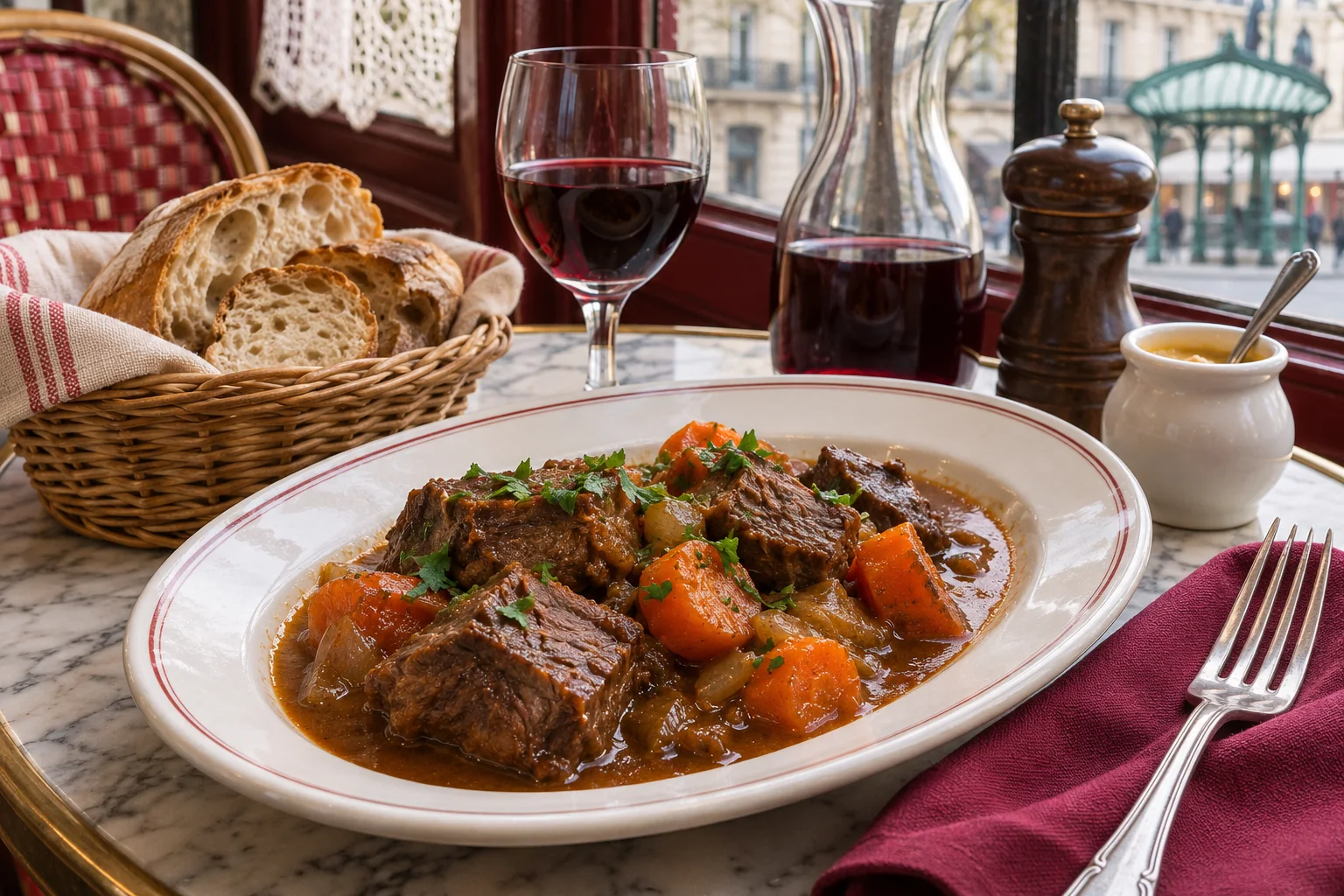
A long French menu becomes less intimidating when you read it out of order. Begin with the main dishes and find one you would happily eat even if you ordered nothing else. At Chartier, the English sample menu includes descriptions of the main ingredient and, on many lines, the accompaniment. That second detail helps you decide whether the meal needs a separate vegetable or a lighter first course.
The restaurant describes the online menu as indicative and says the selection can change with produce availability. Use it to practise reading the categories before a visit. In the dining room, let the current menu decide what you can actually order. Knowing that you would like fish with vegetables is more useful than committing in advance to one exact fish that may have been replaced on the day.
Understand the French starter
The word entrée on a French menu introduces the first course. A traveller used to seeing that word attached to the main dish at home may otherwise order an unexpectedly small lunch. Chartier's examples range from dressed vegetables and soup to terrine and snails. Think about which job you want this course to do. A few mouthfuls of something tart feel very different before a rich main from a substantial dish of fish and potatoes.
For an exercise, pair a heavier main with a simple vegetable starter, then reverse the idea. A diner who has chosen duck might like leeks with dressing at the beginning. A diner planning a lighter fish dish might prefer a more substantial starter. The choices make sense together when you can describe the whole meal. No individual heading on the menu obliges you to order from it.
Look for the side dish inside the main description
Read every word after the name of the main ingredient. A chicken dish may already include fries, and a braised beef dish may come with pasta. Separate sides are listed in their own part of the menu. Ordering a portion of potatoes on autopilot can leave you with two starches and none of the vegetables you actually wanted.
For two diners, ask whether an extra vegetable can be brought for the table and how large the serving is. If both mains already include accompaniments, one side may be plenty. If one person wants a vegetable as the main part of their lunch, ask specifically about the ingredients and the day's available choices. The existence of a vegetable section gives you options but does not tell you how every item is cooked.
Choose cheese with the rest of the meal in mind
A French meal can include cheese towards its end, though the decision belongs to the diner. Chartier's sample lists individual cheeses and a fresh cheese option. If an unfamiliar cheese catches your eye, ask whether the flavour is mild or powerful and whether the texture is firm or soft. Those two questions make the choice easier than trying to remember an entire map of French cheese regions.
If you are sharing a table with someone who wants dessert, you can still choose cheese for your own final course. Ask how the orders will arrive if you would like to finish together. A diner with a large main course on the way can wait until later before making the decision. Half an hour after looking at the menu for the first time, an extra course can feel either much more attractive or quite unnecessary.
Decode a dessert by its main texture
Look for the word that tells you what you will eat with a spoon. A mousse, a rice pudding and a baked custard provide three different endings even before the flavour is considered. A fruit dessert may be a gentler choice after a rich meal, while a chocolate dessert might be what a diner has been saving room for since the starter.
If you choose a dessert with an unfamiliar name, ask about any ingredient that would change your decision. The sample menu mentions rum in one dessert and wine in another. Read the full description before ordering for a child or a person who avoids alcohol. Asking at the table is a straightforward way to account for a recipe change since the online menu was published.
Build a complete example before you go
Try a practice order using categories alone. The first diner could choose dressed vegetables, a fish main with its listed side, and coffee or dessert depending on appetite. The second might make a main of the day's meat dish, add a vegetable if needed and finish with cheese. This arrangement lets both people take part in the same meal while spending their attention on different courses.
Now attach a spending limit to each meal. Add the prices printed for the actual dishes you choose and allow for the drink you intend to order. A restaurant's advertised starting price describes the least expensive item in a category. A plan based on the sum of the menu's cheapest numbers will only match the bill if those are the items you actually select. Keep the current table menu as the reference.
Make one change at a time
When a main is unavailable, look for another dish with a similar role in the meal. A different fish accompanied by rice may work better with your starter than switching immediately to a second rich meat dish. If the substitution changes the side as well, revisit the extra vegetable order. The whole meal can usually be rescued with two short questions rather than another full reading of every line.
Keep the name of the dish you enjoyed and one word describing the side or preparation. On another Paris menu you may recognise the same cooking term alongside a different ingredient. Over a few meals that knowledge adds up. Even if you never visit the same bouillon again, you can sit down somewhere new and start with the part of the menu you already understand.
Keep a useful translation
Instead of writing down every unfamiliar word, choose one term for a cooking method and another for an accompaniment you particularly enjoyed. Add the dish alongside them. The next time those words appear, you will have an actual taste to connect with the language. That is how reading a menu becomes progressively easier with each new meal.
Look up between courses
When the first plate has gone back and the next one is on its way, put the menu aside. The room offers a second kind of reading. Start with the objects closest to your seat and let the rest wait until there is a convenient moment to look around.
Begin with the room as a whole
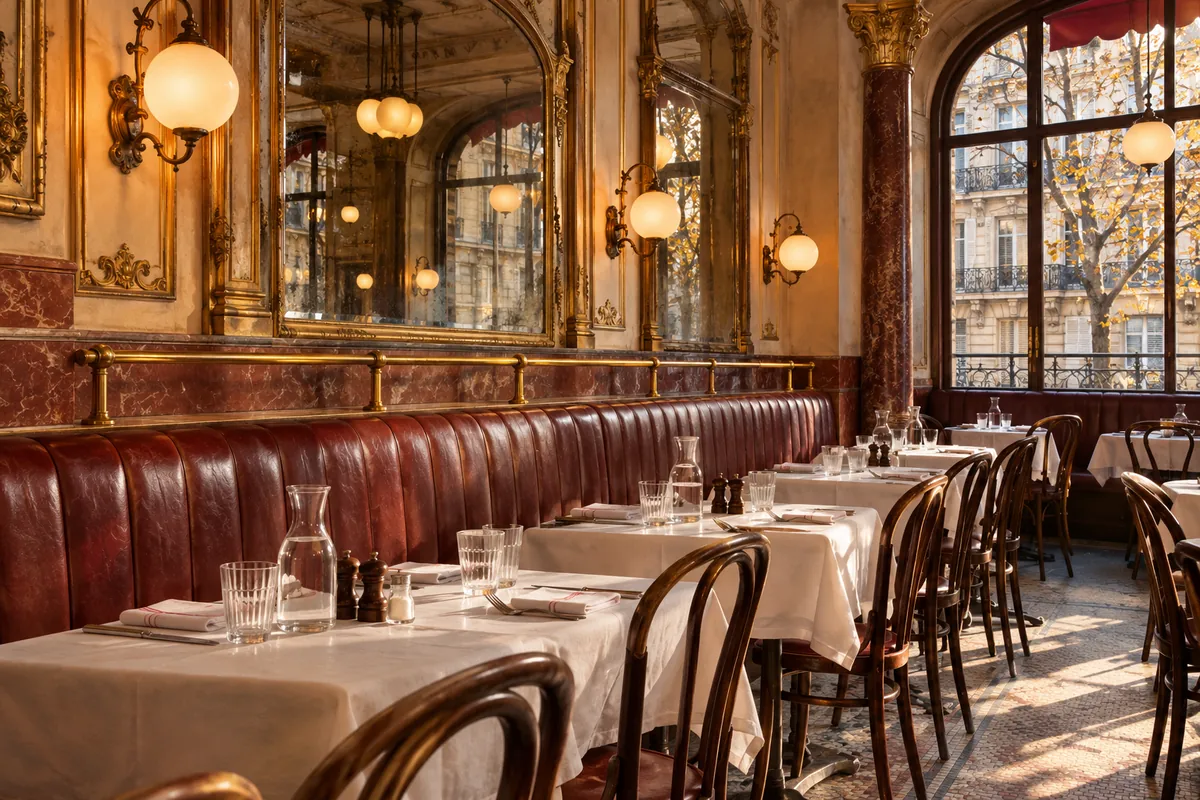
Take in the proportions once you have reached your place. Chartier describes a large space with mirrors, sculpted wood, chandeliers and copper details. A mirror changes how much room the eye thinks it sees. Look for a visible frame or reflected lamp to distinguish the actual line of the dining room from its reflection. That tiny observation can make an enormous interior easier to read from a seat near the edge.
Then pay attention to what the objects do. A light fitting illuminates a table and also marks the rhythm of a long room. Woodwork gives a wall definition at the level where diners sit. Surfaces that catch light carry the effect across several tables. You can enjoy these features during the meal without walking around between servers carrying plates or leaning into a neighbouring table's space.
The little drawers tell a particular story
One of the restaurant's most evocative details is its bank of small drawers. According to Chartier, regular guests once kept their napkins there. A stored napkin suggests somebody expected to return often enough to need a familiar place for it. It turns a piece of furniture into evidence of a working dining routine. Look for it when you have a clear view or ask a server where it is at a convenient moment.
Consider what such a routine says about the meal. A visitor may arrive for one famous room, while the regular associated with a drawer returned for ordinary lunches. That is a useful lens for reading the present menu. Look for a straightforward dish you would choose on a working day. It gives the building a different meaning from treating every meal there as a special occasion with as many courses as possible.
Find the painting when it is convenient
Chartier tells the story of a painting by Germont given to the restaurant in 1929 to settle the artist's account. The story is the restaurant's own account, and its branch page invites diners to look for the painting. If you cannot identify it from your seat, ask about it while a staff member is free. Several pictures and reflections in a busy room can make a confident guess surprisingly unreliable.
If you are travelling with someone who enjoys art, let that one object give the visit a focus. The conversation can move from the practical value of a restaurant bill to the long life of an object that remains part of the dining room. A quick look before leaving may be more pleasant than trying to photograph the whole room while other diners are eating.
Put the dates in the right order
Three dates help explain why the room attracts attention. The establishment opened in 1896. The restaurant places the painting exchange in 1929. It says its decor was entered in France's cultural heritage register in 1989. These milestones refer to different things. The opening date belongs to the restaurant, the second to an individual artwork and the last to recognition of the interior.
If you are keeping a travel journal, write the object next to the date. A note with three isolated years rarely means anything when read months later. A line about a customer's napkin drawer, an artist's payment and protected decor creates a useful record of how a restaurant can acquire several layers of history while still serving people who have simply come in for lunch.
Visitor sources
- Chartier’s Grands Boulevards dining room
- Chartier’s English sample menu
- Paris tourism office restaurant listing