A taco lunch at Chelsea Market
One taco counter, one bakery and an Italian grocery for the trip home, starting on Ninth Avenue.
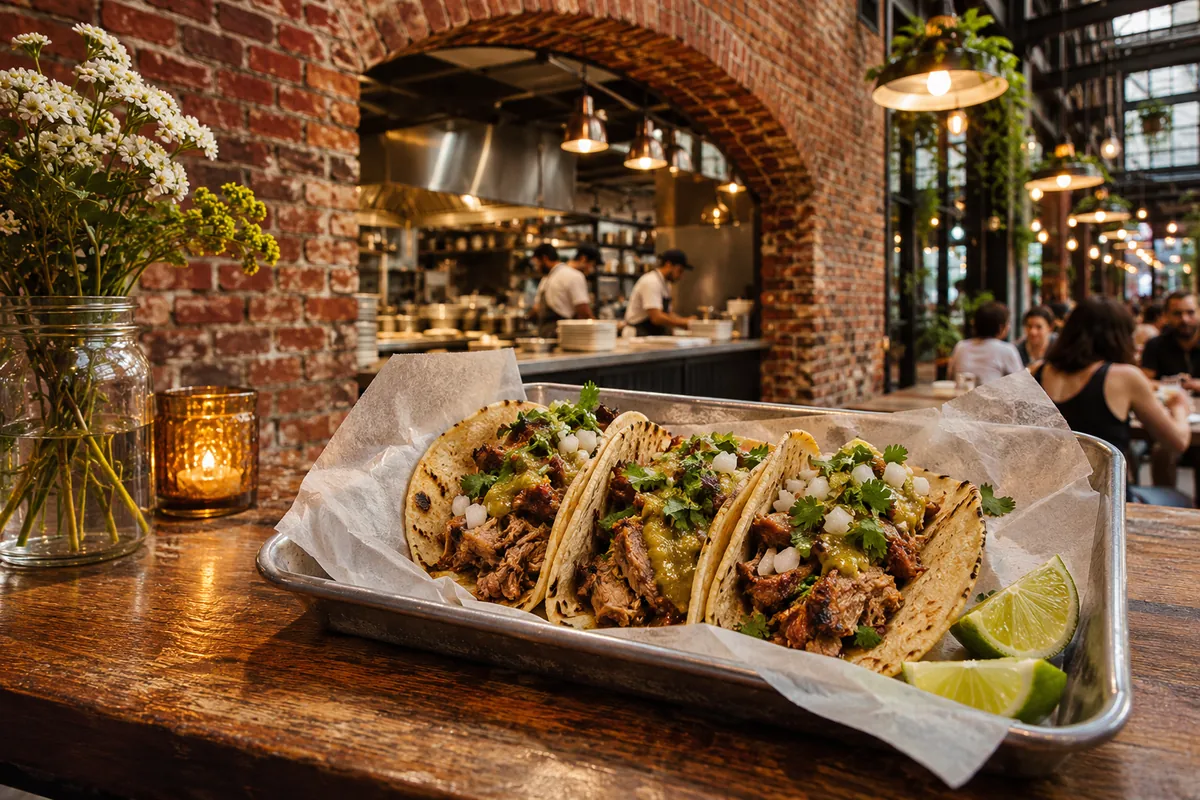
Chelsea Market can swallow a whole lunch break while everyone reads the menus. For a short visit, give the group three landmarks. Los Tacos No. 1 is the hot lunch, Amy’s Bread is the bakery and Buon’Italia is the stop for groceries. Decide which of those you came for before walking through the Ninth Avenue door.
The useful dividing line is between food to eat as soon as it’s cooked and food you can carry. Buy a taco when you’re ready to eat it. Bread or a packet of pasta can wait until you’re heading out.
Plan your stops
Decide on the tortilla before the counter
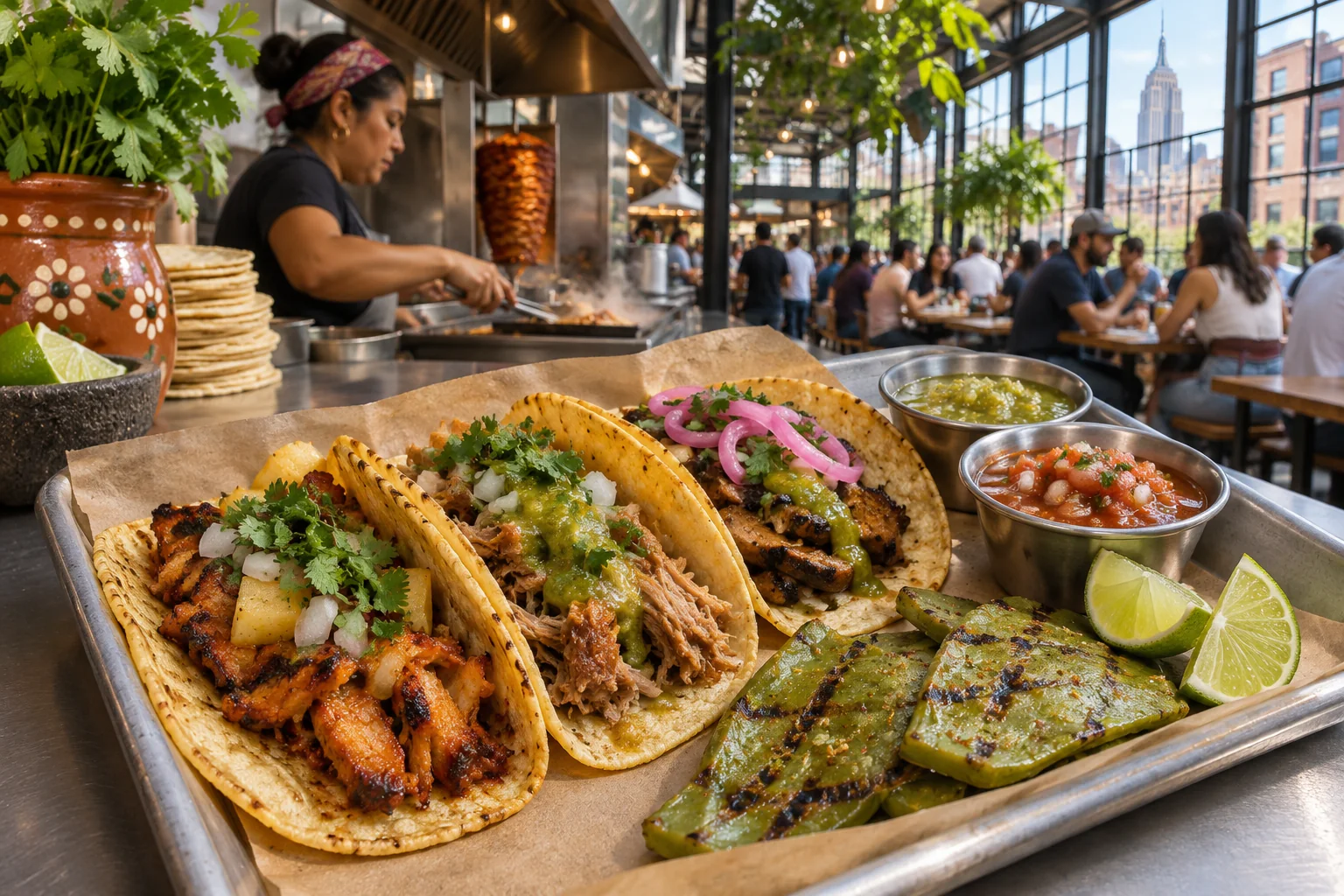
Los Tacos No. 1 offers corn or flour tortillas. Compare grilled steak, marinated pork and grilled cactus, then pick a single taco to start if you’re also making a bakery stop. The restaurant’s ingredient note says the flour tortillas and beans contain pork lard. Ask the team about your whole order if that affects what you eat.
Match the bakery stop to your train
The market directory places Amy’s Bread on the concourse via the Ninth Avenue entrance. Buy something to eat later if you have a train to catch. If you’re meeting someone arriving separately, agree to meet at the bakery by name so neither person has to search the full hall.
Find groceries by the 15th Street entrance
Buon’Italia is listed in Chelsea Local with a 15th Street entrance. Choose something your kitchen can use, such as a dry pasta shape for a particular sauce. If you want an ingredient that needs refrigeration, make this your final stop and leave with it.
One taco before the bakery
Choose a tortilla and filling before you reach the front. If the bakery is part of lunch, order one taco first and eat it while it is hot. A second taco is easy to add if the queue is short. A pastry meant for the train travels better in a separate bag from the warm food.
Early arrival or taco lunch?
The building and its food businesses keep different hours. An early arrival suits a bakery stop. For tacos, use the restaurant’s Chelsea location page before you choose a train. Checking those two times separately can save a wait outside a closed counter in an otherwise open market.
Make the first order small enough for a second stop
Walk into Chelsea Market with one decision already made. Is lunch a taco with a bakery stop for later, or a wider tasting exercise with several people sharing? A single taco makes a good first order for either plan. A large order made before anyone has seen the bakery can turn every later stop into something you buy out of obligation. At Los Tacos No. 1, choosing corn or flour is a separate decision from choosing a filling. Sort those two questions separately and it becomes much easier to hear the next question at the counter.
For two friends who want to compare, change one element at a time. Order the same tortilla with different fillings if you are curious about the cactus and the grilled meat. Choose the same filling on different tortillas if the tortilla is what interests you. This is a little tasting exercise you can do with ordinary lunch orders. Agree whether you are sharing before adding salsas so one person's preference for heat does not settle the question for both people.
Ingredient questions also work better before the order is assembled. The restaurant explicitly mentions pork lard in its flour tortillas and beans. Someone avoiding pork needs to consider what comes under and beside the filling as well as the filling itself. Explain the particular ingredient you avoid and ask about the current preparation. A picture of a cactus taco or a dish name on a menu will not answer a question about cooking fat. If the staff cannot confirm what you need to know, leave room to choose another meal.
A useful pair of meeting points
A covered market has real advantages on a wet afternoon, but it also makes it easy for friends to enter through different doors and assume they are standing in the same place. Send the full business name for the first stop and the street you are approaching from. If one person is early, they can check the queue without ordering food that will cool while the other person finds the counter. Decide when to switch to a backup plan, particularly if the group is fitting lunch between trains.
Use the bakery as the second meeting point if people want to browse separately. Give the person carrying the food somewhere specific to wait. It is easier to find Amy's Bread by looking up the business in the food directory than by following a friend's description of the last three shops they passed. If a pastry is for later, ask for packaging suited to carrying it. A bag with something warm and savoury underneath can be a poor place for something delicate that you planned to eat on the train.
At Buon'Italia, start with what your kitchen is missing. If you have a sauce in mind, ask which dry pasta shape goes with it and look at the size of the packet. A large purchase only makes sense when you can carry it home and will use it. If you choose something chilled, make that the last counter on your route and consider how quickly you will reach a refrigerator. The smaller the bag, the more worthwhile this sequencing becomes.
Check the right business before travelling
Opening times for the building answer one question. A particular restaurant's service hours answer another. Before an early trip, find the business in the directory and follow its own location information. If a visitor is collecting a pickup order, check the pickup entrance separately as well. A phone map may take you to the main building even when the instructions on the order point to another street. Write the door and the business name together so the person collecting lunch has both pieces of information in one message.
Putting together lunch for people on different schedules
Suppose three friends have agreed to meet at Chelsea Market. One is coming from the subway, one is collecting an order and the third has to leave for a train. It is tempting to ask everyone to meet “inside” and sort it out on arrival. A better message would name a business, a nearby entrance and a latest time for ordering. The person collecting the order can then read the pickup directions before walking to the same entrance as the other two. The person catching the train can say whether they have time to sit or only time to eat.
A common departure time is unnecessary. Choose one food you want together, have that at the beginning and then split off as needed. If tacos are the shared stop, buy them when the group is ready to eat. The friend catching the train can visit the bakery as a final stop. The shoppers can turn towards the grocery counter after saying goodbye. This uses the market's variety to give each person a workable afternoon and avoids making somebody trail along with a paper bag of increasingly soft food.
When choosing the meeting place, think about sound as well as distance. Giving directions on a phone call in the middle of a busy food hall is much harder than reading a short message. A business name, a street and the time you will be there are usually sufficient. Include a fallback if a queue blocks the spot where you meant to stand. A person who has difficulty standing for long periods should be able to choose the waiting place before the others disappear to different counters.
A grocery purchase with a meal in mind
If a packet of pasta catches your eye at Buon'Italia, ask yourself what you will put on it and who will be eating it. A shape that holds a thick ragù may be a strange partner for the light dressing you already have at home. If you want the pasta specifically for its shape, decide on the sauce at the same counter while someone can help. Then inspect the packet size. A large bag might serve several suppers but still be an awkward thing to carry through the city for the rest of the day.
Write one sentence about the meal you want to make. That sounds fussy until you consider the alternative of discovering three unrelated ingredients in your bag that evening. “Pasta tonight, with the tomato sauce already in the fridge and a little cheese” tells you what to buy and what to leave behind. If there is no kitchen where you are staying, choose a product for a future dinner at home and check that it suits the rest of your journey.
At the exit, put the item you want to eat next on top. Keep a delicate pastry separate from an aromatic taco wrapper and store any receipt you need somewhere dry. The market's different entrances can save time, but only if you check your destination before walking out. A few seconds looking at the street name on a sign can spare the friend carrying all the shopping an unnecessary lap around the block.
Start at the seat, not the display case
Picture the place where you expect to eat. Will you have a table, a napkin, a free hand and somewhere to put a bag? A beautiful iced pastry that works perfectly on a café plate can be awkward on a short train ride with luggage on your knees. A small roll or a firm slice may make a better travelling lunch, depending on the journey you actually have.
Chelsea Market's food directory provides a starting point for finding bakeries and other food businesses. Think about the route from the business to your next train before making a purchase. A closed packet for later and a hot meal to eat inside the market can be part of the same stop. They just need to be ordered and packed in the right sequence.
Distinguish food for now from food for later
If you want a taco and bread for the journey, eat the hot dish first. Buy the bread on your way out so you are not holding a bakery bag while standing at a busy counter with a warm plate. The principle applies to any combination of food that must be eaten promptly and food chosen to travel.
Look closely at what the travelling item requires. A whole loaf may be useful for dinner at home but do little for lunch on a train without a knife or filling. A small ready-to-eat piece can solve the immediate meal while leaving the loaf intact for its actual purpose. Ask the bakery whether it offers the size or wrapping you need rather than assuming the most photogenic item will fit every part of the day.
Ask for the wrapper that suits the purchase
Tell the seller when you expect to eat the food and how you are carrying it. They may suggest a different bag, a box or a choice that keeps its shape better. If the item contains a filling that needs particular storage or prompt eating, follow the bakery's advice. For a long journey without a suitable way to keep it, choose an item the seller considers appropriate or eat it at the market.
Separate a fragile pastry from anything heavy enough to crush it. A drink bottle loose in a tote can undo the protection of a paper bag during the first flight of stairs. If you have a small box, keep it level and make sure you can hold it while scanning a ticket. A purchase that requires two hands all the way to the station is a poor match for someone pulling a suitcase.
Pack two people’s food as two meals
If the travellers will sit in different seats or leave the train at different stations, ask for the orders to be wrapped separately. There is little pleasure in trying to divide a pastry in a narrow aisle while a train is moving. Label similar packages if they contain different fillings, particularly if one diner has told the bakery about an ingredient requirement.
A sharing plan can still work well. Buy something already portioned, take enough napkins for both diners and decide who carries the packet. If the choice is between a single large pastry and two smaller ones, compare the convenience as well as the cost. A larger pastry may be excellent value at a picnic table but offer rather less value once half the filling has landed on somebody's coat.
Getting there
The main address is 75 Ninth Avenue between West 15th and 16th Streets. From the 14th Street/Eighth Avenue subway complex, the market directs visitors west toward Ninth Avenue.
Check before leaving
Check the individual business’s holiday hours and the restaurant’s current ingredient notes before ordering.
Visitor sources
Research checked .