Lunch under the arches at Borough Market
A cheese toastie, a proper market shop and a way through Borough’s three very different sections.
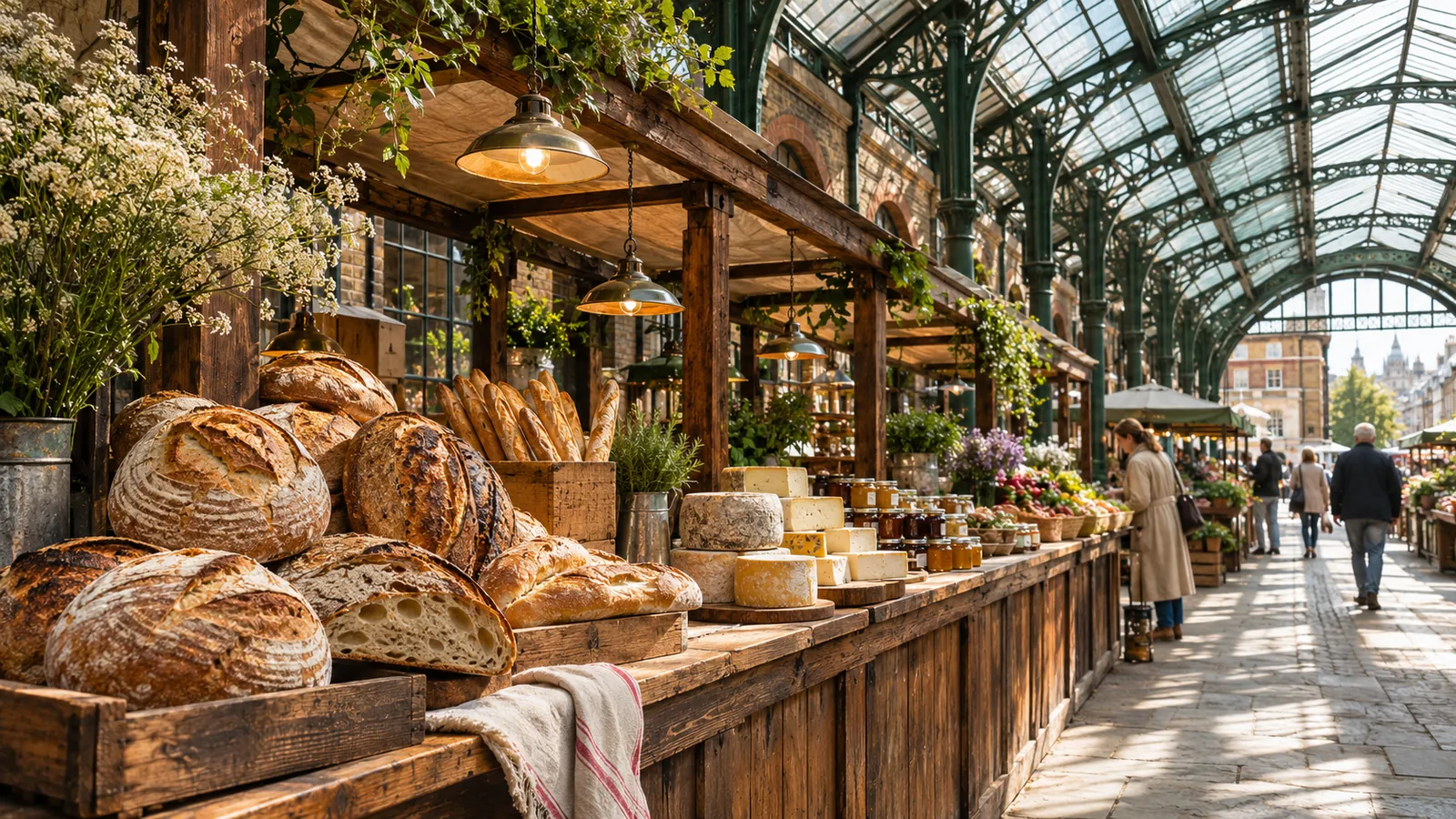
A sandwich goes cold while you decide which cheese to take home. At Borough there’s an easy fix. Make the shopping decisions first, buy your hot lunch last and give yourself permission to skip an entire section if you only have a lunch break.
The market divides into three useful parts. Three Crown Square has the bigger producers and merchants, the Green Market has smaller specialist stalls, and Borough Market Kitchen is where to look for a cooked meal. One exception worth remembering is the little cheese shop on Stoney Street.
Plan your stops
Build a picnic in Three Crown Square
Start with the size of the meal. For two people eating straight away, ask for a piece of cheese to share, then look for bread and something sharp, such as pickles. Ask the cheesemonger to cut a piece to your budget. It’s easier to spend sensibly that way than to guess the weight of a wedge.
Give the Green Market one job
Pick one thing that travels home well. A jar is a better souvenir than another hot sandwich, provided you can carry the weight. If a stall catches your eye, note its name before walking on. The trader directory lets you look up a business by ingredient or trading day when you want to find it again.
Choose between the grill and the Kitchen
At Kappacasein, 1 Stoney Street, the toastie puts several cheeses, onions and leeks between sourdough. Raclette comes over potatoes with pickles. Pick the toastie for a handheld lunch or the potatoes if you’d like to linger. The shop keeps a shorter trading week than the market. On its days off, head to Borough Market Kitchen for another hot lunch.
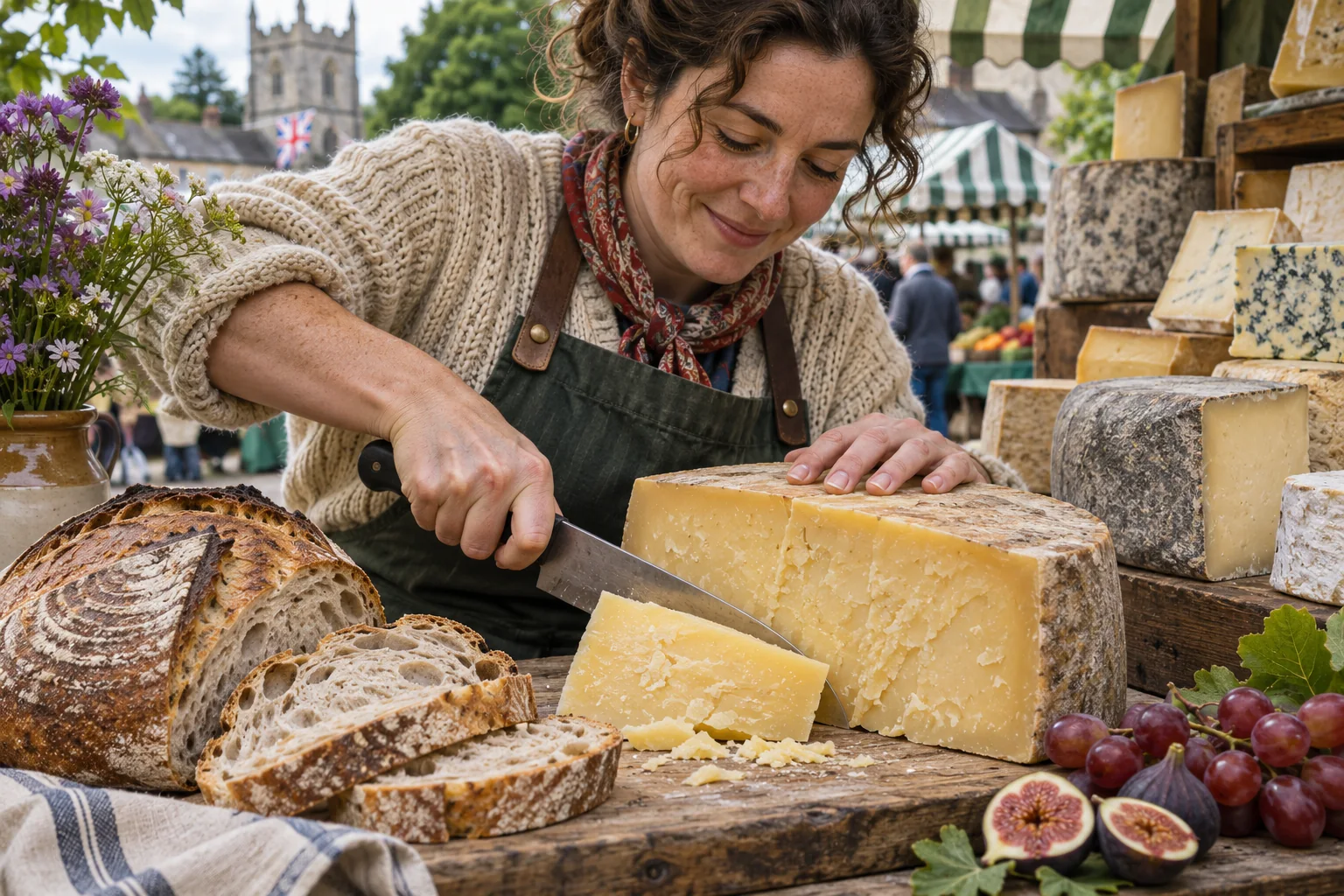
A cheese picnic for two
Ask the cheesemonger for one wedge cut to a spending limit. Buy the cheese first, then choose bread to suit it. A firm wedge will travel in paper. For a soft cheese, ask for a little pot or choose bread you can tear and dip. If the picnic turns into lunch at the grill, keep the wedge wrapped and share one hot order before deciding whether you want another.
If you have one lunch break
Go straight to the trader you came for and have a second choice within the same section. If you have a morning, shop first and compare what you could assemble yourself with what a cook is serving. That’s the pleasure of having both sorts of market under the arches.
How to buy a wedge when the price is per kilo
A price card beside a wheel of cheese can make a small purchase feel like an arithmetic test. Start with a job for the cheese. Tell the seller whether you want enough for two people to eat with bread now, something to grate over dinner, or a piece that will stand up to a train ride. A soft cheese that looks wonderful at the counter may be awkward to eat with a wooden stirrer on a bench. A firm wedge and a small roll need very little equipment. Ask how the cheese will be wrapped before you settle on the soft one.
Suppose a cheese is priced at £32 a kilo. This is a worked example, not a price from a Borough trader. One hundred grams at that rate is £3.20, so a £6 cheese budget buys a little under 190 grams. You do not need to get that number exactly right. Saying “Could you cut me about six pounds’ worth?” tells the person holding the knife far more than pointing at an enormous wheel and saying “a small bit.” Check the weight once it is on the scale. A tapering wedge can look surprisingly different from a rectangular piece of the same weight.
Think about the rest of the loaf as well. Cheese with a strong flavour can stretch further when the bread is mild. A salty pickle gives a rich cheese a bit of contrast, but a full jar is a hefty purchase for a lunch that will last fifteen minutes. If you already have a jar at home, spend the difference on a second kind of bread. Bring a clean bag that will keep the loaf away from the bottom of your shopping bag.
Two lunches under one roof
Imagine two friends meeting at London Bridge. One has come specifically for the cheese toastie. The other wants to browse and buy ingredients for dinner. Agree on a place to eat before splitting up. “Outside the cheese shop on Stoney Street” is a more useful message than “by the bread.” If one person is delayed, a hot sandwich waiting on a table loses much of the contrast between its crunchy outside and soft centre. Send the message before joining the short final stretch of the grill queue.
If the grill is closed, keep the two plans separate for a moment. The shopper can finish at the produce stalls while the hungry diner checks the cooked-food options in the Kitchen. Agree on the next message you need, such as “I have found something I want, meet here.” Otherwise both people can spend the remaining half hour taking photographs of menus for each other. A backup only needs to answer one question. Where can you both eat within the time you actually have?
For a return visit, write down the trader name and the thing you bought. A note that says “sharp, crumbly cheese from the counter on the left” will mean very little months later. The business name and the name on the wrapper are enough to find the trader again, ask for a similar cheese, or check the next trading day. That small record is particularly useful here because the market directory is searchable even when you are planning the trip from home.
When walking distance matters
Someone who wants to avoid long periods of standing may prefer shopping for a picnic to queueing for hot food. Check where your party can comfortably stop before ordering. Borough's public market is on one level, but a path with cobbles, shoppers and a narrow turn can feel very different from an empty pavement of the same length. Let the person choosing the route set the pace. One person can collect food while the other waits at a place both people already recognise.
A lunch plan for one bag and two appetites
If you arrive at Borough together and one of you wants lunch while the other wants to shop, send the sandwich lover to look at the grill before either person buys anything. The question to bring back is quite specific. Can we order and eat here in the time we have left? A glimpse of a queue from the other side of the road is a poor substitute for seeing which counter it ends at, what the cook is making and whether people are actually collecting orders.
For the shopper, there is a useful difference between choosing cheese for a sandwich tonight and choosing it for lunch here. Tonight you may have mustard, a knife, a board and a grill. At the market you may have only your hands and a napkin. Tell the cheesemonger which kitchen you have in mind. A cheese that melts into a particularly good toastie may be too awkward to divide neatly on a bench. Ask for one piece you can work with and buy bread in a size that matches it.
Now consider the extra items. If one of you wants a jar of pickle, ask who will carry the open jar afterwards. If you both like pickles but neither wants the jar, that might decide the lunch question in favour of a prepared plate with a pickle already on it. The point of a producer market is having choices like these within walking distance. Let what the traders are selling change your plan once, then set a stopping point so you actually get to sit down and eat.
What to look for on a return trip
Keep the label from an especially good purchase long enough to note three things. What was it called, who sold it, and what did you eat with it? When you return, that information makes a conversation possible even if the precise cheese has sold out. A request for “something like that crumbly one I ate with an apple” is much easier to answer when the vendor also knows the maker or the name on the paper.
If bread and cheese felt too heavy last time, start the next visit among the smaller specialist stalls and choose something with acidity or crunch before returning to the cheesemonger. If the picnic never happened because you went straight for hot food, plan for that honestly and buy any groceries afterwards. You need not repeat a route that served a different appetite. The three named market sections are a map you can rearrange, not a list of chores.
Finally, agree whether this is a shopping morning or a lunch break before picking the meeting time. Someone who has cleared a morning will happily compare two cheeses and ask about the makers. Someone due back at work may want ten quiet minutes to eat. An early message such as “I'll meet you at the grill after I've bought the bread” gives both people precisely the visit they came for.
Getting there
London Bridge station serves the market. The public market areas are on one level, with some cobbles and narrow passages. The market flags Saturday afternoons as especially busy. Its visitor page locates accessible toilets.
Check before leaving
Check the market’s holiday hours and the individual listing for Kappacasein on your date.
Visitor sources
Research checked .