
Ordering a grilled cactus taco at Chelsea Market
How to put together a nopal taco, from the choice of tortilla to the last squeeze of salsa.
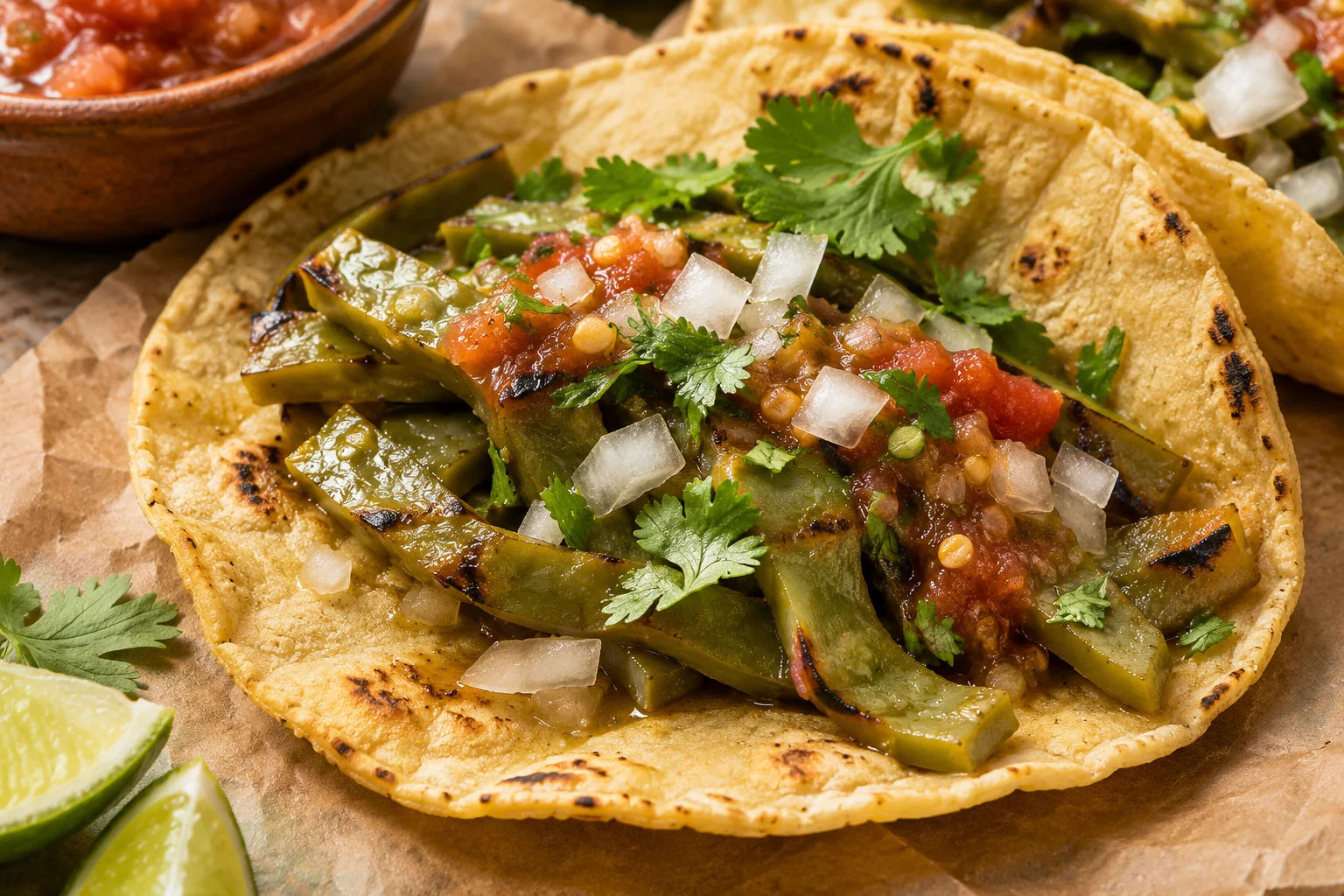
Meet the filling
Nopal on the Los Tacos No. 1 menu means grilled cactus. For someone who knows cactus mainly as a prickly windowsill plant, it can be difficult to imagine the appeal of a whole taco built around it. Think of a green vegetable that can keep a little resistance when cooked and take on browned edges where it meets the grill. Those edges are particularly enjoyable against a soft tortilla.
Set aside the idea that the vegetable option must be a compromise someone makes while everybody else eats steak. A cactus taco poses a different question. How much of the appeal of a taco comes from the tortilla, the grill, the salsa and the fresh toppings as well as the filling? Ordering one alongside another style can be a good way to find out.
At Chelsea Market, consult both the restaurant's menu and the posted details for the order in front of you. The menu identifies nopal as a filling and gives a choice of corn or flour tortilla. It also includes ingredient notes about other components. Read the full order if your choice is connected to something you avoid eating.
Choose corn or flour first
A corn tortilla brings its own distinctive aroma to a lightly seasoned filling. If the cactus interests you for the contrast between grilled green vegetable and corn, it makes a good first choice. Fold it around the filling while warm and support it from below. If juice or salsa runs towards the fold, the part resting on the paper will often soften before the upper edges do.
A flour tortilla bends differently, making a softer wrapper around the same grilled pieces. Los Tacos No. 1 states that its flour tortillas contain pork lard. It also notes pork lard in its beans. If avoiding pork is why you are ordering vegetables, tell the team what you need and ask about preparation before choosing the wrapper and any sides. A plant-based filling describes only part of the order.
For two diners comparing tortillas, order the nopal filling twice with the same toppings if both orders suit you. The first bite then gives you a fair comparison. If you choose different fillings and different sauces on top, there are so many differences that it is hard to know which tortilla you actually preferred.
Leave the cactus a little room
The published taco menu includes onion, cilantro, salsa and guacamole. Each changes how the cactus tastes. Fresh onion adds a sharper crunch alongside the softer cut face of the vegetable. Cilantro brings an aroma that can be quite prominent. Guacamole fills the spaces between the pieces and gives the bite a richer texture. Decide which of those qualities you most want to taste.
If the counter can put salsa on the side, try a little cactus with the tortilla before adding any. Then put salsa on one end and taste again. This makes it possible to judge the level of heat against the cooked vegetable. Pouring a generous amount over everything at once can leave you tasting almost entirely salsa until the last bite.
There is also a simple structural reason to go slowly with extra sauces. A juicy filling, guacamole and salsa all put moisture in the middle of a folded tortilla. Turn the taco towards the open paper so any pieces that fall out land somewhere you can retrieve them. Keep the lower fold intact and take smaller bites from the ends.
Build a two-taco comparison
A diner who also eats meat might pair nopal with the menu's grilled steak or marinated pork. Order both on the same tortilla if the point is to see what the grill contributes to each filling. Begin with the cactus. It is easier to pick out its vegetal character before taking a bite of strongly seasoned pork. Take a sip of water between them if you are trying to notice differences.
Two cactus tacos can also make a comparison without changing the filling. Have one with a small amount of salsa and the other with the toppings you usually choose. If you enjoy both, you know the nopal works as the main taste and as part of a fuller order. If you enjoy only one, you have still learnt something that helps at the next counter.
For a party making several food stops in Chelsea Market, a single taco can be an entire stop. Pay for the taco you actually want and eat it while the tortilla is still warm. A second one can wait until after you know how much room you want to leave for bread, a drink or whatever your companions have lined up next.
Use the market to your advantage
Agree on where you will eat before a group joins different queues. Some people may want to return to the taco counter and others may be heading towards a bakery. A named point in the market directory gives everyone something specific to look for. It also means the first person with a hot taco can start eating instead of walking the length of the hall with it.
If a diner in your group needs more time to read the ingredients, give them the restaurant's menu ahead of the visit. The person at the front of the line can ask a precise remaining question. That is easier for everyone than trying to decide, while holding up the queue, whether a cactus order automatically meets a particular diet.
Write down the combination you liked. “Nopal, corn tortilla, a little salsa” is a useful instruction for a second visit. So is the decision that you preferred a softer flour wrapper or wanted more acidity next time. The point of trying a vegetable you do not usually order is to discover what you would willingly eat again, even when the familiar choices are available.
There is one last use for that order note. When someone in your group asks what grilled cactus is like, describe the actual combination they will get. A firm green filling, a soft wrapper and a sharp bite of onion are more informative than saying it tastes healthy or unusual. Mention the tortilla you chose and the ingredient note if it matters to them. Then let them decide whether to order one for their own reasons.
When the same cactus comes three ways
Los Tacos lists nopal in more than one part of its menu. Alongside tacos, the restaurant lists tostadas, quesadillas and mulas, and a nopal plate with beans and cheese. That gives a visitor who enjoyed the first bite of grilled cactus an interesting second choice. You can keep the filling familiar while changing nearly everything about the way the meal eats.
Consider the tostada if you want more crunch and you have somewhere to stop. A crisp open base holds the grilled pieces in a shallow layer. Take a bite from the edge while holding the underside near that edge, keeping the rest above its paper or plate. A little guacamole can help loose pieces stay put. As the base breaks into smaller pieces towards the end, each can carry its own share of cactus. A diner who likes a crisp first bite might prefer this to a second soft taco.
The plate works for someone who wants to sit with a fork and eat the components in different proportions. It also presents a useful example of why reading the whole description matters. The restaurant lists beans and cheese with the cactus and notes pork lard in its beans. Someone keen on grilled cactus for its own flavour may be happy with the plate as served. Someone avoiding pork or dairy needs a conversation with staff about their own requirements.
A lunch order for a mixed Chelsea Market group
Suppose one friend wants to save space for the bakery, one is hungry enough for a plated meal and one has never tried nopal. Let the bakery visitor buy a single taco. The hungry diner can read the full plate description and choose whether its sides appeal. The curious diner could try a taco or a tostada, depending on whether you have found a place to stand comfortably. Everyone gets a real lunch choice without ordering identical trays.
When the group wants to compare the food, decide which comparison interests you. Nopal on a corn tortilla and nopal on a crisp base reveal how texture changes the same filling. Nopal and grilled chicken on the same tortilla reveal what each filling contributes. Ordering three different proteins in three different forms with three different toppings will still make a good meal, but the diners may find it difficult to explain afterwards what they actually preferred.
For a friend who is nervous about trying cactus, offer a clean piece from the edge of your own order if you are both happy to share. Describe what you notice in that particular piece. Is the grill flavour strong? Is the centre softer than the edge? A description based on the food in front of you gives a better introduction than promising that cactus tastes exactly like another vegetable they already know.
Finally, remember the heat and moisture when you plan your last purchase. Bread or a packet of groceries will tolerate the walk out of Chelsea Market far better than a dressed nopal tostada. Let the hot food have its own stop and make the purchases intended for later once all the tortillas have gone.