
Reading the tapas board at El Quim
A guide to portions, preparations and building a counter lunch around the daily selection at stand 582.
Count portions before dishes
Two people studying a tapas menu can easily choose four dishes each and call it a light lunch. Start with the unit in which each item is sold. On El Quim's menu an oyster is listed individually, croquettes are described by the number of pieces in a serving and several choices are plates to put in the middle. Comparing the printed amounts makes sense once you know what will actually arrive at the counter.
Suppose each diner wants one oyster, both want to try a croquette, and one would like a whole plate of eggs. Ask how many croquettes are included today and whether the eggs can be shared comfortably. Two individual oysters plus one shared serving of croquettes may account for the entire first round. The rest of the menu can wait until you have seen the sizes and decided whether another hot dish is welcome.
Choose one cooking method you want to taste
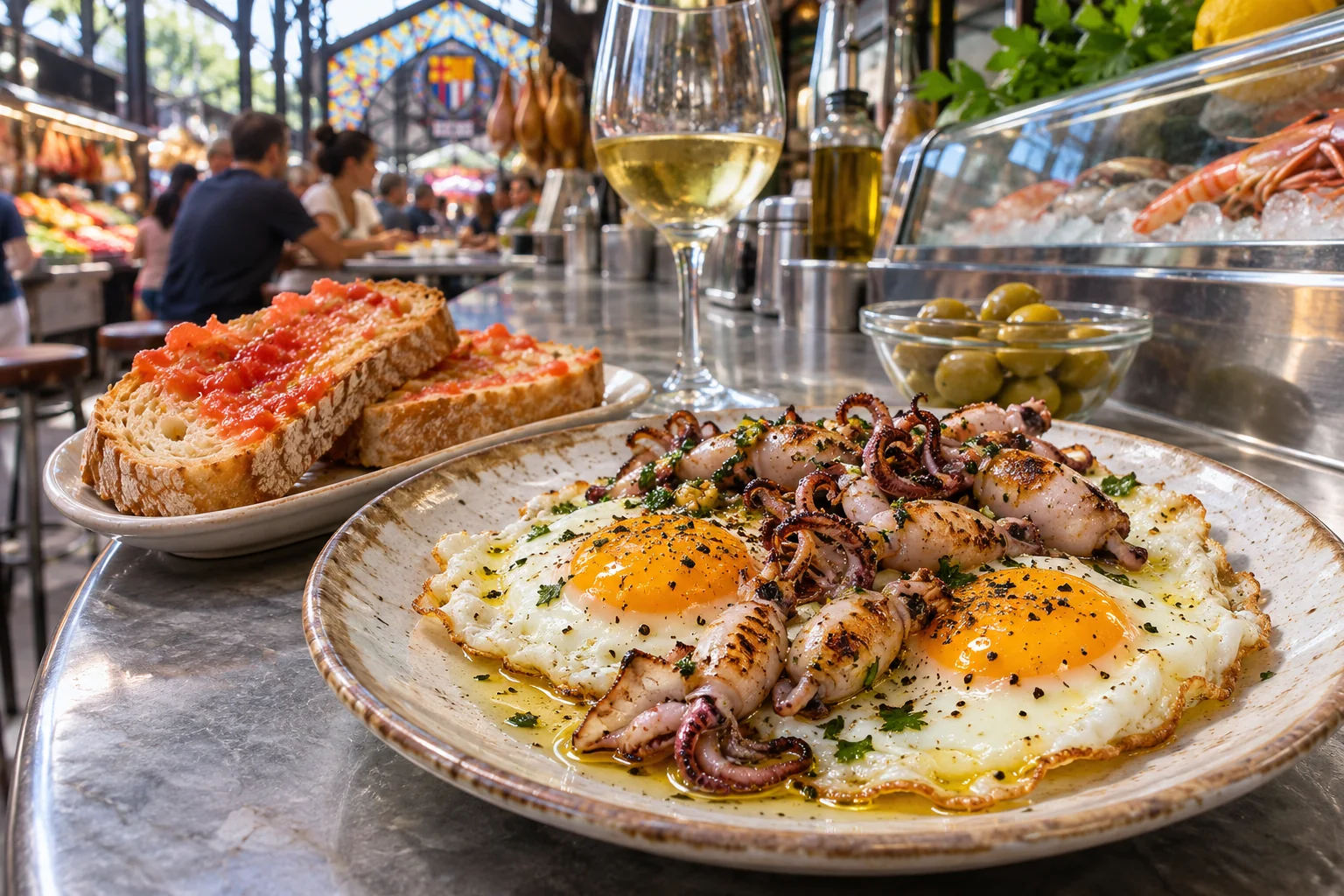
The kitchen's English menu shows baby squid in several preparations. One dish includes fried eggs, garlic and chilli. Elsewhere the squid is offered grilled with leek or fried in the Andalusian style. Asking for squid alone leaves the cook a fair amount of guessing. Point to the complete dish name, including the part that tells the kitchen how you want it prepared.
Consider the rest of the order before choosing. A plate of eggs and squid works as a centre for lunch. Grilled squid makes sense beside vegetables or something substantial you have already ordered. A fried version alongside croquettes makes both dishes about a crisp exterior. If exploring different preparations is the point of the visit, choose one fried dish and use the other order to try the grill or the vegetable side of the board.
Save room for the vegetables
A long list of meat and seafood can distract from a small plate that makes lunch feel complete. El Quim lists escalivada, a dish of roasted vegetables, and also includes items that depend on what is in season. Ask what is being served that day and whether it comes warm or cool. That small detail helps you choose between ordering it alongside the eggs or saving it for the second round.
For a two-person lunch, picture the food on one table. If you already have something crisp and something rich, a vegetable dish can give you a gentler third bite. When there is only one vegetable lover at the table, ask about the portion and how it is dressed. Sometimes it makes more sense for one diner to order a vegetable plate as their own dish than to share several things they are only mildly interested in.
Make the order audible at a busy counter
The stall map identifies El Quim as stand 582. Once at the right counter, wait until the person serving can hear you before listing the meal. Give the number of portions, the dish name and any question that would change the order. If the item you were hoping for is seasonal, ask about its availability before deciding on all the other plates that were going to accompany it.
People sometimes try to give a whole table's order in several languages at once. Choose one person to order the shared plates. Individual diners can still ask about their own ingredients. Keep a short list on the phone if there are several choices. A list reading two oysters, one order of croquettes, one order of eggs describes the number of portions far more clearly than a collection of photographs.
Work out what to leave for a second round
When the first plates have arrived, take a look at the pace of the meal. Is a hot dish still to come? Does the table still want another fried item, or would the diners rather use the rest of their appetite on the surrounding market? Ask about the outstanding order before repeating it. A plate taking longer to cook can arrive just as another serving is commissioned.
If you have the counter seat for a leisurely meal, a second round gives you a chance to order more of the most successful dish. If it is a short stop during a market shop, paying after the first round can be a satisfying choice. You can still buy olives, whole fruit or something for the evening from another vendor. The counter and the produce stalls are different opportunities within the same building.
A menu for two different appetites
Imagine one diner has skipped breakfast and the other wants a few tastes before a late lunch elsewhere. Start with the individual appetite that is hardest to fit. One substantial egg dish can belong to the hungry diner while each orders a small bite from the starters. The person saving room can then enjoy the counter without feeling obliged to finish half of every shared plate.
Before leaving, write down the exact preparation you would make the trip for again. The difference between eggs with baby squid and a separate plate of squid matters when looking up the menu later. Save the stand number as well as the restaurant name. If you bring a friend on another date, check holiday hours and the current selection before promising a particular plate.
A short glossary for the next menu
Two useful words from the counter are huevos, eggs, and calamares, squid. If you recognise only the main ingredient, read one or two words further before ordering. The preparation determines whether you receive a simple grilled ingredient, a crisp fried dish or something cooked with eggs and another seasoning. Compare the wording on the board with the dish being served, then check with the person taking the order.
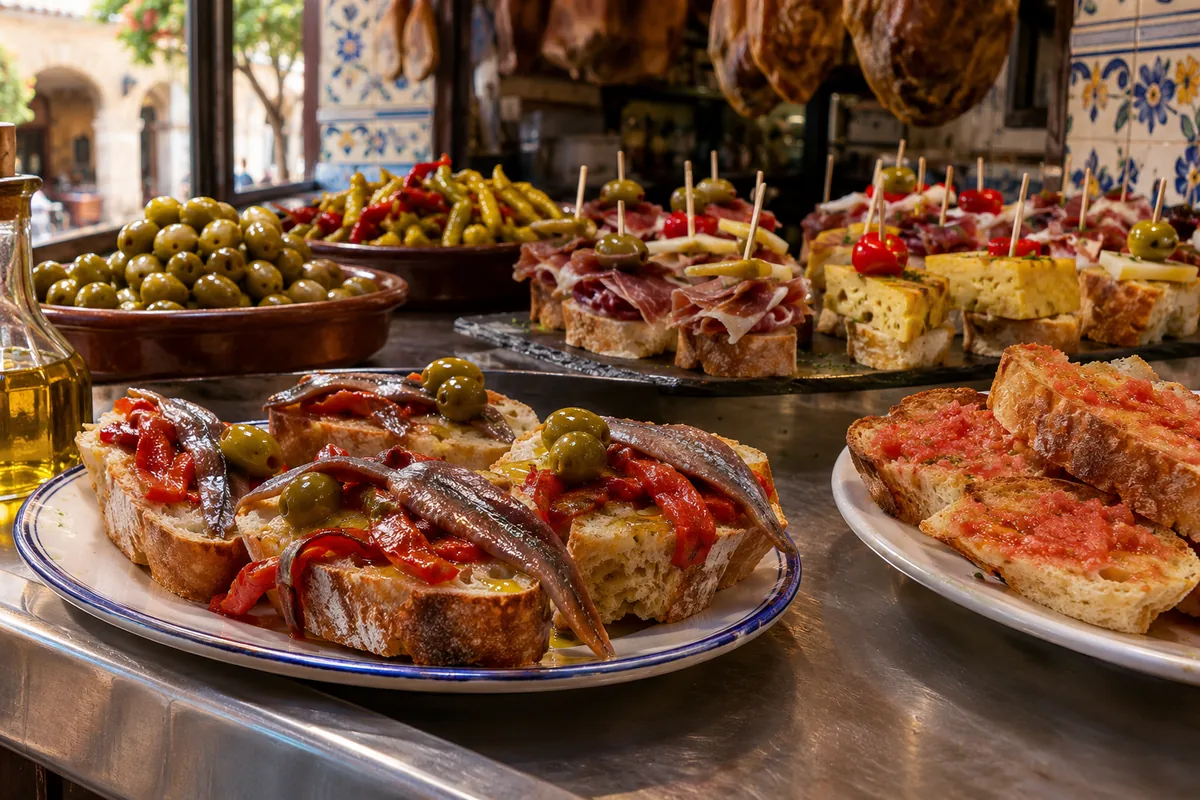
The menu also distinguishes fresh anchovies marinated in vinegar from salted anchovies. Both can be inviting first plates with bread, but they bring different textures and seasoning. If the group prefers gentle flavours, ask the server which preparation they would choose for that table. For a diner who wants to compare the two, ask whether both are available and whether the portions make sense for the number of people eating.
Keep the printed name on the receipt or make a brief note when you leave. It is easier to remember which version to seek again when you have recorded the feature you loved, such as the vinegar on the fish or the garlic with the eggs.
What to do when the stools are all occupied
A counter lunch can change shape the moment you see the seating. One free stool may be enough for a solo diner and no help to a pair who have come to eat together. Ask the staff how they are managing the wait and whether a waiting pair should stay near the bar or return later. Standing immediately behind seated diners is uncomfortable for everyone and does not tell the staff that you are next.
Use the waiting time for a specific job. One person can check the stall map for the fruit stand they intended to visit later. Another can look at the English menu and identify two dishes both people want. If a seller needs room to deliver goods, step out of the way. Agree on a time limit before deciding to wait so that one member of the party does not discover too late that the other had planned to catch a train.
If the alternatives are a rushed five-minute seat or a calm picnic, make the change while you still have choices. Save the name of the counter and note the full stand number. Pick up one or two things you can eat comfortably elsewhere. Buying several snacks half-heartedly while hoping the queue will disappear often costs almost as much time as waiting and leaves very little appetite for the counter when it finally opens.
When everybody likes a different part of the menu
Imagine three people sharing. One likes eggs and seafood, one wants to try croquettes, and one has arrived most interested in the market vegetables. Let the person with the narrowest preference describe what they are looking for first. The rest of the order can then be laid around that choice. If everyone starts by announcing a favourite they expect the whole table to share, one diner can end up paying for a meal they barely touch.
Decide which plates are personal before they reach the counter. A portion of eggs can be shared when everyone agrees; it can equally belong to the person who came specifically for the dish. With three diners, an order containing four pieces leaves a different question from one containing three. Offer the extra piece to the person comparing two preparations, or divide it if the food allows. There is no need to buy a second portion simply to make the numbers even.
The last useful calculation comes before the bill. Remember which individual items were charged by the piece and which were shared plates. If people are settling among themselves, work that out after paying the counter and making room for the next diners. Send the others the dish names while the memory is still fresh. When someone asks later about the plate of anchovies or the squid, the person who placed the order can say exactly which preparation the table ate.
For a repeat visit, choose the dish everybody talked about afterwards and give each person one entirely new choice. A shared favourite makes a dependable starting point while leaving room to discover what the kitchen is serving on the new date.