
Salted or dressed in vinegar? Ordering anchovies at El Quim
Two anchovy dishes on a Barcelona menu can taste so different that the fish is almost the only thing they have in common.
Read one more line
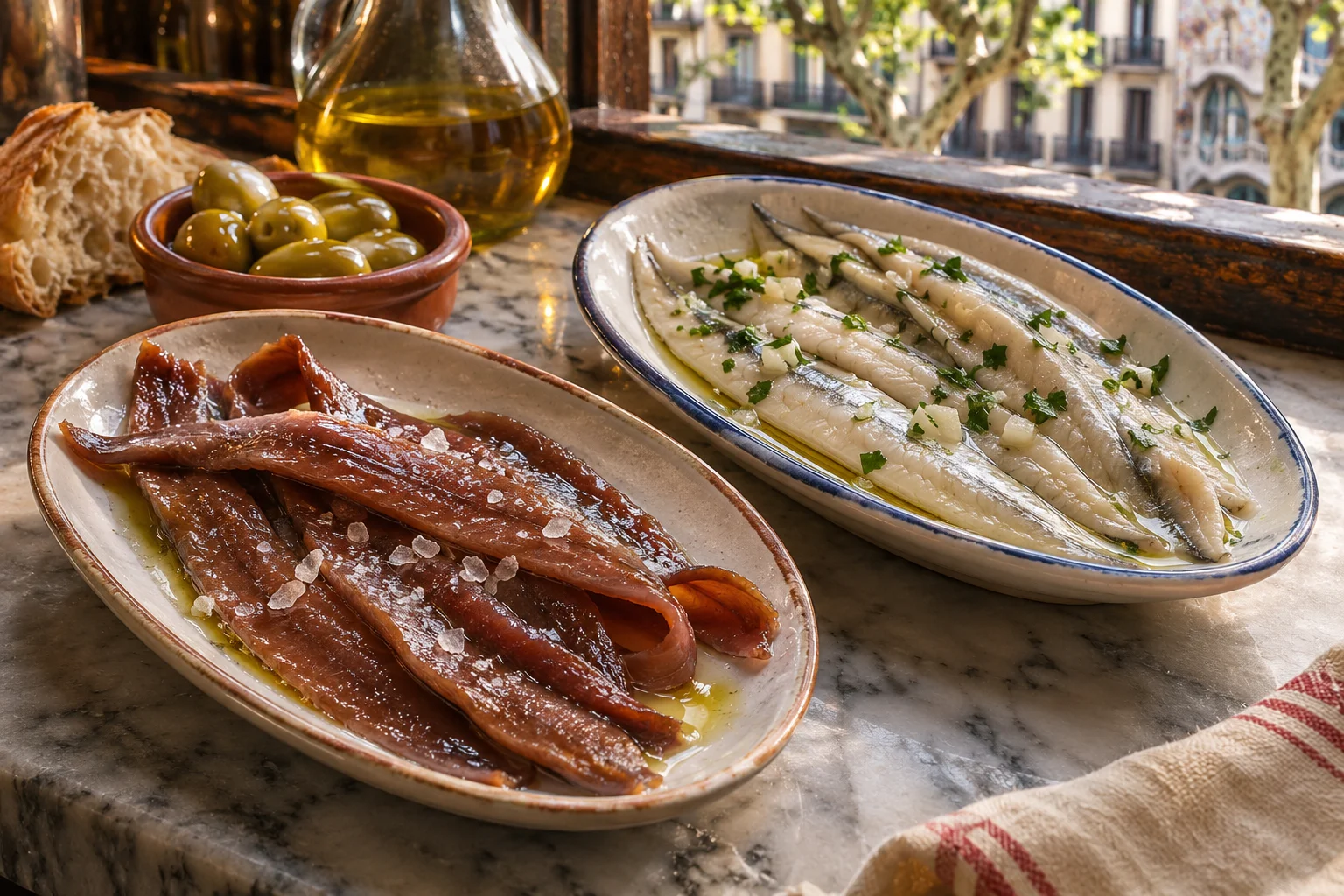
El Quim’s menu lists both anchovies from Cantabria preserved in salt and anchovies in vinegar. This is an unusually clear opportunity to choose by preparation. A salt-cured fillet gives a concentrated, deeply savoury mouthful. Vinegar brings a brighter edge. At the counter, repeat the preparation when you order so the person taking it knows which plate you mean.
Think about what is already on your side of the table. With mild bread or a simple vegetable dish, a little of the salt-cured fish goes a long way. If you are working through a rich plate of eggs or croquettes, the vinegar version can give the next bite a sharp change of direction. Either works as a small dish for the middle.
Share a fillet fairly
Before everyone reaches for a fork, count the pieces and ask whether anyone wants a whole one to taste on its own. For a small group, cutting the longer fillets into portions keeps the bread from disappearing under several full fillets in one serving. A little of the dressing on a piece of bread carries a surprising amount of flavour.
Leave the bread separate until you are ready for it. Bread that absorbs the whole plate of oil or vinegar will be soft by the time the last person takes a piece. For an informal tasting, give each person two small pieces. Start with the fish they expect to like less and let the second piece settle the question.
When one plate will do
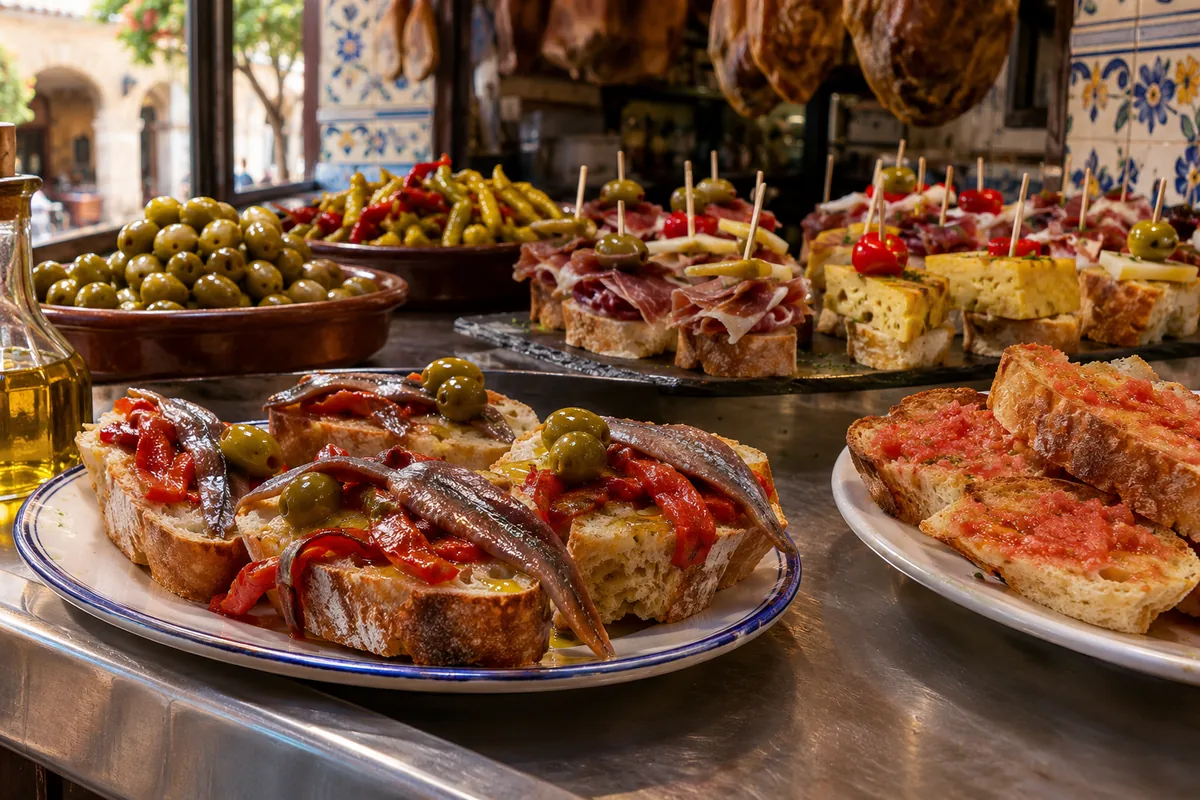
A pair with plans for another market stop can order one anchovy dish and add something with a different texture. El Quim also lists roasted pepper and aubergine, and tomato bread appears on its menu. Check what the kitchen has available and the size of the serving before choosing the second plate.
If the first plate goes down well, you can move on to the other preparation. Ask for a clean plate or a fresh piece of bread between the two to avoid carrying vinegar into the salt-cured fish. The nicest outcome is going home knowing which kind you would actually buy at a fish counter.
Salt, vinegar and the first sip
Before ordering drinks for the whole meal, consider the intensity of the anchovy dish. Both preparations can be strong in small quantities. A glass of water alongside your chosen drink makes it easier to taste two versions without the flavour of the first lingering into the second. If someone is choosing wine for the table, have them taste the anchovy before deciding which glass they prefer beside it.
A mild, fairly plain piece of bread is a useful base for the same reason. If the bread already carries a great deal of tomato, garlic or seasoning, it will turn the first bite into a composed dish before you know what the fish is like. That may be exactly what you want for the rest of lunch. For the first piece, try the end of one fillet on its own and take the bread straight afterwards.
For a diner who finds one taste strong, change the proportions as well as the accompaniment. A thin piece of anchovy laid across a bigger bite of bread brings the same flavour into a more substantial mouthful. Adding increasingly rich accompaniments to a whole anchovy may still leave you eating more salt or vinegar in one bite than you enjoy.
One menu, three different fish plates
El Quim also lists sardines prepared with pickle on its starter menu. If someone at the table says they want “the little fish in vinegar”, settle on the actual name before sending one person to order. Anchovies and sardines are different fish, and the word pickle alone does not identify which plate another diner saw earlier. Keeping the menu open while ordering resolves the ambiguity.
A table with an enthusiast for preserved fish could make a tasting from two different species. A first-time visitor might get more from comparing the same fish in the two preparations. The latter is a smaller question with a clearer answer. Do I prefer the flavour when vinegar leads, or when the fillet itself carries a concentrated salty character? That answer can influence what you buy at a delicatessen later.
For a person who wants to buy some to take to their accommodation, ask the seller how the product has been prepared and what to do with it once opened. A fillet served on a restaurant plate has already been prepared for the table. A product bought in a shop can be sold in a different form and may require different handling. Read its own instructions before planning to put it straight onto bread.
Decide whether this is lunch or a tasting
A plate of preserved anchovies is usually chosen for intensity. It can carry a small tasting lunch alongside bread and a vegetable dish, but it may not suit a hungry diner expecting a substantial portion of grilled fish. Tell your companions which kind of meal you have in mind before ordering a series of small plates that nobody quite regards as their main course.
If two people have different appetites, let the bigger eater add a more substantial dish while both share the anchovies. The lighter eater can finish with bread and vegetables. This is easier than trying to make the small number of fillets divide into two entire lunches. The kitchen's current menu and advice about portion size are more reliable than estimating from the width of a photograph.
When the kitchen has only one of the two preparations available, the comparison can wait. Choose it if that preparation genuinely appeals, and pick the accompaniment that will make it enjoyable. Ordering an unfamiliar plate simply because its alternative is off the menu is less satisfying than recognising that the other dish was the one you actually wanted.
Translate the preference into a shopping question
A good question at the next fish counter is “Do you have anchovies prepared in vinegar that are ready to eat?” or “Which salted anchovies would you serve on bread?” Those questions identify the preparation and the intended use. Mentioning just the name of a restaurant dish can leave the seller guessing whether you mean fresh fish to cook or a prepared product for today's lunch.
Note the kind of bread, the dressing and the amount of fish you enjoyed on each piece. The right shopping quantity for four people can be quite small if the fillets are one course in a longer meal. Tell the seller how many people will taste it and how much else you plan to serve. That is the shortest route from a good counter lunch to a purchase you will happily finish.
Make a three-plate lunch that leaves room for the fish
One easy order for two people is a plate of anchovies, a plate of roasted pepper and aubergine, and bread if it is available. The anchovies supply a concentrated savoury or sharp note, depending on the preparation. The vegetables give you something soft in a genuinely different register. Bread gives both people a way to decide how much fish they want in each bite. Nothing needs to be divided with great precision.
Order the anchovies and vegetables first if you mainly want a leisurely tasting. If one diner wants a hot dish from the kitchen as well, tell the server how you intend to eat. A hot plate arriving with the first forkful of anchovies may be perfectly welcome for a pair on a short lunch break. A table settling in for a slower meal may prefer a little time with the cold dishes first.
Build one bite of bread with a strip of roasted pepper, then lay a little anchovy across it. Try another with aubergine first. The soft flesh takes up the dressing and holds a shorter piece of fish in place. If this is the combination you like, leave enough of the vegetables for the remaining fish. It is easy for a shared vegetable plate to disappear ahead of the much stronger ingredient it was ordered to accompany.
A vocabulary for the second counter
Look for the words the stall or restaurant itself uses. Anchoas often appears on the Spanish side of a menu for salt-cured anchovies, while boquerones en vinagre identifies anchovies dressed in vinegar. The market and its surroundings offer plenty of opportunities to see both terms. A prepared-food seller may use a fuller local description for a specific product. Point to the actual tray or label while asking for it.
The name of the market, La Boqueria, can also cause a small confusion for someone trying to remember the word boquerones after lunch. Store the dish name and the restaurant name as separate lines on your phone. For an order, “anchovies in vinegar” and a gesture towards the exact dish communicate more than an uncertain guess at the name of a whole market.
If you buy a tin or jar, keep the ingredient label with it. At home, drain just what you need for the first pieces of bread and follow the seller's handling advice for the rest. The idea is to build a bite that tastes like the reason you bought it, rather than tipping an entire container over a loaf and attempting to rescue the proportions afterwards.
For guests who say they dislike anchovies, find out what they have tried. A person who remembers a very salty pizza topping could still be curious about the vinegar preparation. Serve the fish on a separate plate and let them choose their own amount. The one guest already fond of anchovies will appreciate the freedom to add rather more.