
Buying by weight without doing maths at the counter
Take the uncertainty out of buying a wedge of cheese, a scoop of olives or a small bag of nuts.
Start with the meal
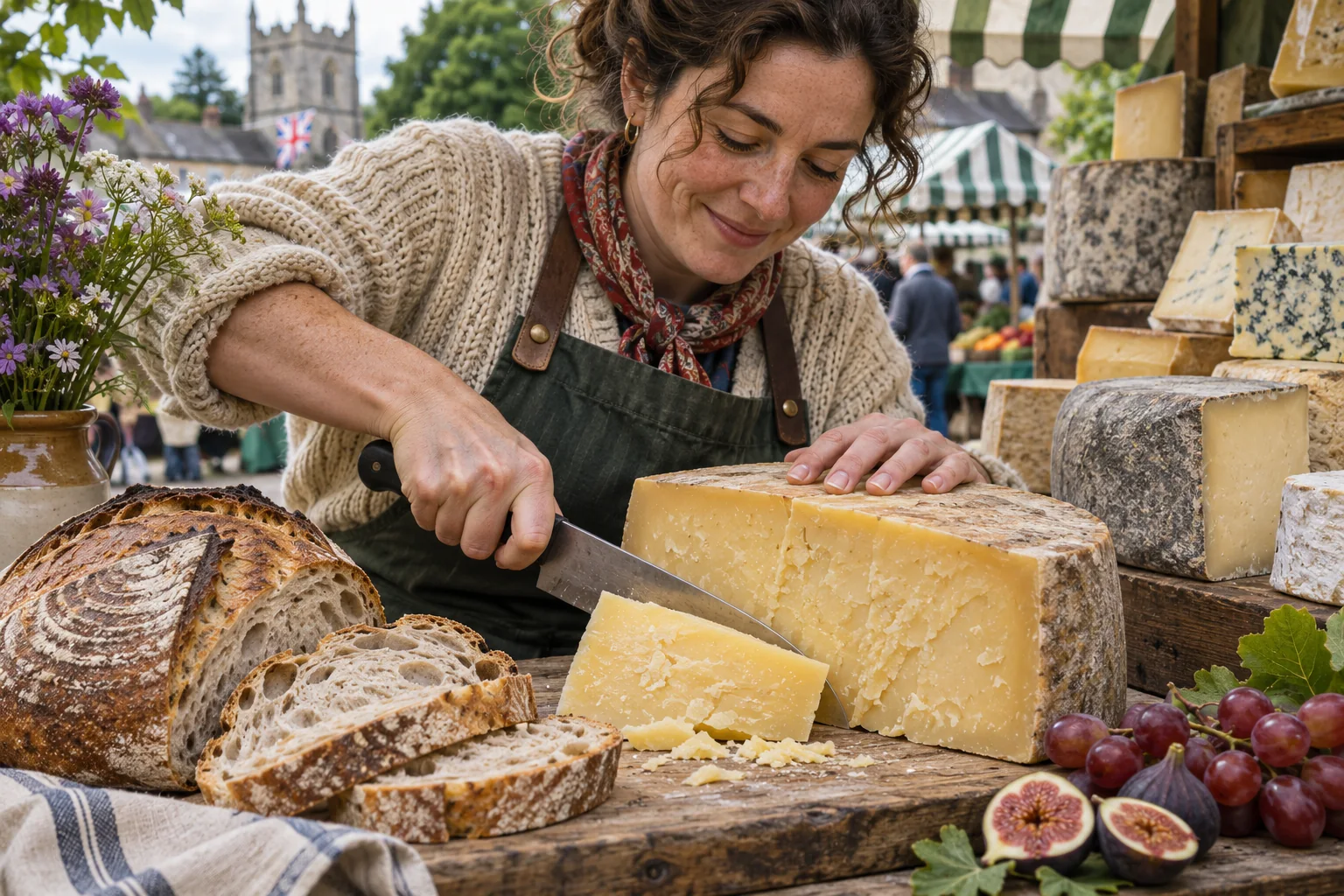
A cut piece of cheese can be the centre of a picnic or the last bite of a much bigger lunch. Tell the seller which one you have in mind. “A piece for two people to eat with bread” gives a cheesemonger something useful to work with. A request for “a little” leaves both of you guessing what little means.
At Borough Market, the trader directory is a practical starting point for finding cheese and other picnic ingredients. Pick the counter before deciding what size wedge to buy. A hard, rich cheese and a soft cheese you intend to spread on bread will serve quite different lunches.
Read the unit before the number
On a board marked per kilogram, a quarter of the displayed figure buys 250 grams. If the board says per 100 grams, multiply the figure by two and a half for that same piece. For a worked example, a fictional cheese priced at £24 per kilogram would cost £6 for 250 grams. These figures illustrate the calculation and are separate from any trader’s current price.
With loose olives or nuts, you may find it easier to set a spending cap. Ask whether the trader can weigh a portion close to that amount. If there is a minimum purchase or the piece has already been cut and wrapped, finding that out before the weighing saves an awkward conversation at payment.
Make the last purchase the right one
Buy one main picnic ingredient before adding little extras. A wedge, a loaf, two pears and a small tub of pickles are already a meal with several textures. The tempting extra tub can wait until you know where you will eat and whether anyone has a fork.
Keep the serving problem in view as you pay. Ask whether the cheese will slice with the knife you have, whether the olive tub closes firmly, and which item the seller would open first. The most economical purchase is often the portion you can actually carry, divide and finish.
Work a basket backwards from a budget
Imagine two people have £14 to assemble lunch. They have already seen a loaf they want for a fictional £4 and fruit that would come to another £2. That leaves £8 for both cheese and anything sharp to go with it. A half-kilogram piece at the illustrative price above would come to £12. The number on the board might look reasonable, yet that particular cut would use more than the balance for the whole meal. Ask about a £5 or £6 piece and leave money for one other ingredient.
Now change just one detail. The loaf is so large that half of it will go home for breakfast. The lunch still costs the original amount at the till. Whether it feels like good value now depends on where you are staying. With somewhere to keep the loaf, tomorrow's breakfast may be a welcome part of the purchase. With a train, two cases and a full afternoon ahead, choose two rolls or find a different stall. The arithmetic and the carrying plan have to agree.
Translate the scale into a serving
A stallholder can often make a cut close to your budget, but cutting exactly 250 grams from an irregular wedge takes judgement. If a slight difference would matter, say so before the knife goes in. If you would be happy a little either side, say that too. Once the piece is on the scale, check the weight and the total together. A change from 250 to 275 grams at £24 per kilogram changes the amount by 60 pence. Knowing the order of magnitude makes it easier to recognise an honest variation.
The same little calculation can reveal why a prepared serving costs more than its loose ingredients. A ready-made plate might include bread, pickles, a place to set the food and the work of assembling it. For someone on a short break those things have a value. If you would otherwise have to buy a whole jar and a much larger loaf, the individual plate might even be the less expensive route to the lunch you want.
Compare the two counters in front of you
Suppose one counter sells a whole small piece and the next sells larger pieces cut to order. First ask yourself whether everyone eating lunch likes the same thing. If one person wants a strong cheese and the other prefers a milder one, a pair of small cuts may have more value than one larger piece at a better price per kilogram. If both want the same cheese, ask which size fits the bread you have already chosen.
An unfamiliar unit on a handwritten board deserves a short question. Point to the particular item and ask what one piece of the size you are thinking of would cost. This works equally well when bowls of nuts, local fruit and prepared food are displayed close together under different signs. There is no prize for completing the transaction without talking to the person who knows the stall.
When four people are sharing
Put one person in charge of the bag and another in charge of the running total. Otherwise, two people can each buy a handsome loaf while everyone assumes someone else is getting something to spread on it. Make the first round very specific: bread, one cut cheese, one tub and enough fruit to divide. Give each shopper a budget for their part and agree on the meeting point.
At the table, taste everything before deciding whether to return for more. You may discover that the sharp little pickle is the thing everyone wants another spoonful of, while half the cheese is still wrapped. If somebody wants to take a wedge home, make that a separate purchase after lunch. Keeping souvenirs out of the shared lunch budget helps the group split the bill fairly and lets each person decide how much weight to carry for the rest of the day.
Buy in a reversible order
Start with bread or firm fruit you would happily keep for later. A loaf and two apples remain useful if the group switches to a hot lunch. An opened tub, an unwrapped slice of quiche and a fragile pastry are harder to manage while looking for shelter.
Make cheese or another chilled purchase near the end of the visit and ask the seller how it should be carried. Think about the actual journey after lunch. Two people heading home can buy quite differently from travellers who expect to spend the afternoon in shops with both hands occupied.
Let the table decide the menu
If you have a flat place to sit, a wedge and a loaf are easy to divide. If the only comfortable spot is a bench, small pieces of bread and individual fruit can be more practical. Ask whether the counter can wrap two portions separately if you plan to eat them at different times.
When choosing the backup, check the distance and surface between the halls. Queen Victoria Market publishes details of accessible entrances and routes. Agree on an entrance or a named counter in case somebody moves indoors first. Knowing where to regroup is more valuable in a downpour than having bought every item on the original shopping list.
Two unit prices, two different lunches
Imagine the first trader will cut cheese from a wheel priced at £32 per kilogram and another offers a ready-wrapped piece marked £7 for 200 grams. To compare the unit prices, divide the second price by two to find the cost of 100 grams, then multiply by ten. At £35 per kilogram the wrapped piece is dearer gram for gram. But if the first trader can cut only a larger piece and you want exactly 200 grams, ask for the actual total before deciding which purchase suits you.
There is another calculation a price sign cannot make. Will your group eat everything you buy? If a stronger cheese would be eaten by only one of four people, a small piece can be a better use of the lunch money even at a higher unit price. If all four diners would happily share the same mild cheese, buying one larger cut could simplify both shopping and serving. Ask each person for the one thing they would like in their sandwich before setting out with the communal money.
For a packed lunch, think about how the ingredients will be divided once hands are full. Buying enough for four and cutting it by eye at a crowded bench can leave the last sandwich with only a sliver. Ask whether the trader can suggest a cut that is easy to divide into four, and decide who will do the dividing. A minute spent arranging the portions at the counter can make a much more noticeable difference to lunch than a few pence saved on each hundred grams.
What belongs on the receipt
If you are keeping track of the group spend, photograph the receipt before the paper goes into the bottom of the bag. Make a note if the same receipt covers both the shared cheese and a personal grocery purchase. When people settle up later, it is much easier to separate those items while somebody still remembers which wedge belonged to whom.
A useful final check is to look at the basket just before leaving the market. Does the picnic need another ingredient, or does it simply need a quiet place to sit down? If all four people can put something on their bread and follow it with fruit, the weighing and comparing have done their job.