Raclette and the potato underneath it
At Borough Market, the potato, pickle and timing of the first forkful matter as much as the curtain of cheese.
Follow the cheese to the plate
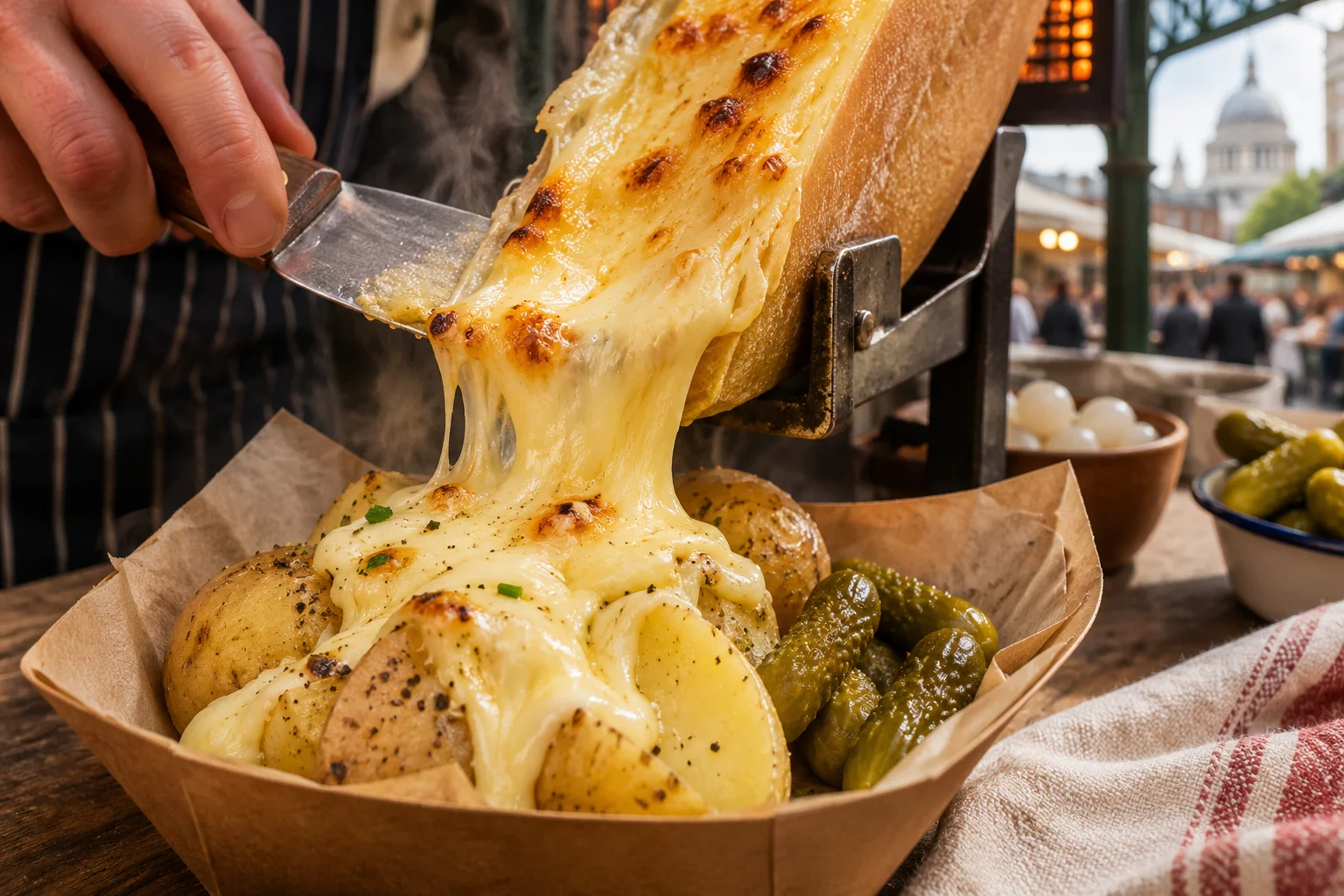
Kappacasein’s Borough Market listing describes raclette and a toasted cheese sandwich. They make quite different lunches from much the same craving. The toastie gives you browned bread around a hot centre. With the raclette, the cheese arrives on potatoes and you choose the proportions in each forkful. If what you want is the taste of the cheese itself, order the plate.
Look for the point where the warmed face of the cheese starts to give. The scrape gathers the softer layer and any toasted edges together. Those darker bits give a different bite from the pale folds. Before stirring anything together, try a little of each with a plain piece of potato. The contrast is part of what you came to the grill for.
Build a forkful that holds together
A potato makes a better base sliced open. Catch a little cheese on the cut face and it stays with the fork as you lift it. Dragging a whole smooth potato through the top layer tends to pull a much bigger sheet of cheese along behind it. If the cheese has begun to firm, cut across the fold with the side of your fork.
Take the pickle between richer bites. Its sharpness will be especially noticeable just after a mouthful of warm cheese. Mixing all the pickle into the plate at once makes it difficult to get back to that milder potato flavour. A diner who likes a sharper lunch can always add another piece.
Plan the handover
Choose a place to eat before the cheese comes off the grill. A bench available to both diners beats one person holding two slowly cooling portions while the other searches for seats. For a pair splitting lunch, ask about a second fork when ordering. Divide some potatoes and cheese together so the second diner gets the same dish.
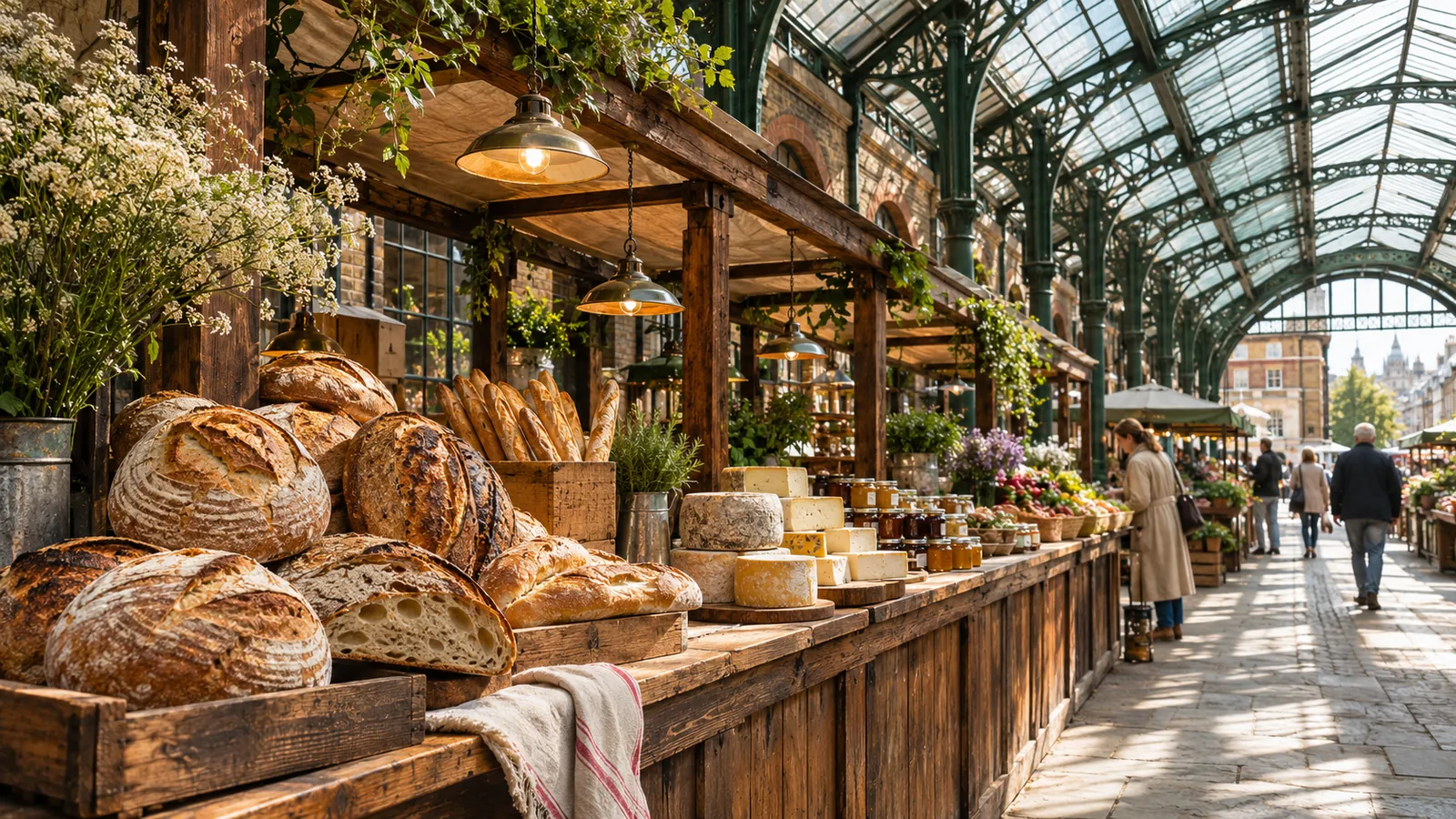
Save the shopping for either before the queue or after the meal. A paper-wrapped wedge will wait while you take a photograph or choose bread. A freshly melted topping changes texture almost immediately. Check the trader’s listing for its own service days before building your visit around this particular lunch.
Stand at the grill or take the raclette home?
A diner shopping for cheese and a diner ordering raclette are making different purchases. At the grill, someone else has brought the cheese to the point where the surface is molten and ready to scrape. You buy a serving at that moment. At a cheese counter, you might buy a piece to cook with another day. Ask for a cheese suited to melting if that second experience is the one you want.
Describe your kitchen to the seller. If you have a grill in the oven and a shallow ovenproof dish, say so. If you have only a frying pan in a holiday flat, say that too. A seller who knows how the cheese will be heated can give more useful advice about the piece and its thickness. A visitor who asks for exactly what they saw on a commercial grill may buy more than their equipment can handle comfortably.
For a gift, a fresh serving makes a poor model for guessing how much cheese to buy. Much of the volume on the plate comes from the potatoes. Tell the cheesemonger how many people will be eating and whether the dish will be supper or one small course. Have the wedge wrapped separately from anything hot so it reaches your kitchen in the condition intended.
Choose lunch for the weather and the table
Imagine a blustery day when even a paper napkin can be awkward to keep on a bench. A toastie in a sleeve can be an easier lunch in those circumstances. Raclette asks for a fork, a reasonably level place for the plate and a few minutes of attention. If it is the raclette you came for, spend the waiting time finding that place rather than composing an ambitious route to your next five shops.
On a quieter outing with a companion, the raclette can serve as the centre of a very short two-dish lunch. One person orders the potatoes and cheese, the other gets the toasted sandwich, and both use a spare fork to sample the first dish. Keep a couple of pieces separate instead of burying them under a corner of the sandwich. Tasting the melted cheese against plain potato and against browned bread makes the two orders meaningfully different.
What to ask about the potatoes
A potato can be waxy and firm or fluffy enough to soak up melted cheese like a sponge. The description of a dish does not tell you how a given batch will feel. Look at a portion as it is served. If the potatoes hold together neatly, plan on cutting small slices. If the skins are splitting, start by opening one with the fork and drawing a little cheese into the centre.
The accompaniments matter especially if you have a particular dietary question. Ask the trader about the cheese and everything else served with it. A potato-based dish can easily be mistaken for a complete answer about ingredients or preparation. Explain the actual ingredient you need information about and let the stall tell you what it can accommodate while the plate is still being put together.
If the cheese stall is your main stop
Think of the outing as one lunch with a few optional errands rather than a tour that must include every section. Look up Kappacasein in Borough Market's trader directory before leaving. On arrival, check that the grill is serving the dish you want, then decide whether there is time for a shop first. A person waiting for a friend can do the locating without ordering a plate that will have to wait.
Save any spices, sauces or pickles you buy elsewhere for their intended use. A well-stocked market can tempt you to add a little of everything to the plate. The existing pickle already lets you hear the cheese against something sharp. Try a complete mouthful before considering another addition. The most useful shopping idea to take away may be as simple as buying one good cheese, a few sound potatoes and a jar of pickles for your own kitchen.
If you ask the seller the name of the cheese you enjoyed, note it beside the date and the trader's name. The market has more than one cheese business, and “the one with the big wheel” may be a poor description when you return with a friend.
Raclette, Ogleshield and the taste of a name
Borough Market identifies London raclette from Bermondsey and Ogleshield in its description of the dish. If you are buying a wedge to match lunch, ask which was on the grill when you ordered. A trader who sells several melting cheeses can help much more readily with that detail. With a piece on the counter, ask for a small taste if sampling is available, then consider how the flavour differed when it was warm.
Cold cheese announces itself differently. You may notice the rind or the salt first on a small unheated piece, while heat made the aroma travel and the texture dominate at lunch. A sample that tastes slightly different from the raclette plate is therefore unsurprising. Ask whether the seller recommends using the rind on that particular cheese, especially if you plan to heat a slice at home rather than scrape directly from a large piece.
The new potatoes, gherkins and pickled onions also matter when recalling which cheese you liked. A bite with a whole pickled onion carries much more sharpness than one with a sliver of gherkin. Save a small piece of each pickle for the last few potatoes. You can then choose between onion, gherkin and plain cheese instead of using up all the sharp accompaniment while there is still half a plate to eat.
A two-person cheese lunch without a raclette machine
Suppose you have bought a small wedge from the trader, your friend has found a loaf and there is a jar of pickles in the cupboard. Before buying anything else, decide what matters about the lunch you are trying to repeat. If it was cheese over warm potatoes, keep the bread for tomorrow and ask the seller how to melt the cheese using the grill or pan you actually have. If it was the contrast between hot cheese and a crisp edge, a toastie gives you another way to use the same purchase.
Borough Market publishes a toastie recipe by Ed Smith with the reasoning behind combining cheeses for flavour and melt. That is a useful approach for a cook with a small raclette wedge and the end of a stronger cheese already in the fridge. Lay out the two cheeses and taste them before grating. A little of the stronger one may do plenty of work once it warms up.
Keep a sharp accompaniment alongside the sandwich for the first half and tuck a little inside the second. This small comparison tells you whether you enjoy the contrast as a distinct bite or prefer it threaded through every bite of lunch. A note about that choice is arguably a better keepsake of the market than a complicated recipe you will only make once.
For someone staying in London without a kitchen, there is a simpler version of the same exercise. Enjoy the warm raclette at the market, then ask for a small wedge you can eat cold with bread later if you have suitable storage. That way the second meal has its own purpose and you never have to chase the exact texture of a commercial cheese grill in a hotel room.