
Shopping for dashi and a strainer at Tsukiji
Choose stock ingredients for a particular soup and match a kitchen tool to the equipment you already own.
Take a bowl count to the seller
A visit to the dried-food shops starts more easily with a meal in mind. Perhaps you want to make enough stock for two bowls of soup, or to flavour a pot of vegetables for several people. Tell the seller which meal you intend to cook and roughly how much liquid you need. Even a picture of the bowls at home can convey the difference between a small starter and a substantial noodle lunch.
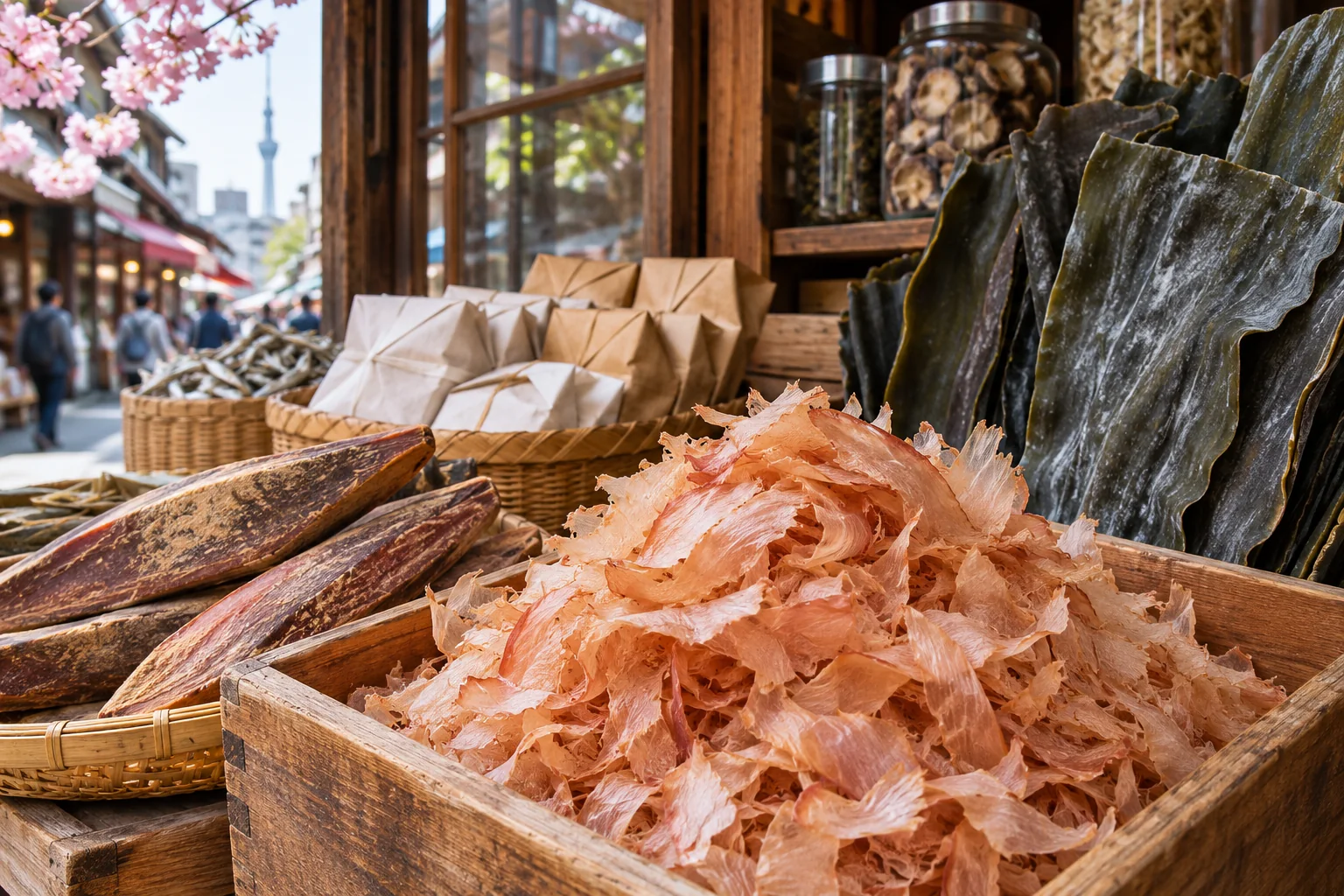
Tsukiji's merchandise guide identifies dried bonito flakes, or katsuobushi, as an ingredient for dashi. The market's directory separates sellers of bonito from other dried-food and seaweed specialists. Looking up those two categories before arriving gives the visit a clear shape. A shop specialising in stock ingredients is also a natural place to ask how the product changes when it is shaved, packaged or used in a different dish.
Tell the seller what equipment you have
A cook with a saucepan, a fine sieve and a measuring jug can work with different products from a traveller who has only an electric kettle in a hotel room. Describe the equipment honestly. If you are cooking at home next month, there is plenty of room for a packet that needs a little preparation. If supper is tonight, the packaging instructions need to fit what you can do in the room.
Compare at least two forms when they are available. A packet of loose flakes lets you measure the quantity for different pots. A portioned stock packet can be more convenient when you know the size of the meal and have limited equipment. The ingredients and seasoning may differ. Read the label before buying and ask whether the finished stock should already taste salty or needs seasoning during cooking.
Understand what the word bonito tells you
Bonito is fish. A visitor looking for an entirely plant-based stock should explain that requirement directly. A packet decorated with seaweed may still contain a mix of ingredients. Ask the seller to point out the relevant ingredients on the packet or suggest a product that matches the intended meal. A picture of the vegetarian dish you hope to cook can make the conversation easier, although the label still matters.
For a household where two diners want different stocks, think about making the common ingredients first and dividing the preparation before adding anything individual to each pot. That choice is easier with products whose contents you understand. Ask how the seller would season each version. Stock is a foundation for the meal, so a small purchase that gives you control over the flavour can be more useful than a ready mix selected only for convenience.
Ask for one preparation you can repeat
Before paying, find out the quantity of product, the quantity of water, the handling of the heat and when to strain or remove the ingredients. These four details are more useful in a home kitchen than a general reassurance that the product is easy to use. Ask whether the instructions apply to the exact flake size or packet you are taking away. A note on your phone can keep the advice beside the product name.
Use the first pot as a reference batch. Measure the liquid and the portion of the dried ingredient, then taste the stock before adding soy sauce or other seasoning. If the flavour is lighter than you imagined, ask yourself whether you wanted more stock flavour or simply more salt. Change one thing on the next attempt. Otherwise it becomes difficult to know whether the different result came from the amount of flakes, the liquid or the final seasoning.
Buy the amount you will open
A large package can look economical on the shelf and be a poor purchase for someone who cooks soup only a few times a year. Ask about the smallest sealed size and how to store it after opening. Take the seller's product-specific instructions home, particularly if they are printed only on the back of a packet. Keep that label when you transfer anything into another container.
Dry ingredients are fairly easy to carry when kept in their original packaging, but light flakes can be crushed by heavier groceries. Place them above jars and ceramics. For an international trip, check the destination's rules for the ingredient you are carrying, including fish products. If you have no time to establish whether a food can travel with you, purchase a portion to cook during the stay or choose a non-food item instead.
Make the visit work around breakfast
A shopping visit and a hot breakfast can fit in one morning when they have separate moments. Visit the dried-food counter with clean, free hands. Ask your product questions, pack the purchase and then go for the food you intend to eat immediately. A steaming bowl deserves your attention, and a shopkeeper describing flakes should not have to wait while you balance a breakfast order against the display.
If a particular shop is your reason for making the trip, check its own trading day and closing time. Plat Tsukiji provides area maps and visitor help, and the market directory groups sellers by product. Choose a second shop in the same category before setting off. That gives the morning a useful alternative if a specialist happens to be closed.
Bring home the information as well as the packet
On your last morning in Tokyo it is easy to throw away the one scrap of paper that tells you how much water to add. Photograph the storefront name and the packet together, then write your four preparation details beneath the image. Add the dish you planned to make. Three weeks later those few lines can turn an interesting souvenir into the soup you actually came to Tsukiji to cook.
When the first pot succeeds, record the actual yield. A note saying it filled two of your bowls is useful context alongside the measurement. The next time somebody asks what to buy at the market, you can describe a specific ingredient, a specific meal and the exact feature you liked about it.
Reorder with a sample in mind
If another shop suggests a different style for the same soup, keep a small note of the explanation. It may be worth trying the following year. Returning with a description of the stock you made makes a much better conversation than asking for an identical bag whose name you have forgotten.
Find the missing part of your setup
After choosing the flakes, picture how the stock will reach the bowl. The most helpful purchase might be a strainer that fits the pot or two bowls you enjoy lifting. The kitchenware counters turn a discussion about ingredients into a concrete set of tools for the dish.
Start with a job you already do
A kitchen tool earns its space when it solves a recurring job. Think about the last three meals you cooked. Did you struggle to drain noodles, serve rice without crowding a plate, or roll an omelette neatly? Carry that question into the kitchenware section at Tsukiji. The directory distinguishes utensils, knives, tableware and packaging, which saves a new visitor from searching every shop for one bowl.
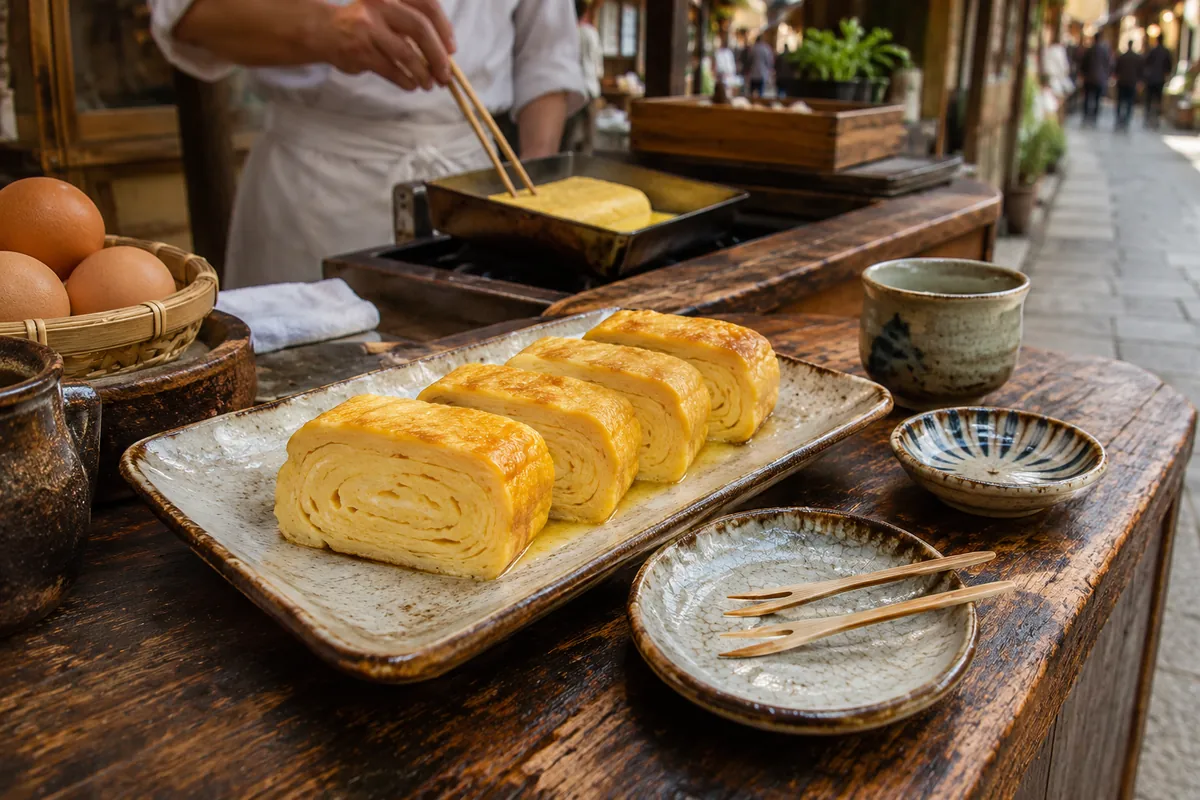
A modest piece of equipment can be the more personal souvenir. A strainer that fits your saucepan gets used on ordinary weekdays. A rectangular egg pan is appealing when you actually plan to practise making folded omelette. A bowl suits someone who likes the idea of a shared kitchen memory but would rather eat than learn a new cooking technique. Begin there before an impressive shop display chooses for you.
Compare the humble strainer
Yamanoi's listing in the market directory describes a stainless-steel strainer among the shop's practical tools. Consider what you strain most often. A loose handful of noodles needs different holes and depth from a delicate stock you want to keep especially clear. A strainer that balances over a bowl also frees a hand when pouring a saucepan. Ask the merchant to show how the item is intended to sit or be held.
Measure the mouth of your usual bowl before buying if the fit matters. Without a ruler, a measurement saved from home helps more than tracing an uncertain circle in the air. Look at how the rim is finished and where food might collect during washing. A tool for frequent use should be easy to rinse, dry and put away in the kitchen you actually have.
A bowl can carry the whole memory
If you have no desire to pack metal cookware, look at Japanese tableware as a separate shopping stop. Ask whether the piece can be microwaved or washed in a dishwasher if either is important to you. Check how it feels filled, particularly if you plan to lift it from the table. A deep bowl can be comfortable for noodles and awkward for a dish you prefer to spread out.
For a pair of bowls, set them beside each other if the seller allows. Slight variations may be part of the pleasure. Ask how they will be wrapped and how much space that wrapping takes. A bowl that fits your palm can occupy a much larger corner of a suitcase once protected. Decide whether you can carry it safely for the rest of the visit before paying.
Give the shop visit some space
Tsukiji's narrow shopping lanes work more smoothly when bags and luggage are out of the way. Plat Tsukiji lists coin-operated lockers in several sizes. Check availability and access hours on the day before depending on one. A practical plan is to store bulky luggage where permitted, shop with both hands free, and collect purchases that need careful handling late in the visit.
Ask before photographing a shop or product. If you are considering a purchase, a photograph of dimensions or care instructions may be more useful than a wide picture of the showroom. A shopkeeper may prefer that you make a written note. If the purchase involves a special finish or a tool that can be repaired, ask how to identify the maker and where to seek care information later.
Visitor sources
- Tsukiji Outer Market shop categories
- Plat Tsukiji maps, lockers and market manners
- Tsukiji’s merchandise guide
- Kitchenware specialist Yamanoi