
How to read a sashimi rice bowl before ordering
A bowl topped with fish can be a single-ingredient tasting or a survey of an entire counter. Choose the kind of lunch you want first.
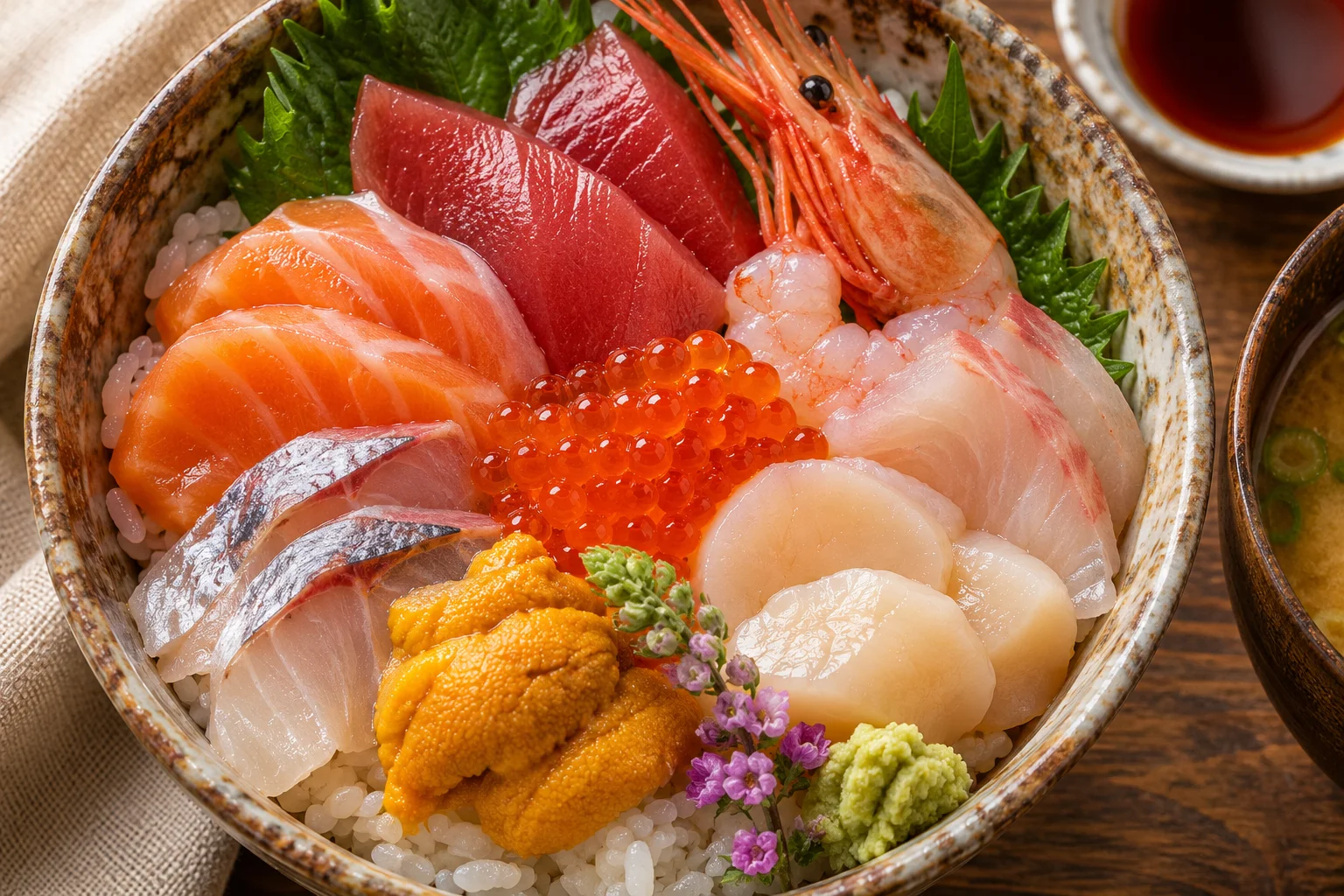
A bowl with one question
Tsukiji's official directory separates sushi restaurants from places serving sashimi rice bowls. It is worth looking at those listings independently. A diner who wants several kinds of prepared sushi presented piece by piece has a different meal in mind from someone who wants a bowl of rice with slices of fish all within reach at once. Both can make excellent use of a limited lunch break.
Choose the question you want lunch to answer. Perhaps you know you enjoy tuna and want enough of it to notice different cuts. A bowl centred on tuna makes that possible if the restaurant is offering one. If the appeal is discovering which fish you like, a mixed bowl puts different textures and flavours side by side. Look for a menu that names the toppings so you can identify them.
Pictures help with arrangement and approximate proportions. They cannot tell you exactly what is available on the day. Ask which toppings in the pictured bowl are being used today. Where the menu has several sizes, find out whether an upgrade changes the rice, the fish, the selection or all three. A large portion of rice is a different purchase from a few additional slices of fish.
Read across the surface
When the bowl arrives, take a moment to look at one topping at a time. A smooth slice, a piece of fish with a more pronounced grain and a small cluster of roe offer very different bites against the same rice. If your menu named the ingredients, keep it within sight long enough to connect each name with its place in the bowl. Ask the server about one particular piece if you cannot identify it.
Begin with a bite small enough to include both fish and rice. Drawing a little rice from immediately beneath the topping leaves the rest of the arrangement intact. If you eat all of the fish first, you may be left with a bowl of rice that would have made those early bites more balanced. If you work straight down the first side, some fish can tumble into the space you made.
Taste the first piece before adding soy if the restaurant presents the bowl already seasoned. If soy is supplied separately and the house has no particular guidance, add a little at a time. A large pour runs under the fish and into the rice, where there is no way to take it back. Ask staff how they serve the house bowl if the seasoning is part of the dish.
Spend the upgrade where you will notice it
Two bowl names may differ by a single topping. Find out what that topping contributes before ordering the more expensive choice. If you enjoy the pop of roe and the smaller bowl has none, the difference could matter. If every picture looks attractive but your favourite fish is already in the simplest bowl, the extra choice may bring little additional pleasure.
Consider what else is included. A bowl accompanied by soup, pickles or another small item fills a different role from a simple rice bowl bought as one stop on a longer tasting route. Check the actual menu for accompaniments. An attractive picture of several dishes together does not always establish what comes in one order.
For two diners, a mixed bowl each is generous if both want to sample everything. A more informative lunch can be one mixed bowl and one specialist bowl, with each diner choosing their own favourite. Ask about sharing before moving food between bowls if that is your plan. In a small restaurant with limited seats, check the house's ordering expectations when you arrive.
Leave room for the rice
How the topping meets the rice is part of the experience. If the rice is seasoned, taste it alongside a mild piece of fish before adding a strong condiment. If it is plain, a little sauce carried on one piece of fish may be all you need. You can value a bowl for its rice even when most of the price and attention appear to sit on top.
If you usually eat a small lunch, ask whether the kitchen can use less rice. Make that request while ordering, before the bowl is assembled. A restaurant may serve one fixed portion, in which case you can decide whether a different dish fits your appetite. Asking for less rice does not imply a change to the amount of fish or the price.
Keep any soup separate until you know how the kitchen intends the meal to be eaten. Some dishes are designed around broth added to rice, but a sashimi bowl accompanied by a separate cup of soup need not be one of them. When uncertain, ask. A sip of soup between two different toppings can be part of what makes the set enjoyable.
Choose a place to sit
For this dish, a seat and a little undisturbed time are worth more than the opportunity to keep browsing. Look up the venue in the market directory, check its operating day and consider how long you are prepared to wait. A bowl that suits lunch perfectly at a restaurant with seats now may be a better choice than your first pick with a line stretching into the aisle.
If someone in your group prefers a cooked meal, look for a restaurant whose menu actually lists one before anyone joins the queue. The market covers many businesses, but two separate restaurants do not necessarily share tables or allow food to be brought between them. Choosing the shop is a group decision even when each diner picks a different bowl.
After lunch, take down the name of the one topping you would order again. A mixed bowl is particularly useful when it sends you back into the market with a more precise question. On the next visit, you can ask about that fish, choose a more focused bowl and see whether you still like it as much when it carries most of the meal.
For a mixed group, that note can also help the next person choose lunch. Tell them whether the appealing part was trying several unfamiliar fish, getting a good portion of a favourite, or having everything arrive in one bowl. Each points towards a different order, even if the original photograph of an elaborate lunch would make them all look equally attractive.
The person at the table who does not want raw fish
Sort this out while you are still looking at menus outside. Tsukiji's visitor information points to several sorts of meal, including tempura, ramen and rice balls. That range across the market does not mean that the particular counter with the bowl you want serves all those dishes. Look for a restaurant with both options. If you cannot find one, agree on separate short meals and a meeting point before either person orders.
A diner who simply prefers fish cooked through might enjoy a completely different lunch in the same building. Other diners may need to ask about stock or seasoning even when the visible topping is cooked. Tsukiji's ingredient guide describes bonito flakes in dashi. A vegetable side accompanied by a broth can therefore raise a separate question for someone avoiding fish. Point to the item on the menu and ask about that dish rather than relying on appearances.
If the group decides to eat separately, agree on a time as well as a place. A party choosing a made-to-order bowl may sit down much later than the person buying a rice ball. Ask about the queue before promising to meet in fifteen minutes. A clear arrangement gives everyone a chance to enjoy the food they came for, and keeps someone from running through a working market with an unfinished lunch.
A short menu-reading exercise
Imagine three illustrated bowls on a board. One shows mostly red pieces, one has a patchwork of contrasting colours, and a third appears to have twice as much topping. Each may suit a different diner. Before guessing from colour, find out which fish the first one uses. Then ask whether the second has a fixed assortment or changes with supply. For the third, establish what the larger price actually buys. An especially prized item can account for a considerable difference even if the portion is quite similar.
Now imagine the same board on a day when your preferred fish is unavailable. A cook's assortment can still make sense for someone excited by variety. A diner who planned the entire visit around one ingredient may prefer a simpler different dish or another venue from the directory. That is a more useful distinction than agreeing to a substitution at the counter and spending the rest of lunch wishing you had asked to see the alternatives.
If you photograph the board for a friend, do so with permission and from a place that leaves the aisle clear. Include the dish name, not simply a cropped image of the bowl. Later you can pair that photograph with a short note about its composition. A reader looking at a photograph cannot tell which fish was substituted, whether the rice was seasoned or whether the pictured soup came separately.
For a second visit, choose one thing to change. Order a bowl centred on the topping you liked most, try a cooked set instead, or return to the same mixed bowl on a different day and ask which fish has changed. Keeping the rest of the comparison simple gives the next market lunch a purpose beyond repeating the most photogenic order.
Visitor sources
- Tsukiji’s guide to ingredients
- Tsukiji’s specialist shop directory
- Tsukiji’s official visitor and dining guide