Choosing a borek at Melbourne’s Dairy Produce Hall
The filling is only half the decision. Shape, heat and the next stop on your market walk determine which pastry makes a good lunch.
Stand where you can read the names
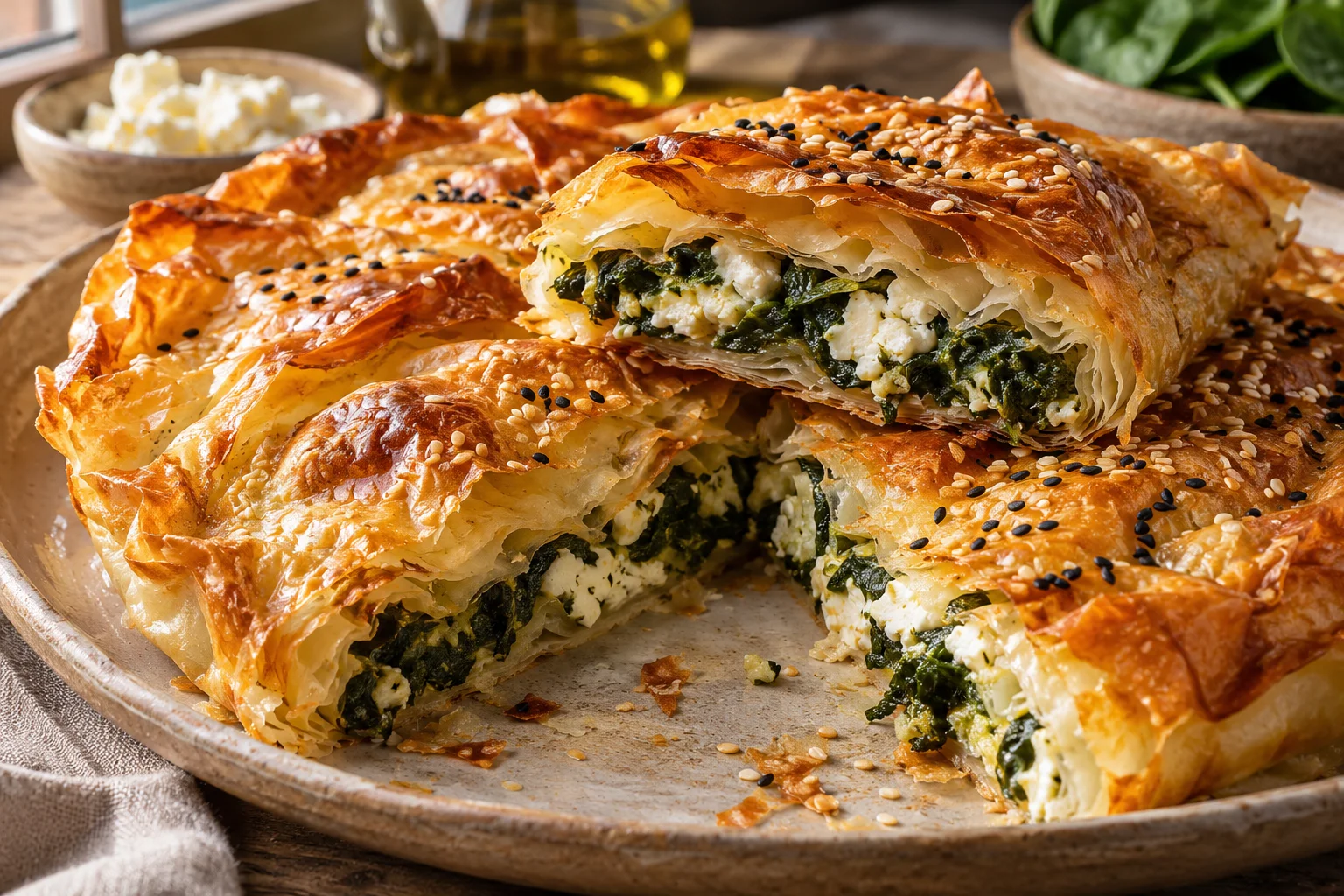
At Queen Victoria Market, The Borek Shop lists pastries with spinach and cheese, spiced lamb, and potato among its choices. It also lists gozleme and pide. Stand back long enough to match the name on the card to the tray. A similar combination of cheese and greens can appear in several shapes. Pointing at the pastry you saw someone carry away is sometimes more useful than guessing which name they ordered.
Look at the cross section if a pastry has already been divided for service. A large amount of bread around a narrow seam will eat differently from a closely packed filling reaching almost to the edge. Decide whether you want the first mouthful to be mostly crust or mostly filling. A preference for one or the other is an excellent reason to choose a different piece from your companion.
The online catalogue is useful for making a shortlist on the way to the market. It cannot tell you which batch has just come out or which tray will last until you reach the front. Pick two fillings you would be happy with. Someone willing to switch from cheese and spinach to spiced potato can make a much easier lunch decision when the last piece disappears.
Cheese, greens or the soft centre of a potato
Spinach and cheese gives you two textures inside the same pastry. Greens interrupt the richness of the cheese and give the bite a little resistance. A diner mainly looking for the savoury cheese can compare that option with the plain cheese borek on the catalogue. Ask which cheese is in today's version if you have a strong preference for a mild or salty filling.
Spiced potato has a different rhythm. A soft interior catches seasoning, while the edges of the pastry give you something firmer to bite. It suits someone who enjoys a pasty or a potato-filled flatbread and wants that satisfying combination again. Ask what the spice tastes like if the word on the sign is more important to you than the amount of heat. Someone at the counter can distinguish peppery or aromatic seasoning from a filling that is actually hot with chilli.
For a lamb order, take a look at what else you intend to eat that day. A rich meat filling and a sausage in a roll can make two substantial consecutive stops. If you have come specifically for both, split the borek with a companion and buy the sausage later. A cold drink and a piece of fruit also make enough company for one whole pastry.
Eat the two ends differently
The closed tip often carries more baked dough and less filling than the centre. Start at one end and leave room to rotate the pastry as you go. If you begin in the middle, the filling has two open edges to escape from. Hold the paper around the lower half and uncover just enough for the next bite. Cheese pressed against the bottom of a tightly wrapped paper can pull away with the wrapper.
Pause after the first opening to see where the steam goes. Potato and cheese can hold heat inside long after the exposed surface feels comfortable. Set the pastry down on its paper while opening a drink or deciding how to divide it. An extra minute also lets you see the filling instead of eating the whole first half on the move.
When two diners want to compare the same two fillings, ask for each to be divided if the counter is able to do it. Give each diner one end and one middle-heavy portion across the two pastries. Both diners then get a decent sample of the dough as well as the filling. Keep the lamb and the cheese pieces on separate sheets so you can tell them apart after the first bite.
Make it a market lunch
The shop's catalogue lists a bean salad among the other foods it sells. Ask what's on hand and how the salad is packed. A little acidity and a forkful of beans can make a better companion to a large borek than another pastry. On a shopping trip, the small container is an extra thing to hold, so find a place to eat before adding it to your order.
If one diner would like pastry and the other wants a complete plate elsewhere in the Dairy Produce Hall, decide where you will meet before queuing. A warm borek is easy to carry a short distance when it is still wrapped. Keep the trip purposeful. Taking it around the entire hall while someone considers every lunch option gives steam time to soften the exterior.
For a solo lunch between errands, buy the pastry after picking up anything you can carry in one hand. Bread or an apple can go in the bag first. Leave awkward or heavy shopping for later. The object is to be able to stop and eat without balancing the purchase on top of bags or crowding the counter the next customer is trying to reach.
Save the right thing for later
If two fillings appeal but you only want one now, note the exact name of the second one. The Borek Shop sells several other products involving potato or spinach. A note saying “green filling” is unlikely to identify the same pastry next time. A name plus the shape you remember is far more useful than a photograph of a whole display taken from a distance.
For a purchase intended for your kitchen, ask the shop about storage and reheating for that particular product. Some items in the market catalogue are specifically described for heating and serving. Ask whether the piece on the counter is being sold ready to eat or intended for that use. The answer affects when you buy it and whether it will suit the facilities where you are staying.
One good borek can be the whole point of a market visit. Keep the last few bites for the part of the filling you liked best, leave the paper where the market directs and take the rest of your walk with both hands free. Save a second visit for the filling that caught your eye on the way out.
One last detail to record is whether you ordered a borek or a gozleme. Both can have similar descriptions of the filling in a market catalogue. The pastry around the filling is part of what makes the item worth seeking out. A precise name makes your recommendation more useful to the next person.
Borek, gozleme and pide on one menu
One of the nicest problems at this particular shop is seeing familiar fillings arranged in several different ways. The catalogue includes a spinach and cheese borek, a spinach and cheese gozleme and an egg, cheese and spinach pide. The names matter even if you know exactly which ingredients you enjoy. You are choosing the bread or pastry around the greens as much as the greens themselves.
If texture is the deciding factor, ask the person serving to show you which item has the thinner surrounding bread and which has the more substantial baked edges. Take a look at the surface and the shape of each. A flat, broad piece gives a high proportion of surface to filling. A plumper piece generally leaves more space in the centre. The same handful of spinach can feel quite different to eat in those two forms.
To taste the difference with a companion, choose the same filling in two forms rather than choosing both a different filling and a different shape. Start with a bite from the middle of each. One might lead with the dough and the other with the filling. Cut a second bite from the edge and see whether your preference changes. You will learn more from that small comparison than from debating whether every pastry labelled spinach and cheese counts as the same lunch.
One counter, a bicycle ride and a work lunch
For someone cycling home, the distinction between a warm snack now and a pastry for later is practical. A hot borek tucked upright into a small bag can be pressed out of shape as you move. Eat the hot order before setting off, or ask what the trader sells that is specifically intended for heating later. Keep the shop's instructions with a later purchase. They matter more than any general rule about reheating a pastry with an unknown filling.
For an office lunch on foot, an individual borek and a small salad can be easier to carry than a collection of pastries wrapped together. Keep the salad container apart so its dressing does not find a way into the pastry wrapper. If you have bought lunch for someone else as well, mark which wrapper contains the spicy filling before the familiar shape disappears under a fold of paper.
For a picnic, ask how many people actually want pastry and how many want a taste. Two substantial pastries cut into usable portions can be more satisfying than one of every variety shared into tiny corners. Choose a pair with distinct fillings, ask about dividing them and buy the rest of lunch elsewhere in the hall. Finish with fruit or something cool and crunchy if that is what will make a warm, substantial pastry feel like a complete meal.
When a particular choice really works, write down why. The note could be as practical as “the baked edge stayed firm on the walk to the park” or “the potato centre made one piece enough”. Those details are a better guide to a future lunch than remembering only that the market had a famous pastry shop.